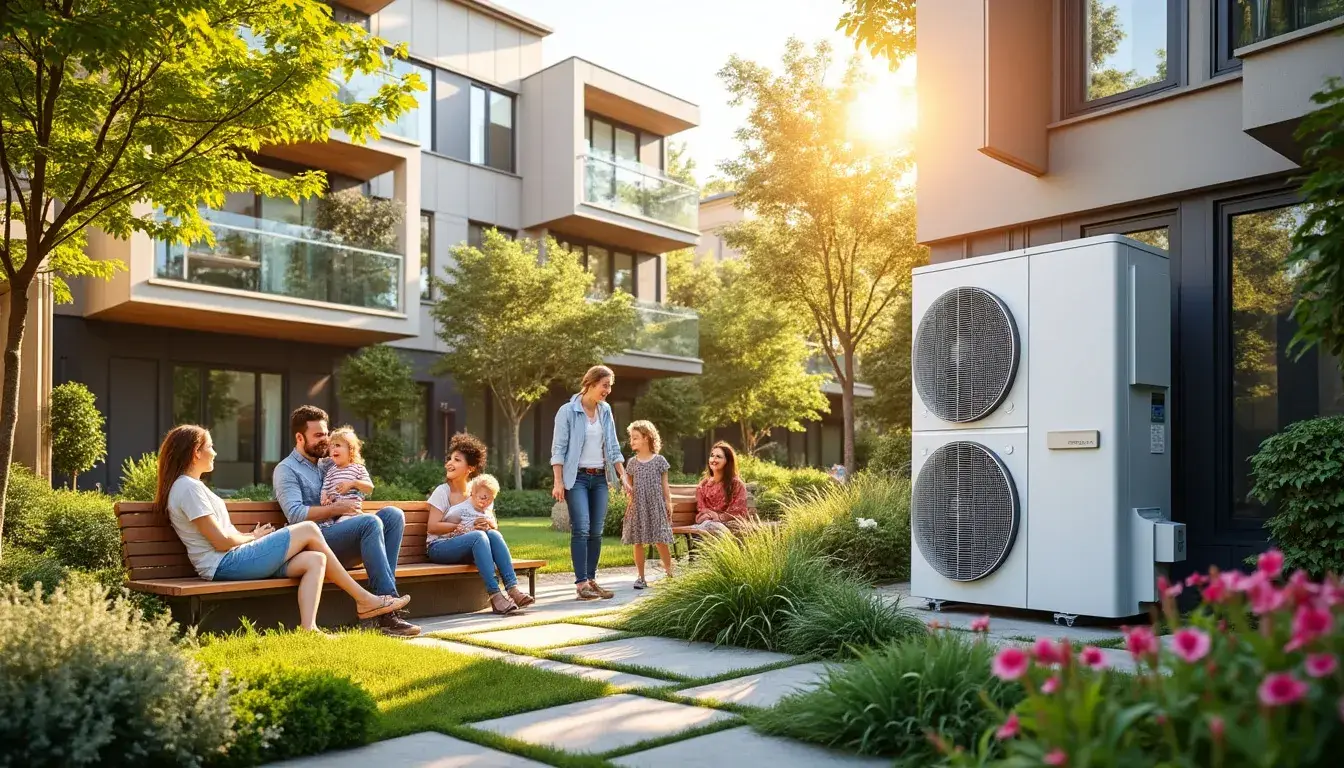
Collective heat pump: a profitable investment for your condominium in 2025
5 min read
The energy transition is accelerating, and condominiums are not left behind. The installation of collective heat pumps represents a future solution, both ecologically and economically. In a context where oil and gas are gradually being banned, individuals and co-owners are looking for sustainable alternatives. This article reviews the issues, the steps to follow, and the benefits associated with installing a heat pump in your condominium in 2025.
The rise of heat pumps in condominiums
Currently, it is estimated that fewer than 100,000 apartments in condominiums are equipped with a heat pump. This is a relatively small proportion, given that nearly 30% of housing belongs to a condominium, or about 10 million apartments. However, this situation is expected to evolve rapidly due to two key factors:
Ban on the installation of oil boilers, both in new constructions and in renovations.
Prohibition of installing gas boilers in new constructions.
Condominiums must therefore consider renewable heating solutions, with the heat pump as a choice option. How does this technology stand out in the landscape of collective housing?
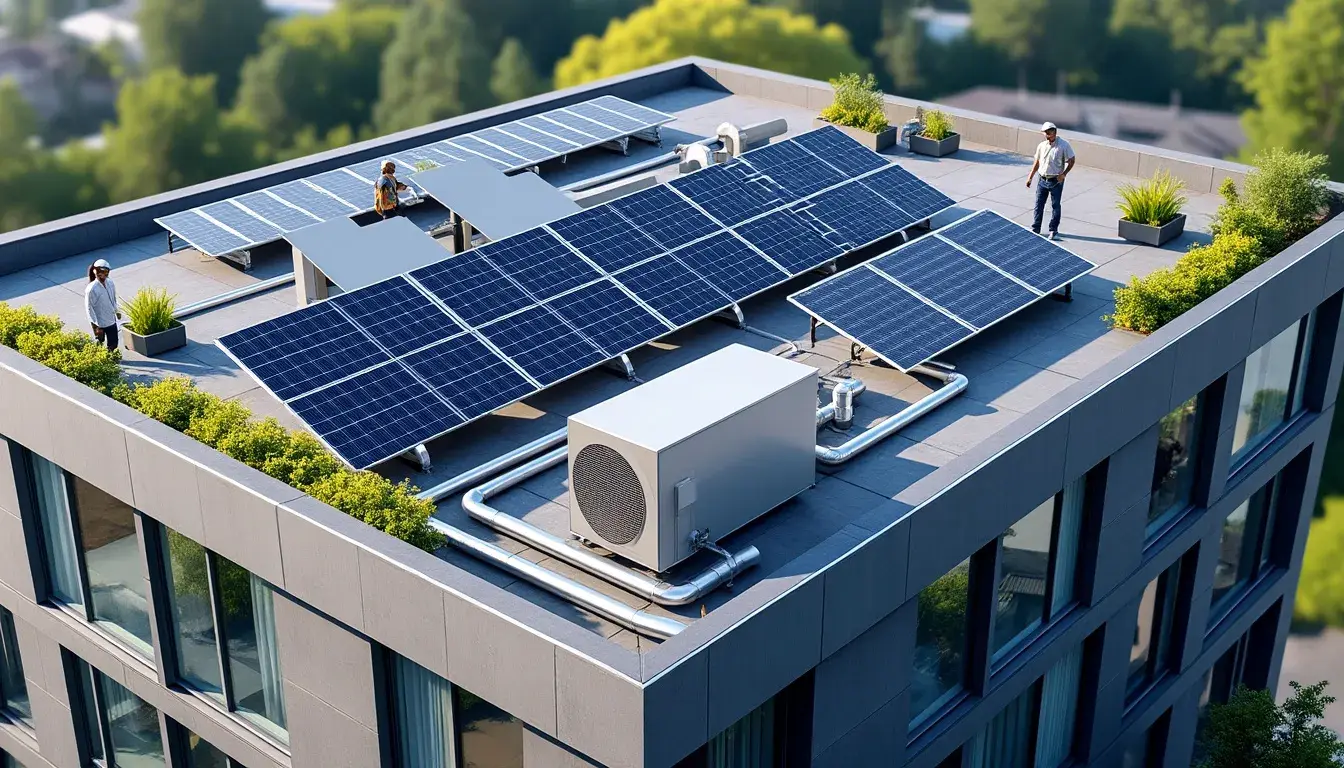
Why choose a collective heat pump?
Installing a heat pump (HP) in a condominium may seem complex, but the benefits are undeniable. Here are some reasons why you should consider this option:
Energy efficiency: HPs harness renewable energies, making them particularly efficient in terms of energy.
Cost reduction: In the long term, the savings on heating bills can offset the initial installation cost.
Reduced environmental impacts: Using HPs decreases the carbon footprint of the building.
How to install a heat pump in your condominium?
The process for installing a heat pump in a condominium is divided into several key steps. Whether you are considering an individual or collective installation, specific rules must be followed. Here’s how to proceed:
The two scenarios
You have two options for installing an HP:
Individual installation: If you wish to install a heat pump for your own apartment, it is crucial to seek the condominium's approval. This includes discussing the appropriate location for the system.
Collective installation: A collective HP can provide heating and hot water (ECS) for the entire building, which can be more economical in large condominiums.
Each option has its advantages and disadvantages, particularly in terms of costs and installation simplicity. For example, for small condominiums, individual HPs may prove to be more financially advantageous compared to a collective installation.

Project feasibility criteria
Before starting the procedures, ask yourself the right questions:
Is your building well insulated? Effective insulation is essential to maximize the efficiency of HPs.
Do you have the necessary space to install the indoor and outdoor units?
Are there any urban planning constraints? Local regulations concerning noise and outdoor installations must be considered.
If you answer positively to these questions, it's time to move on to the necessary administrative procedures.
Administrative and legal procedures
Installing a heat pump requires following specific administrative steps. This includes contacting the condominium manager and the town hall to obtain the necessary permits.
Procedures with the manager
Whether for an individual or collective installation, the condominium manager plays a crucial role:
For an individual HP, you must obtain the agreement of the co-owners at the general assembly.
For a collective installation, a vote with an absolute majority is required to decide on such an initiative. This means obtaining 50% of the votes + 1.
Procedures with the town hall
You must also inform your town hall of your project by submitting a request for a prior work declaration (DP) using the CERFA form 13404*07. Don’t forget the supporting documents like the project plan. You will receive a response within one month.
Type of installation | Required majority | Administrative procedure |
|---|---|---|
Individual HP | Simple majority | Agreement in general assembly |
Collective HP | Absolute majority | Agreement in general assembly |
Technological choices for your heat pump
In terms of heat pumps, several technologies are available to you, ranging from affordable solutions to more sophisticated options. Depending on your needs and budget, here’s an overview of the types of HPs you might consider:
Different types of HPs
Air-water HP: This is the most common and often the least expensive solution. It extracts heat from the air to heat the water of the heating circuit.
Air-air HP: Dispenses warm air throughout the housing via a ventilation system but is not suitable for producing hot water.
Ground-water HP: Utilizing the heat of the ground, this option is more expensive but very effective.
Water-water HP: Particularly efficient systems connected to a water source, such as aquifers or rivers.
Tips for choosing the technology
I recommend prioritizing the types of HPs that are eligible for government aid, particularly air-water and water-water HPs. Major brands like Daikin, Thermador, Viessmann, and Mitsubishi Electric offer particularly efficient models suitable for all types of housing.
The advantages and disadvantages of HPs in condominiums
It is essential to evaluate the advantages and disadvantages of heat pumps in a condominium environment. This table summarizes the main points to consider:
Advantages | Disadvantages |
|---|---|
Significant energy savings | High initial installation cost |
Reduced environmental impact | Space restrictions for outdoor units |
Access to financial aid | Complexity of administrative procedures |
Improved thermal comfort | Performance dependent on building insulation quality |
Financial aid for HP installation in condominiums
To facilitate the installation of heat pumps, several aid programs are available to you, whether for individual or collective installations. These aids can significantly lighten the cost of your investment:
MaPrimeRénov'
This aid is intended for property owners who choose to have an individual HP installed. Here are the details:
Amount up to €5,000, depending on the appliance's performance.
Condition: housing over 15 years old with an appliance that has an energy efficiency greater than 126%.
MaPrimeRénov’ Condominiums
Condominiums can also benefit from this aid for global renovations:
25% of the cost of works, capped at €15,000 per housing unit.
A minimum energy gain of 35% is required.

CEE bonuses and zero-interest eco-loan
CEE bonuses (Energy Savings Certificates) may apply, as well as the zero-interest eco-loan, which allows financing for works aimed at improving the energy performance of buildings.
Conclusion and perspectives
Heating solutions based on heat pumps are rapidly expanding in condominiums. It is crucial to initiate collective reflection on the economic and environmental benefits of such installations, while considering the necessary procedures.
FAQ about installing heat pumps in condominiums
1. Is it possible to install an individual HP in a condominium?
Yes, it is entirely possible to install an individual HP, but this requires the agreement of the co-owners at the general assembly.
2. What types of heat pumps are suitable for condominiums?
Air-water and water-water HPs are generally the most recommended, as they are eligible for government aid.
3. What financial aid is available?
You can benefit from MaPrimeRénov', MaPrimeRénov’ Condominiums, as well as CEE bonuses and the zero-interest eco-loan.
4. What are the main disadvantages of HPs?
The initial installation costs can be high, and performance depends on the quality of the building's insulation.
5. What brands do specialists recommend?
Brands like Daikin, Viessmann, and Atlantic are often cited for their reliability and performance.