Convert your oil heating to a renewable solution: steps and practical tips
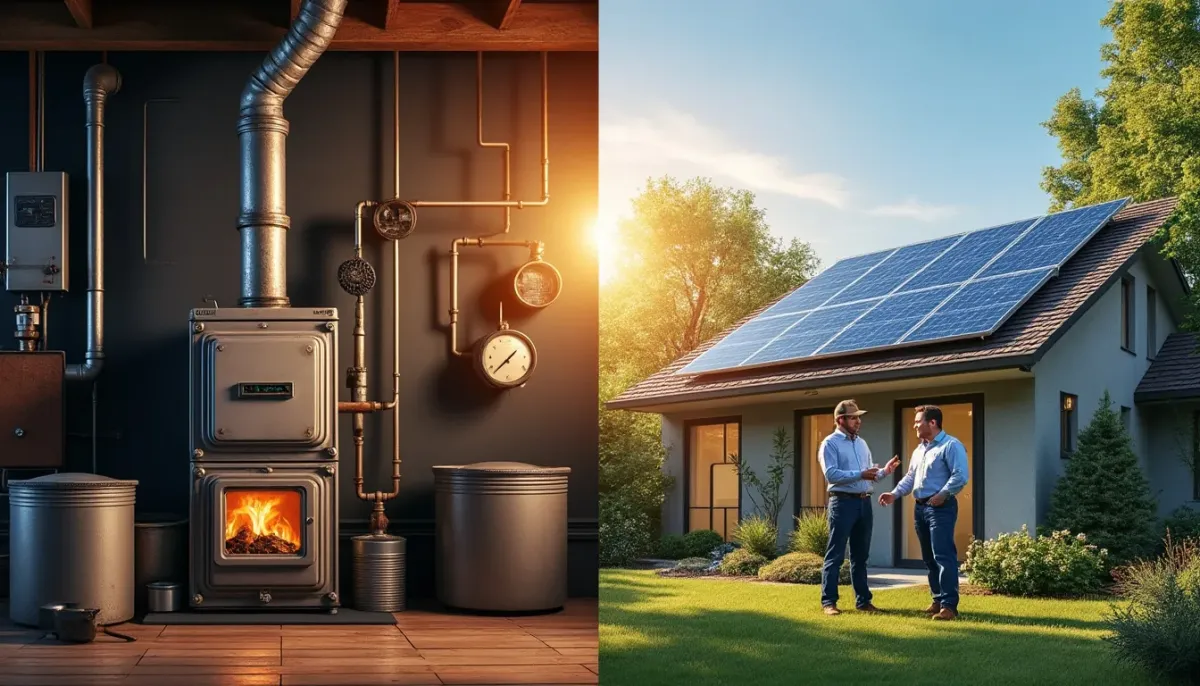
The transition to renewable energy has become one of the major concerns of our society. In 2022, France, continuing its ecological objectives, implemented legislation to ban the installation of new oil boilers, thus pushing homeowners to consider more environmentally friendly alternatives. Converting an oil boiler to a biooil solution emerges as both an economical and sustainable option. This change is not solely a matter of legislative compliance but also a concrete opportunity to reduce one’s carbon footprint while maintaining comfort. In this article, I will guide you through the various steps of this conversion, the economic and environmental benefits, as well as the options available to enhance the energy efficiency of your home.
The advantages of converting an oil boiler to biooil
Converting your oil heating system to biooil is not simply a legislative imperative but also an informed approach towards a greener future. This conversion offers a range of advantages both economically and environmentally.
Indisputable ecological benefits
Biooil is, by nature, less polluting than traditional oil. By using a combination of oil and plant materials, CO2 emissions can be significantly reduced. For example, with a boiler running on F30 biooil, CO2 emissions are nearly 30% lower compared to that of a conventional boiler.
Reduction of greenhouse gases: The use of biooil decreases carbon dioxide emissions.
Supporting local agriculture: Biooil incorporates raw materials grown locally, such as rapeseed.
Compatibility with existing systems: Most boilers can be adapted to the new fuels without complete replacement.
A favorable return on investment
It is worth mentioning the financial aspect of this conversion. While the average cost of converting an oil boiler to biooil is about €1,400, the installation of a new biooil boiler can reach and exceed €10,000. Here’s a cost comparison:
Type of project | Average cost |
|---|---|
Conversion of existing oil boiler | €1,400 |
New biooil boiler system | €2,000 to over €10,000 |
In the long term, the conversion leads to a reduction in operating costs, as biooil is generally less subject to price fluctuations in oil.
The steps for conversion to biooil
Converting an oil boiler to biooil requires adequate planning. Here are the key steps to ensure everything goes smoothly.
1. Replacing the Burner
The first step will involve replacing the old burner of your boiler with a model compatible with biooil. This burner is essential to ensure optimal combustion of the new energy source. The cost of this operation, which includes purchase and installation, is generally around €1,400.
Preferably hire a qualified professional for the installation.
Ensure that the new burner is compatible with the type of biooil you choose (F5, F10, F30).
2. Cleaning or replacing the storage tank
The storage tank must be treated carefully to ensure it is suitable for biooil. Here is the recommended process:
Completely drain the existing tank.
Perform a thorough cleaning to remove all residues of traditional oil.
Check the integrity of the tank for issues such as corrosion.
3. Adapting the heating network
Since biooil is slightly more corrosive, it will be necessary to check and potentially replace certain elements of the heating network:
Replace copper pipes with resistant materials such as aluminum or stainless steel.
Install a biooil filter to prevent impurities from entering the burner.
Biooil heating options: between new models and conversion
Once the conversion is complete, the range of biooil boilers available on the market deserves exploration. Models vary in terms of price, energy efficiency, and features.
Available boiler options
Biooil boilers are classified into different categories according to their technical characteristics:
Type of boiler | Average cost | Energy efficiency |
|---|---|---|
Entry-level | €2,000 - €3,000 | 85 - 90% |
Mid-range | €4,000 - €6,000 | 90 - 95% |
High-end | €7,000 and above | Above 100% (condensing boilers) |
Potential savings
For a standard house of 100 m², a biooil boiler could reduce fuel consumption by 15 to 20%, thus increasing long-term profitability.
Costs and financial aids for installing a biooil boiler
Beyond the initial investment, it is crucial to examine the operating costs and the financial aids available to assist in the transition to biooil.
Overall cost of a biooil system
To properly assess the overall cost over a period of 15 years, let’s consider the purchase, installation of the biooil boiler, fuel consumption, and maintenance:
Item | Estimated cost |
|---|---|
Purchase and installation of biooil boiler | €6,000 |
Annual biooil consumption (1500L x €1.24) | €27,900 |
Annual maintenance | €2,250 |
Total over 15 years | €36,150 |
These investments can be supported by financial aids, including subsidies from local authorities, which can help offset some of the costs associated with the installation.
Comparison of available financial aids
There are various financial aid options to encourage homeowners to switch to a more ecological heating system:
MaPrimeRénov’: A government aid for energy renovation works.
Local aids: Some municipalities, such as those supported by Batigère or Eco-Bâtiment, offer specific subsidies.
Tax credit: It may be possible to benefit from an income tax reduction for works aimed at improving the energy efficiency of one’s home.
FAQ on converting oil boilers to biooil
What is biooil? Biooil is a mixture of traditional oil and organic materials, such as vegetable oils, which helps to reduce pollutant emissions.
Does the conversion cost a lot? The average cost of converting an oil boiler to biooil is about €1,400, which is generally cheaper than installing a new boiler.
What are the advantages of switching to biooil? Biooil offers numerous environmental and economic benefits, including reduced CO2 emissions and better price stability.
However, what is the lifespan of a biooil boiler? On average, a well-maintained biooil boiler can have a lifespan of 15 to 20 years.
Where can I find financial aids for the conversion? Check with your local authority, or official sites like Enerplan or Hespul for information on available subsidies.