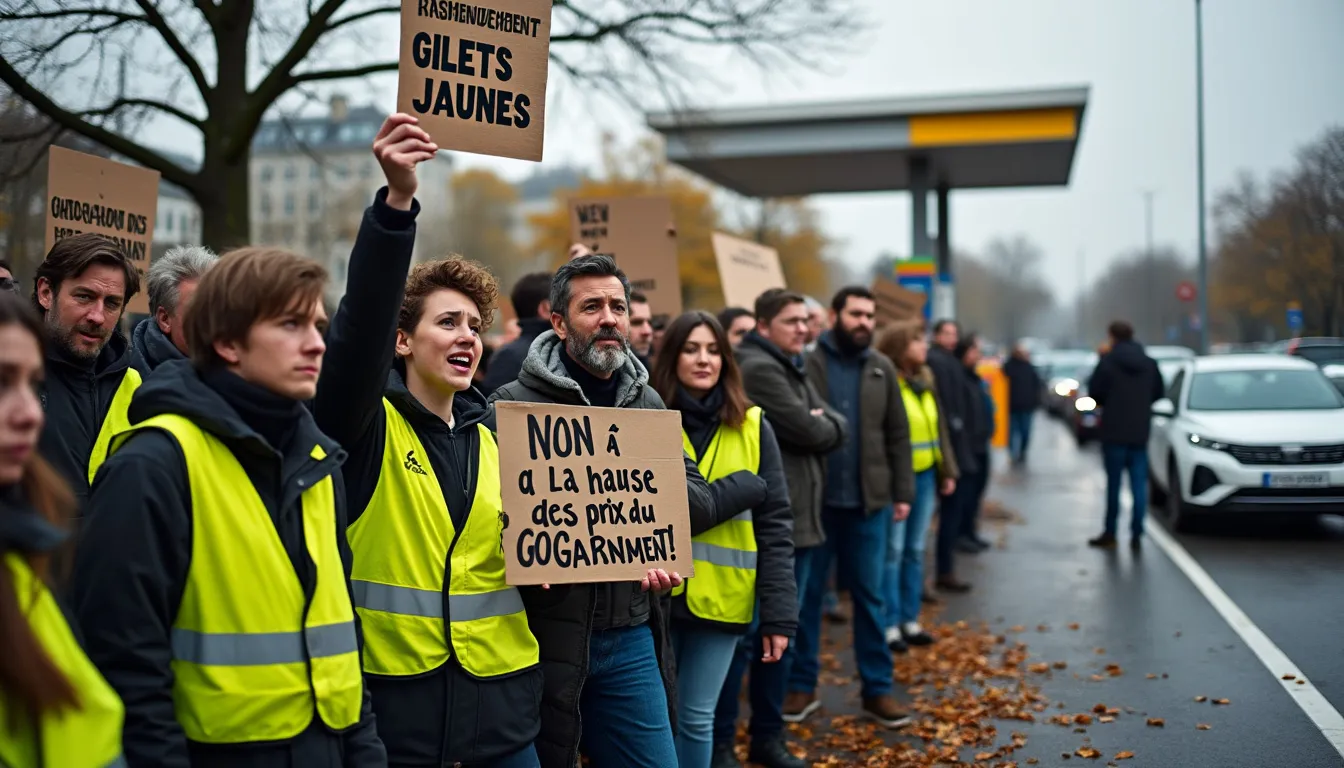
Fuels and heating: the threat of a new "yellow vests" crisis worries the government
7 min read
As fuel and heating prices continue to rise, the French government fears the return of an emblematic social movement: the "yellow vests." This threat of a new social crisis arises in a tense economic context, where households struggle to absorb the increases in energy costs. This article explores the origins, impacts, and potential responses to this worrying situation.
the evolution of the yellow vests movement
Since its inception in November 2018, the yellow vests movement has marked the French political scene with its capacity to mobilize citizens en masse. Initially triggered by the increase in the carbon tax on fuels, the movement quickly broadened its demands to include issues of purchasing power, tax justice, and direct democracy.
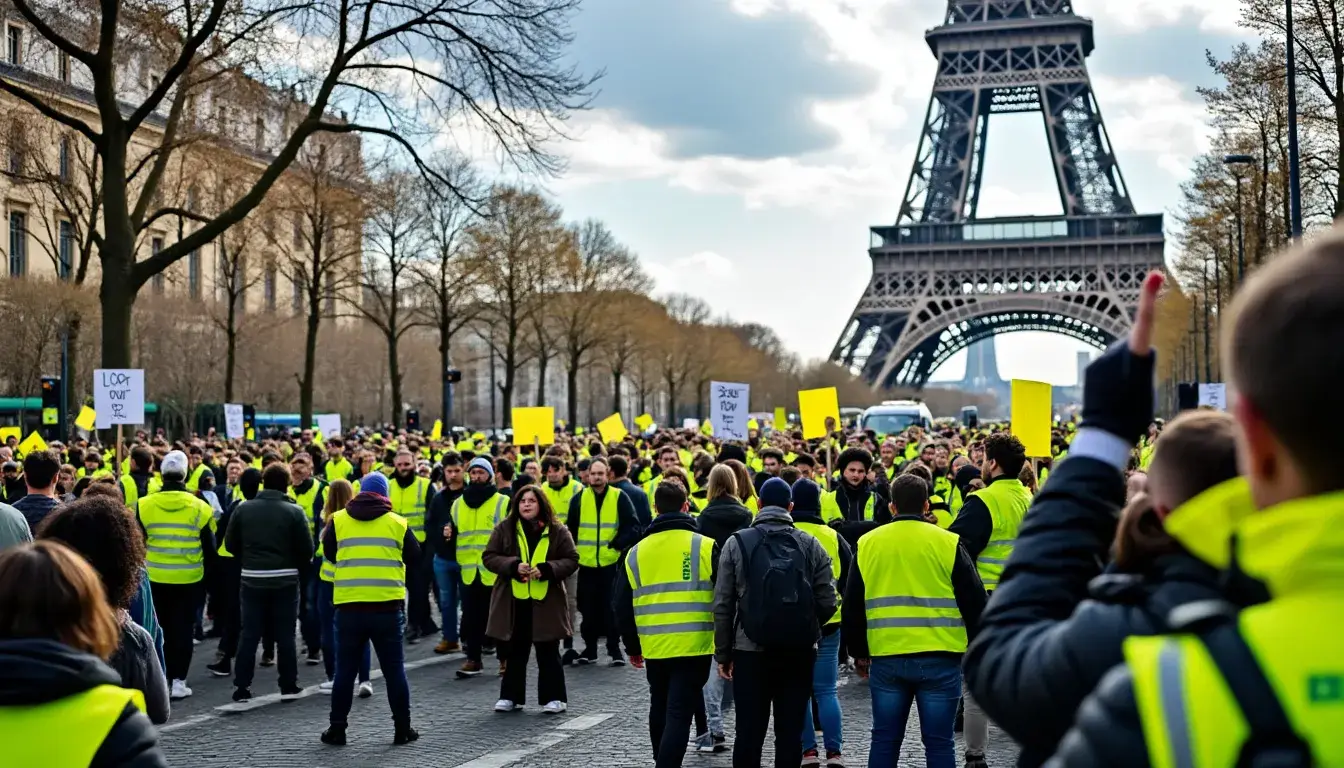
Weekly demonstrations, often organized on Saturdays, have led to roadblocks and the occupation of roundabouts, disrupting daily life and the economy. The yellow vests have captured the attention of national and international media, shedding light on deep social tensions related to ecological transition and economic inequalities.
key significant events
November 2018: Start of demonstrations in reaction to the rise in fuel taxes.
January 2019: Escalation of roadblocks across France.
April 2019: Signing of several agreements with the government to ease tensions.
December 2019: Resumption of demonstrations due to unresolved frustrations.
2025: Emergence of new threats of social movements related to energy prices.
The movement has also influenced public policies, forcing the government to reconsider some of its fiscal and social measures. However, despite attempts at appeasement, the demands of the yellow vests remain strong, fueled by persistently low trust in institutions and a call for deeper reforms.
Date | Event | Impact |
|---|---|---|
November 2018 | Launch of the demonstrations | National awareness of fiscal inequalities |
January 2019 | Massive roadblocks | Paralysis of transport and economic disruption |
April 2019 | Government agreements | Reduction of initial tensions |
December 2019 | Resumption of demonstrations | Hardening of social demands |
2025 | New threats of demonstrations | Government's concern over a resurgence |
For an in-depth analysis of the evolution of the movement, consult this study.
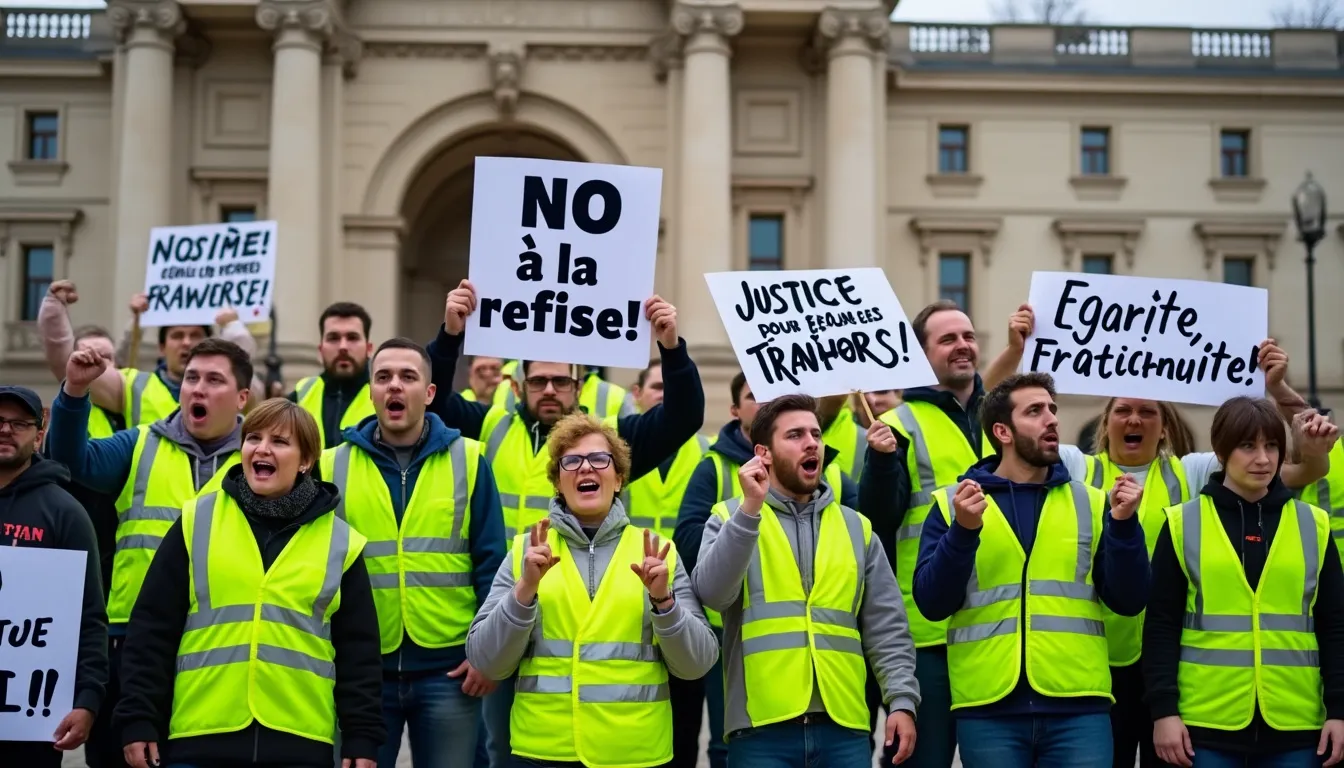
the triggering factors of a new crisis
In 2025, the threat of a new yellow vests crisis is mainly fueled by the persistent rise in fuel and heating prices. These increases directly affect the purchasing power of households, particularly those from middle and working-class backgrounds, exacerbating social tensions.
Among the main triggering factors are:
Increase in fuel taxes: Government's attempt to finance ecological transition.
Energy inflation: Rise in diesel and gasoline prices impacting daily life.
Insufficient compensatory measures: Government aid does not fully cover household needs.
Perception of tax injustice: Feeling that taxes weigh more on the less fortunate.
Lack of social dialogue: Insufficient exchanges between authorities and citizens.
These combined elements create fertile ground for the outbreak of new social movements. The feeling of economic injustice and the lack of support for the middle classes fuel resentment, making French society vulnerable to upheavals similar to those of 2018-2019.
Factor | Description | Potential impact |
|---|---|---|
Fuel taxes | Increase in taxes to finance ecological transition | Reduction in purchasing power and popular discontent |
Energy inflation | Increase in diesel and gasoline prices | Increase in transport and heating costs |
Compensatory measures | Government aid deemed insufficient | Dissatisfaction and fostering of social revolt |
Tax injustice | Perception that taxes affect poorer households more | Feeling of injustice and marginalization |
Social dialogue | Lack of effective communication between authorities and citizens | Deterioration of social relations and increased tensions |
To learn more about the factors behind the crisis, read this detailed article.
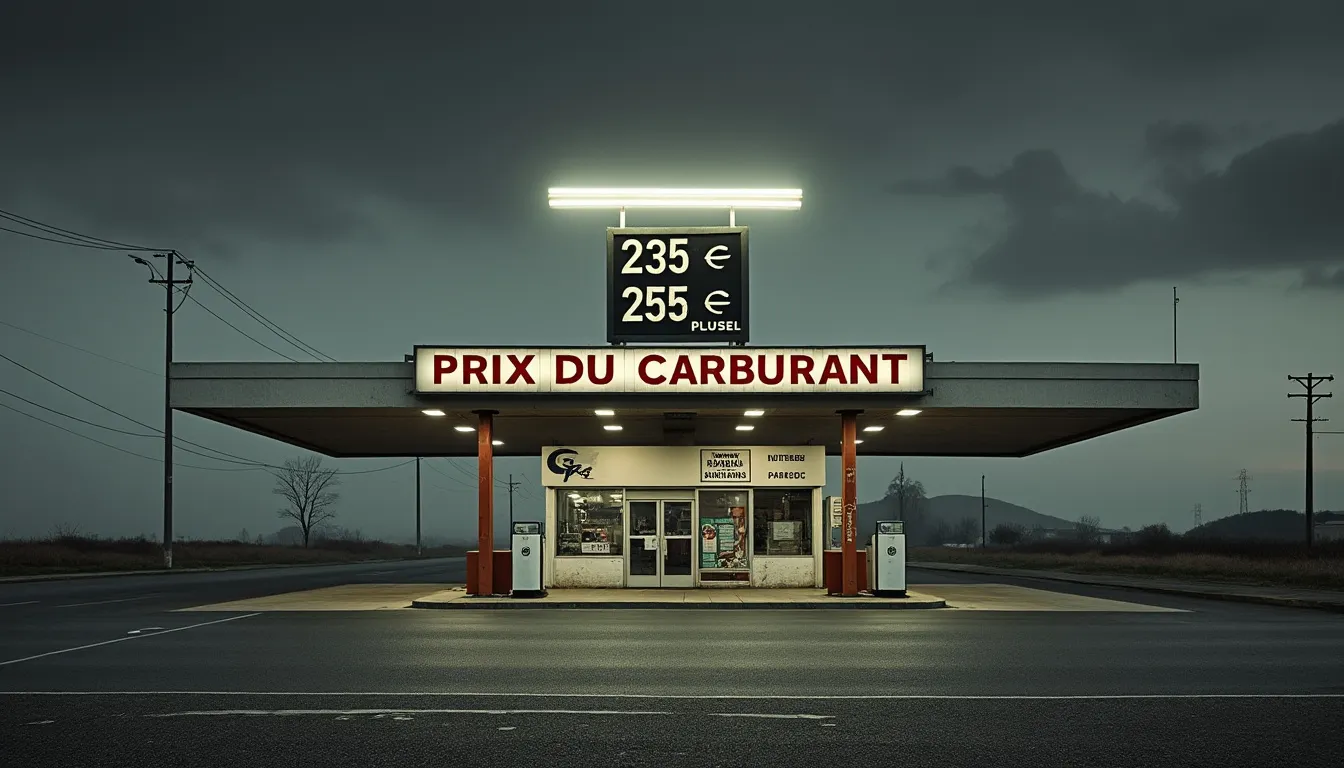
the economic consequences of rising fuel and heating costs
The rise in fuel and heating prices has significant repercussions on the French economy. Households see their budget allocated to energy expenses increase, leading to a reduction in spending in other sectors. This situation can slow economic growth and exacerbate social inequalities.
Reduction in purchasing power: More money spent on fuel and heating reduces consumer spending.
Increase in the cost of living: Prices of goods and services rise due to higher energy costs.
Impact on businesses: Increased operational costs, notably for transport and services requiring energy.
Widespread inflation: Price increases in various sectors, fueling inflation.
Pressure on wages: Need to increase wages to compensate for the rising cost of living.
Companies such as TotalEnergies, Shell, Esso, and BP directly feel the impact of these rises, with reduced profit margins and increased pressure to maintain competitive prices. Moreover, distributors like CORA, Carrefour, Avia, Petroplus, Gilbert, and DHL are also affected by fluctuations in energy costs, influencing their business and operational strategies.
Sector | Impact | Consequences |
|---|---|---|
Households | Increase in energy costs | Reduction in purchasing power and changes in consumption behaviors |
Businesses | High operational costs | Reduction of margins and price adjustments |
Distribution sector | Fluctuation of transport and energy costs | Price adjustments for products and logistical strategies |
Inflation | General rise in prices | Increase in the cost of living and pressure on wages |
Consumption | Decrease in non-essential spending | Impact on overall demand and economic growth |
The economic repercussions of rising fuel and heating prices are complex and interconnected. For an overview, see this article from Les Echos.
the government’s responses and strategies
In the face of the threat of a new yellow vest crisis, the French government has undertaken several initiatives to try to defuse social and economic tensions. These strategies aim to mitigate the impact of rising fuel and heating costs while pursuing the goals of energy transition.
Among the measures implemented:
Targeted financial aid: Subsidies and tax credits for low-income households to compensate for energy costs.
Reduction of taxes on certain fuels: Temporary tax adjustments to moderate price increases.
Promotion of renewable energies: Investments in green infrastructures to reduce dependence on fossil fuels.
Enhanced social dialogue: Creation of consultation platforms to better hear citizens' demands.
Encouragement of public transport: Subsidies and improvements to services to reduce reliance on individual cars.
These initiatives are complemented by awareness campaigns aimed at informing citizens about the long-term benefits of the energy transition. However, the implementation of these measures faces challenges, particularly in terms of funding and public acceptance. The government must skillfully navigate between ecological imperatives and socio-economic expectations to avoid an escalation of tensions.
Measure | Objective | Expected result |
|---|---|---|
Financial aid | Compensation for energy costs for low-income households | Reduction of discontent and maintenance of purchasing power |
Tax reduction | Moderation of fuel prices | Mitigation of pressures on purchasing power |
Promotion of renewable energies | Reduce dependence on fossil fuels | Transition to a greener and more sustainable economy |
Social dialogue | Improve communication between government and citizens | Better mutual understanding and conflict resolution |
Public transport | Reduce the use of individual cars | Decrease transport costs for citizens |
For an analysis of government responses, refer to this article from Le Figaro.
the role of economic actors in the crisis
Large companies such as TotalEnergies, Shell, Esso, and BP play a crucial role in the dynamics of this crisis. As major fuel suppliers, their pricing and distribution strategies directly influence prices for the final consumer. Moreover, distributors like CORA, Carrefour, Avia, Petroplus, Gilbert, and DHL must adapt their operations in response to fluctuations in energy costs.
Pricing strategies: Regular adjustments based on supply costs and government taxes.
Optimization of distribution: Improvement of logistics networks to reduce costs and maintain competitiveness.
Investments in renewable energies: Gradual transition to more sustainable energy sources.
Corporate social responsibility: Initiatives to support local communities and mitigate the social impacts of price increases.
Collaboration with the government: Participation in political discussions to influence fiscal and energy policies.
These economic actors must navigate between the need to remain profitable and public pressure for lower prices. Large retail chains, in particular, face dual pressure: maintaining competitive prices while managing rising operational costs. Furthermore, some companies invest in green technologies and ecological initiatives to meet societal and governmental expectations.
Company | Adopted strategy | Impact |
|---|---|---|
TotalEnergies | Investments in renewable energies | Reduction of carbon footprint and diversification of revenue sources |
Shell | Optimization of the supply chain | Reduction of distribution costs and maintenance of margins |
Esso | Promotion of more ecological fuels | Attraction of environmentally-conscious consumers |
BP | Partnerships with green startups | Innovation and development of new energy technologies |
Carrefour | Adjustment of prices based on energy costs | Maintenance of competitiveness in the retail market |
DHL | Investments in green logistics | Improvement of energy efficiency and reduction of emissions |
To understand the role of companies in this crisis, consult this article from Capital.
faqs on the fuel and heating crisis and the yellow vests
What are the main causes of the threat of a new yellow vests crisis in 2025?
The main causes include the ongoing rise in fuel and heating prices, accompanied by a perception of tax injustice and a lack of effective compensatory measures from the government.
How is the government reacting to this threat of social mobilization?
The government is implementing targeted financial aid, temporarily reducing certain taxes, investing in renewable energies, reinforcing social dialogue, and encouraging the use of public transport.
What role do large companies play in worsening or resolving this crisis?
Large companies influence fuel prices and must adapt their strategies to reduce costs. Some also invest in sustainable solutions, thus contributing to reducing their carbon footprint.
What impacts could this crisis have on the French economy?
The crisis could lead to a reduction in households' purchasing power, a decrease in consumer spending, an increase in inflation, and heightened pressure on businesses, potentially hindering economic growth.
What sustainable solutions are being considered to prevent similar future crises?
The solutions include ongoing investment in renewable energies, improving energy efficiency, increasing financial aid for vulnerable households, and strengthening social dialogue between the government and citizens.