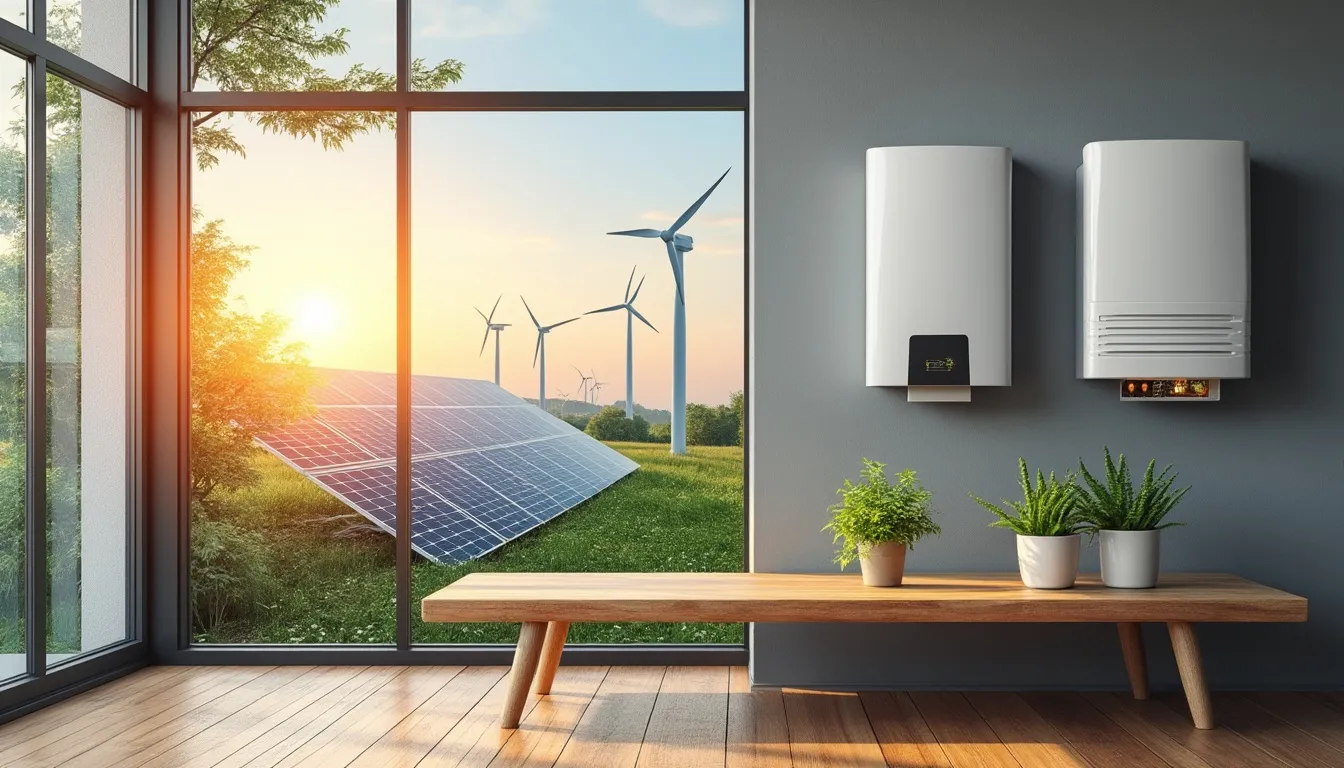
Gas heating: a transition to new solutions?
11 min read
Gas heating, a cornerstone of French households for decades, finds itself at a crossroads today. Under the influence of climate regulations and the emergence of more environmentally friendly technologies, a true energy transition is underway. This article explores the stakes of this change, the available alternatives, and the prospects for households and the gas industry.
The current state of gas heating in France
For several years, natural gas has established itself as the preferred heating solution in about 40% of the French housing stock. With over 11 million homes equipped, this technology attracts due to its ease of use, relatively controlled cost, and compatibility with efficient equipment such as condensing boilers. The density of the distribution network, well established across the entire territory, has greatly contributed to this generalization, providing a continuous and stable supply, unlike more variable energy sources such as oil or wood.

Moreover, gas heating systems are often integrated into new real estate projects and renovations due to their thermal efficiency. The scalability of available solutions, particularly with the introduction of hybrid boilers, has addressed the varied needs of consumers while optimizing the energy performance of homes.
Advantages of gas heating
Gas heating systems offer several notable advantages:
Energy savings: Condensing boilers allow for the recovery of a large part of the heat, thus increasing energy efficiency.
Simple installation: Compatibility with the existing gas network facilitates installation in most homes.
Reliability and comfort: Provides constant and comfortable heat, appreciated by many households.
Controlled cost: Compared to some alternatives such as heat pumps, the upfront cost remains more affordable.
However, despite these advantages, the energy context is evolving rapidly, highlighting the limitations of gas heating, particularly in terms of environmental impact.
Type of Heating | Percentage of Use in France | Main Advantages | Disadvantages |
|---|---|---|---|
Natural Gas | 40% | Energy efficiency, Simple installation | CO₂ emissions, Dependence on fossil fuels |
Oil | 15% | Good thermal performance | High CO₂ emissions, Fluctuating costs |
Electric (Heat pump) | 20% | Low CO₂ emissions, Energy savings | High initial cost, Dependence on electricity |
Biomass | 10% | Renewable energy, Waste reduction | Regular maintenance, Need for storage space |
Solar | 15% | Unlimited energy, Lower long-term cost | Dependence on weather conditions, Initial investment |
The gas distribution network, historically robust and reliable, is beginning to feel the pressures of new energy policies aimed at reducing greenhouse gas emissions. Consumers are increasingly sensitive to environmental issues, and the demand for more sustainable heating solutions continues to grow.
Regulations and climate policies affecting gas
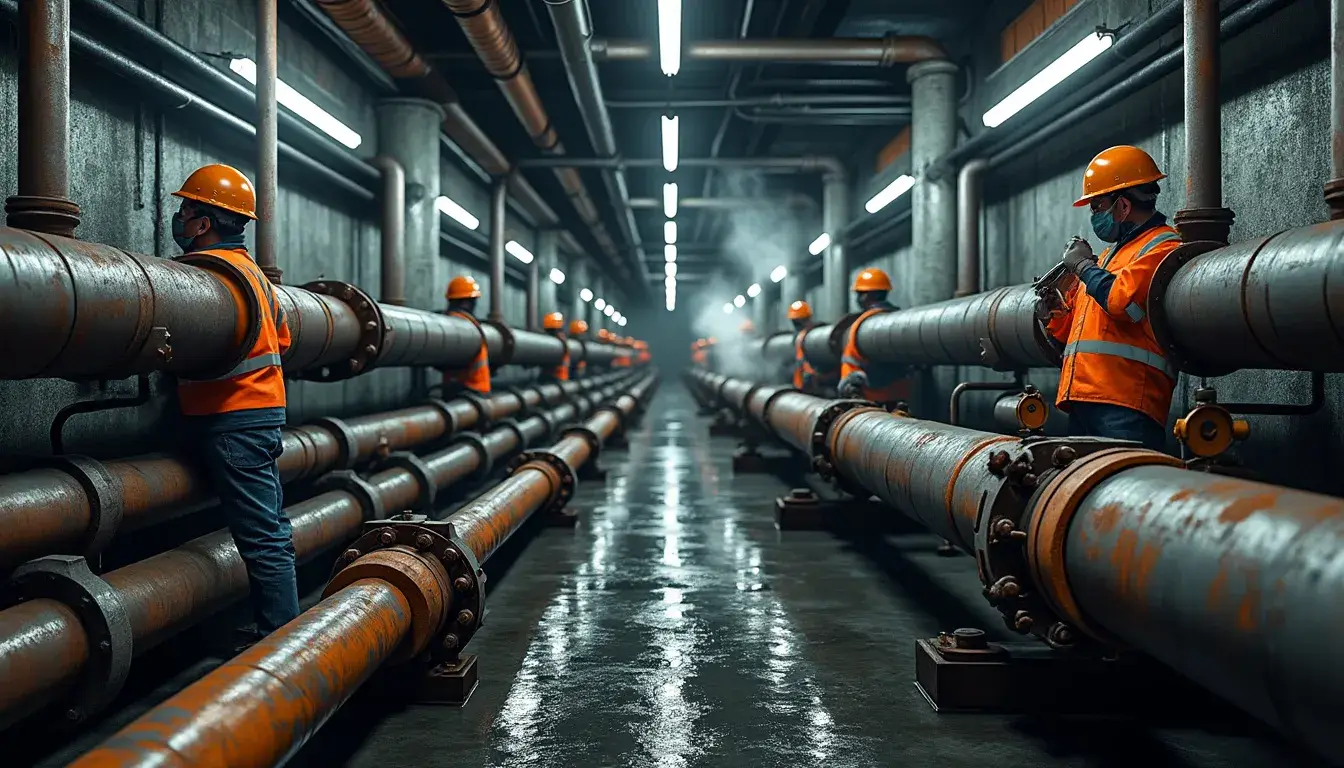
In light of the climate emergency, regulations aimed at reducing the use of fossil fuels have multiplied in France. Since 2022, the installation of gas boilers is prohibited in new constructions subject to the 2020 Environmental Regulation (RE2020). This regulation imposes high standards in terms of energy efficiency and CO₂ emissions, thus promoting the adoption of more environmentally friendly heating systems such as heat pumps or urban heating networks.
These measures are part of a broader energy transition strategy aimed at achieving carbon neutrality by 2050. The government is implementing various financial aids to support this transition, such as tax credits and MaPrimeRénov’, allowing households to benefit from support for energy renovation work.
Additionally, key dates have been set for the gradual prohibition of new gas boilers. By 2026, the state plans to restrict this practice in existing housing, thus encouraging owners to turn to alternative solutions. These measures are complemented by local initiatives aimed at promoting electrification and energy efficiency in buildings.
Main regulations
Prohibition of gas boilers in new constructions: Application of RE2020 since 2022.
Carbon neutrality goal: Drastic reduction of greenhouse gas emissions by 2050.
Financial aids: MaPrimeRénov’, tax credits, and local subsidies.
Encouragement of renewable energies: Prioritization of heat pumps, geothermal energy, and biomass.
Future restrictions: Gradual prohibition of gas installations in major renovations.
Regulation | Year of Entry into Force | Main Impact |
|---|---|---|
RE2020 | 2022 | Prohibition of gas boilers in new constructions |
Carbon Neutrality | 2050 | Reduction of CO₂ emissions by 13% |
MaPrimeRénov’ | Since 2020 | Financial support for energy renovation |
Gradual prohibition | 2026 | Restrictions on gas installations in existing housing |
These regulations directly impact the gas heating market and strongly encourage a energy transition towards more sustainable alternatives. This also creates opportunities for industry professionals, such as Paul Leclerc, to specialize in new heating technologies and offer solutions tailored to the current needs of clients.
Emerging alternatives to natural gas
Facing increasing restrictions on the use of natural gas, several energy alternatives are gaining popularity. Among these, the heat pump stands out as an effective and adaptable solution, particularly in well-insulated homes. Powered by electricity, it allows for significant energy savings while reducing CO₂ emissions.
Geothermal energy is another promising option, exploiting heat from the ground to warm homes. This technology ensures high energy efficiency and low environmental impact, although it requires a higher initial investment and specific geological conditions.
Wood heating, via stoves or pellet boilers, is also part of this energy transition dynamic. Utilizing a renewable energy source, biomass offers an interesting alternative, particularly in rural areas or homes with adequate storage space.
Finally, solar thermal represents a complementary solution, particularly effective when coupled with other heating systems to optimize heat recovery and maximize the energy efficiency of installations.
Comparison of main alternatives
Heat pump: Energy savings, low CO₂ emissions, moderate initial cost.
Geothermal energy: Very high efficiency, sustainable, high initial investment.
Wood heating: Renewable energy, low operating cost, requires storage space.
Solar thermal: Unlimited energy, modular installation, dependence on weather conditions.
Biomass: Waste reduction, renewable source, regular maintenance required.
Alternative | Advantages | Disadvantages | Initial Cost |
|---|---|---|---|
Heat pump | Energy savings, low CO₂ emissions | Dependence on electricity, moderate initial cost | Medium |
Geothermal energy | Very high efficiency, sustainable | High initial investment, geological conditions | High |
Wood heating | Renewable energy, low operating cost | Need for storage space, regular maintenance | Medium |
Solar thermal | Unlimited energy, modular installation | Dependence on weather conditions | High |
Biomass | Waste reduction, renewable | Regular maintenance required | Medium |
Among these alternatives, some benefit from subsidies and financial aids, thus facilitating their adoption. Government initiatives, such as financial aids for ecological heating solutions, play a crucial role in promoting these technologies. These diverse options allow households to choose the solution best suited to their needs and budget, while contributing to reducing their carbon footprint.
The challenges of the energy transition for households
The energy transition towards more sustainable heating systems represents a major challenge for many households. The financial investment required to replace a gas boiler with an alternative solution, such as a heat pump, can range between 10,000 and 15,000 euros. Although aid mechanisms such as MaPrimeRénov’ alleviate this cost, financing remains a barrier for some homeowners.
Moreover, not all homes are equipped to accommodate these new technologies. Insulation constraints, the configuration of homes, or the lack of space can complicate the installation of alternative systems. For example, a heat pump requires optimal insulation to operate efficiently, which is not the case in many older homes.
Main obstacles encountered
High initial cost: Significant investment for the installation of new technologies.
Compatibility of homes: Some buildings, notably older ones, are not adapted to new heating solutions.
Complexity of work: Energy renovations requiring structural modifications can be cumbersome.
Lack of information: Difficulty in learning about the best options available and financial aids.
Social equity: Risk of widening the energy divide between households with access to resources for renovation and those who do not.
Obstacle | Description | Impact on the Transition |
|---|---|---|
Initial cost | High level of investment for new installations | Delays adoption of green technologies |
Compatibility | Technical limits of older buildings | Hinders energy modernization |
Complexity of work | Needs for structural work for installation | Increases costs and timelines |
Lack of information | Difficulty accessing necessary knowledge | Makes owners hesitant |
Social equity | Inequities in access to renovation resources | Creates an energy divide |
To overcome these challenges, it is essential to raise greater awareness among households about the benefits of new technologies and to simplify access to financial aids. Initiatives such as tax credits for energy transition play a decisive role in facilitating this transition. Additionally, improving home insulation and modernizing infrastructure allow for maximizing the efficiency of new heating solutions.
The future of the gas industry and prospects
The natural gas sector is at a pivotal turning point, facing the need to adapt to a context of energy transition. Major market players, such as GRDF, the gas distribution network manager, advocate for a gradual transition to green gas or biomethane. This alternative aims to maintain part of the gas network while significantly reducing its carbon footprint. However, the production of green gas remains limited, and the energy priorities of the industry, particularly in the industrial and transport sectors, may restrict its availability for residential use.
At the same time, boiler manufacturers are innovating by developing hybrid models capable of switching between gas and electricity, thus offering greater flexibility to consumers. These hybrid boilers combine the advantages of traditional gas systems with the performance of electric technologies, allowing for a reduction in emissions while maintaining thermal comfort.
Industry initiatives
Green gas: Development of biomethane for cleaner supply.
Hybrid boilers: Gas-electric combination for better energy efficiency.
Infrastructure modernization: Adapting the distribution network to accommodate new technologies.
Research and Development: Investments in heat recovery technologies and innovative thermal systems.
Strategic partnerships: Collaboration with other sectors to integrate green gas into energy value chains.
Initiative | Objective | Advantages | Challenges |
|---|---|---|---|
Green gas | Reduce the carbon footprint of natural gas | Less CO₂ emissions, maintain existing network | Limited production, high cost |
Hybrid boilers | Provide energy flexibility | Reduction of emissions, adaptation to needs | Technical complexity, development cost |
Infrastructure modernization | Adapt the network to new technologies | Improvement in efficiency, integration of renewables | Massive investments required |
Research and Development | Innovate in heating technologies | New energy solutions, competitiveness | Time and significant resources required |
Strategic partnerships | Integrate green gas into the energy economy | Synergies between sectors, collaborative innovation | Complex coordination, mutual dependence |
Despite the industry’s efforts, the prospect of a decline in gas use in residential settings is increasingly realistic. Electrification, energy sobriety, and efficiency are now priorities. Some experts are already proposing to plan the phase-out of gas heating similarly to what was done for oil, with installation prohibitions starting from specific dates.
In summary, the future of natural gas in the residential sector appears to be limited to auxiliary uses or specific areas where viable alternatives are not yet available. This evolution fits within a global trend of transforming the French housing stock, oriented towards a new era of more frugal and sustainable housing.
Towards a new heating map
The gradual end of gas heating does not mean its total disappearance, but a profound transformation of the residential energy sector. Gas may remain a viable option in certain specific situations, such as poorly insulated buildings or un-electrified areas. However, its role will likely be reduced to auxiliary functions or specific uses where alternatives are not yet sufficiently developed.
This reorganization fits within a broader trend of thermal renovation and improvement of housing insulation. Energy efficiency becomes the watchword, with a focus on reducing energy consumption and optimizing heating systems. Emphasis is placed on heat recovery and the use of innovative thermal technologies to maximize the energy performance of buildings.
The new market trends
Enhanced insulation: Better thermal performance of buildings to optimize heating systems.
Hybrid technologies: Integration of multiple energy sources for increased efficiency.
Renewable energies: Increased use of geothermal energy, biomass, and solar.
Smart systems: Use of home automation to manage and optimize energy consumption.
Ecological renovation: Renovation projects aimed at reducing the carbon footprint of homes.
Trend | Description | Impact |
|---|---|---|
Enhanced insulation | Improvement of insulation to reduce heating needs | Reduction of energy consumption, increased comfort |
Hybrid technologies | Combination of multiple heating systems | Energy efficiency, flexibility |
Renewable energies | Increased use of renewable energy sources | Decrease in CO₂ emissions, sustainability |
Smart systems | Automated and optimized management of energy consumption | Improved efficiency, energy savings |
Ecological renovation | Renovation projects aimed at improving energy efficiency | Reduction of carbon footprint, increased property value |
This transformation is also supported by a collective awareness and increased commitment to sustainability. Citizens, now better informed about climate issues, are increasingly willing to invest in environmentally friendly heating solutions.
To navigate this transition, it is essential to be well informed and to benefit from the advice of experts like Paul Leclerc, who assists households in choosing solutions best suited to their needs and budget constraints. By integrating new technologies and optimizing energy performance, households can not only reduce their ecological footprint but also achieve substantial savings in the long term.
FAQ
What are the main alternatives to gas heating in 2025?
The main alternatives include heat pumps, geothermal energy, wood heating, solar thermal, and biomass. Each solution presents specific advantages in terms of energy efficiency and environmental impact.
What are the benefits of hybrid boilers?
Hybrid boilers provide flexibility by combining gas and electricity, allowing for a reduction in CO₂ emissions while maintaining optimal thermal comfort. They adapt to different climate conditions and the energy needs of households.
How to finance the transition to more ecological heating?
Several financial aids are available, such as MaPrimeRénov’, tax credits for the energy transition, and other local subsidies. These mechanisms help reduce the initial cost of ecological installations.
Is green gas a viable solution for residential use?
Green gas, or biomethane, represents an interesting avenue for reducing the carbon footprint of the gas network. However, its production remains limited, and its availability for residential use may be restricted by priority uses in other sectors.
What are the main challenges related to the energy transition of older homes?
Challenges include the high cost of renovations, the compatibility of alternative heating systems with existing infrastructures, and insulation constraints. It is crucial to plan and benefit from expert advice to overcome these hurdles.