Heat storage: how thermal batteries are revolutionizing energy in 2025
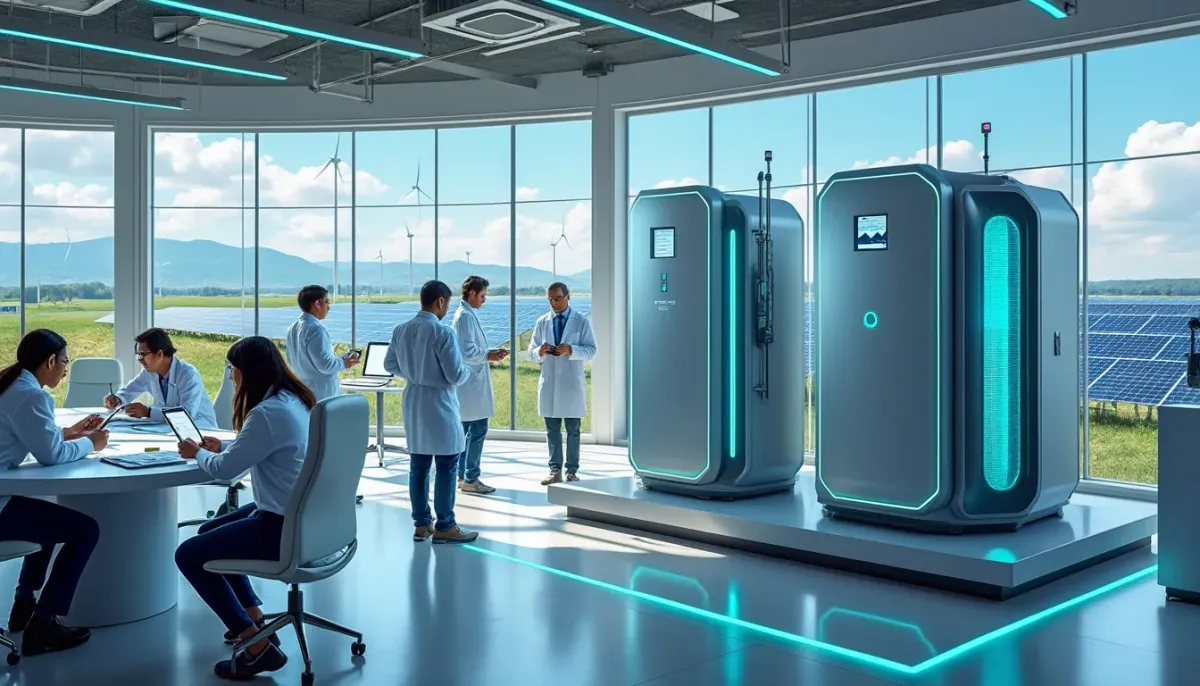
The current climate challenges and the necessity to reduce our energy footprint push us to constantly innovate in the field of energy storage technologies. Among these innovations, thermal batteries emerge as a promising solution for better heat management, particularly by storing energy produced during the warm season for use in the colder months. This article examines the advances in heat storage, the opportunities these technologies offer, and how projects such as those at Eindhoven University of Technology could transform our energy consumption and management by 2025.
A new era for heat storage: thermal batteries
In a world facing increasing energy challenges, the need to optimize our energy consumption becomes paramount. Heat management is often overlooked but represents a significant part of our overall consumption. Whether for heating buildings or producing hot water, optimizing thermal storage is a key solution to achieve maximum energy efficiency.
The concept of thermal storage has gained popularity due to emerging technologies like those developed by the research team at Eindhoven University of Technology, which capitalizes on the use of hydrated salts to store heat. These thermal batteries are designed to capture energy during production peaks, for example on sunny days, and release it when demand is higher. This method addresses the issue of intermittency in renewable energy, a major challenge of the 21st century.
Operation of thermal batteries: a simple yet effective principle
The operation of thermal batteries relies on the use of steam and salts such as strontium chloride. When a solar thermal collector captures energy, it redirects this heat to the battery system. The heat then causes the separation of steam from the salt, allowing energy to be stored without losses as long as these two elements remain separate.
During the discharge phase, the steam re-associates with the salt to form crystals again, thereby releasing the stored heat. This cycle of storage and release is essential to maximize the efficiency and durability of this technology. In terms of performance, initial tests have shown promising results concerning the longevity and compactness of this system, which could operate effectively for over 20 years.
The advantages of thermal batteries for households and businesses
Thermal batteries offer numerous advantages, including:
Durability: These systems provide impressive longevity thanks to durable materials, ensuring a cost-effective long-term investment.
Affordable cost: Their lower production cost compared to traditional battery systems makes this technology particularly attractive for consumers.
Application flexibility: Whether for a single-family home or a multi-unit building, these units can be perfectly tailored to the specific needs of users.
Positive environmental impact: By using readily available materials, thermal batteries contribute to more responsible energy development.
The thermal battery could thus become a central issue in the energy revolution, seamlessly integrating the transition towards cleaner and renewable energy sources.
Innovative projects on the market: towards practical applications
As research on thermal batteries develops, several pilot projects are planned by 2025 to test these technologies in the field. One of these projects aims to deploy installations in homes in Eindhoven, Netherlands, Nice, France, and Gdansk, Poland. These tests will seek to verify the effectiveness of the systems and their acceptance by end users.
The project leader, Olaf Adan, and his team expect that these new thermal batteries will meet the heating and hot water production needs of modern European households, especially during times of high demand. The anticipated results of these trials promise to provide valuable insights into the future of this type of technology and its integration into our current energy systems.
A European collaboration to maximize results
To ensure the success of these projects, a European collaboration is essential. By sharing knowledge and best practices among different countries, researchers hope to optimize the development of better smart storage technologies. This includes joint funding for research, the creation of exchange platforms, and the establishment of common standards to ensure the quality of installations.
Cooperation between research teams and private companies also plays a key role. Brands like Thermagen and ChaleurTech are at the forefront of exploring the technical and commercial aspects of these solutions, helping to transform thermal energy into a major asset for the energy transition.
The challenges of integrating thermal storage technologies
Despite the promises offered by thermal batteries, several challenges remain for their integration into existing energy networks. One of the main obstacles concerns the need to modernize infrastructure. Electric grids must be adapted to efficiently integrate new energy sources as well as thermal storage systems.
It is crucial to develop technologies like EnergiX and ChauffeStock, which allow for better energy flow management, but also to study the environmental impacts related to the production and management of new thermal storage technologies.
Solutions to overcome barriers to adoption
To ensure successful adoption of smart storage technologies, several measures can be taken:
Education and awareness: It is essential to inform consumers and energy professionals about the benefits and operation of these technologies.
Government subsidies: Financial support policies can encourage the use of thermal batteries by reducing initial installation costs.
Clear standards and regulations: Establishing standards for installations can increase investor and user confidence.
These solutions will help ensure that the transition to more sustainable energy systems occurs smoothly and effectively.
A promising future for heat storage: beyond the challenges
Thermal batteries represent a potential turning point in how we manage thermal energy. With pilot projects in several European countries, there is a real opportunity to innovate in energy storage, thereby transforming heat management in our homes and businesses. The economic, social, and environmental benefits offered by these technologies could revolutionize our approach to energy consumption.
It is imperative that industry players, whether researchers, governments, or companies like RevoluStock and SolsticeÉnergie, work together to overcome barriers and make the most of these innovations. The coming years are shaping up to be decisive: the success of these technologies will depend on our ability to adapt and collaborate, to ensure a viable and environmentally friendly energy transition.
FAQ on thermal storage technologies
What are the main applications of thermal batteries?
Thermal batteries can be used for heating buildings, producing sanitary hot water, as well as for industrial applications where heat management is crucial.
How is the thermal battery more advantageous than conventional batteries?
Thermal batteries are often less expensive to produce and maintain than electric batteries, and they offer a longer lifespan thanks to durable materials.
What are recent innovations in thermal storage?
Notable advances include the use of alternative materials such as hydrated salts and integrated management systems to improve storage efficiency.
Which countries are leading research on thermal batteries?
Countries like the Netherlands, France, and Poland are at the forefront of research and pilot projects concerning thermal batteries.
Where can I find information on subsidies for installing thermal batteries?
Local or national governments, as well as various environmental organizations, provide information on available subsidies for installing sustainable energy solutions.