Installation time for a heat pump: how to plan your work effectively?
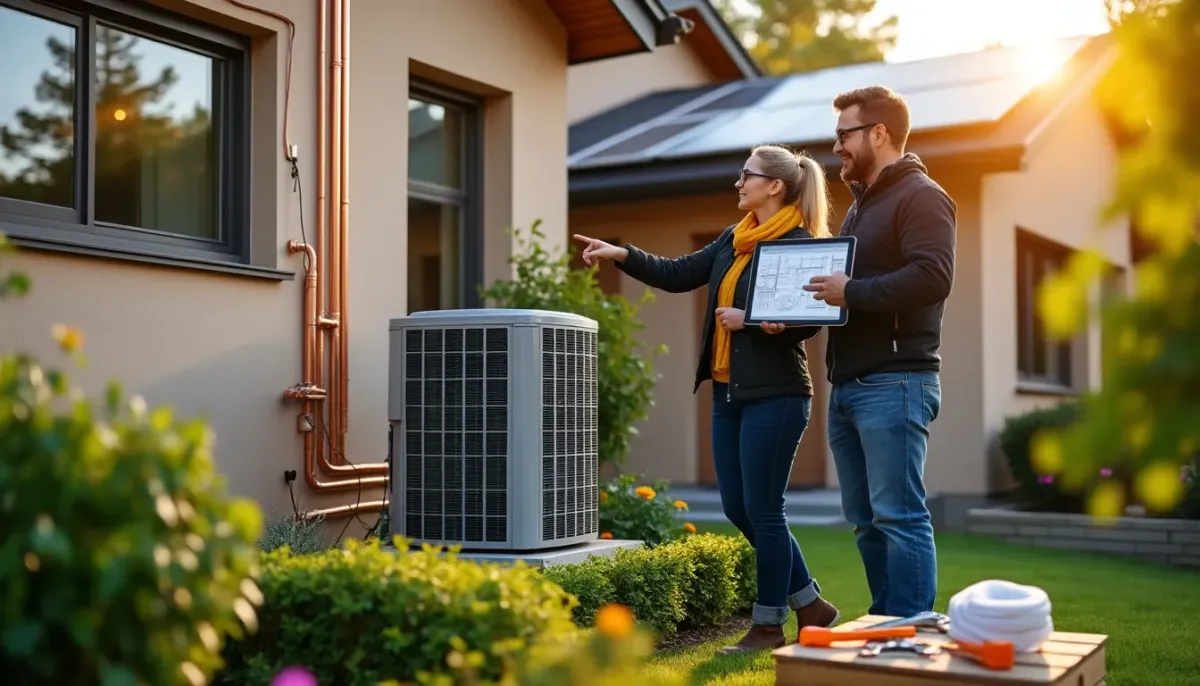
Heat pumps represent an excellent solution for improving the energy efficiency of your home while increasing thermal comfort. However, when installing them, it is essential to carefully plan your project to avoid unforeseen delays. In 2025, understanding the factors influencing the installation timeline will allow you to optimize your experience, particularly by considering the size of your house, the type of equipment chosen, and the administrative procedures to complete. In this article, we will explore the various stages and challenges associated with installing a heat pump, as well as practical tips to ensure an efficient commissioning of your new heating system.
Key steps in the heat pump installation process
Installing a heat pump requires several steps from the initial assessment to the final commissioning. Each of these steps takes a different amount of time and can influence the total duration of your project. Here’s an overview of these steps:
Thermal study: A professional will assess your heating and cooling needs considering the insulation and characteristics of your environment.
Preparation of the quote: After the assessment, a detailed quote will be prepared. This document will include the cost of equipment, labor, and potential financial assistance.
Ordering equipment: Once the quote is approved, the necessary materials must be ordered, which can take time depending on delivery timelines.
On-site installation: This step, which can last from 1 to 5 days, involves setting up the indoor and outdoor units as well as the duct network.
Commissioning: Finally, the commissioning of the system ensures its proper functioning and includes testing and adjustments.
In summary, the installation duration of a heat pump can vary from a few days to several weeks, depending on the complexity of the project and resource availability. Therefore, it is crucial to plan these steps in advance.
Assessing needs and conducting a thermal study
The first crucial step is to assess your heating and cooling needs. The thermal study allows for precise data on the energy performance of your home. A professional will come to your home to analyze elements such as:
The area of your dwelling.
The type of insulation in place.
Geographic characteristics (climate, exposure).
The layout of rooms to determine the number of indoor units needed.
This assessment is essential for choosing a suitable heat pump and for calculating the required sizing. In this context, a poor assessment can lead to suboptimal performance, resulting in higher energy consumption and thermal discomfort.
Selecting equipment suited to your needs
Once the assessment is completed, it is time to choose the heat pump system that best meets your needs. This involves considering several criteria:
Type of heat pump: There are several types, including:
Aerothermal: Captures heat from the air, often quicker to install.
Geothermal: Utilizes heat from the ground, requires drilling.
Aquathermal: Exploits energy from water tables.
Sizing: Correct sizing is essential to ensure efficiency and thermal comfort.
Materials and technologies: Ensure you choose equipment from recognized brands such as Daikin, Mitsubishi, or Atlantic.
An experienced professional will guide you toward a model that combines quality and energy efficiency. A well-informed choice of your equipment will also allow you to optimize your financial assistance, such as the zero-interest eco-loan.
Administrative procedures to consider for a successful installation
Before starting installation work, it is important to take into account the necessary administrative procedures. Depending on your project configuration, certain permits may be required.
Prior declaration of work: If the installation alters the exterior appearance of your house, you will need to submit a declaration to your town hall. The processing time is generally one month.
Building permit: For larger installations, especially for sensors requiring drilling.
Application for financial assistance: Inquire about the various available subsidies and associated processing times.
In 2025, financial assistance for energy renovations is plentiful and can significantly reduce the cost of your project. Taking the time to fully understand them is ensuring a good return on investment.
Treatment of subsidy and financial assistance requests
Engaging in installation work also involves looking into financial assistance questions. Depending on the type of heat pump installed and the nature of the work, several subsidies may be accessible:
Zero-interest eco-loan: Allows you to finance part of your renovations without interest, provided certain conditions are met.
Energy bonus: Payment after work completion, calculated based on energy savings achieved.
Local aid: Some local authorities offer specific assistance; inquire with your town hall.
It is essential to allow a certain amount of time for processing your aid application, often several months. Therefore, plan these steps in advance to avoid delaying the commissioning of your system.
Installation duration and its influence on planning your work
The time needed for the installation of a heat pump can vary significantly based on several crucial factors. A good project manager will assist you through this stage.
Type of heat pump: Aerothermal heat pumps are generally quicker to install, while geothermal models will require more time due to preparatory work.
Complexity of the installation: More complex installations, such as those with multiple indoor units or connection work, will require additional days.
Quality and availability of professionals: Choosing a recognized installer often facilitates adherence to timelines.
Typically, you can expect an installation time ranging from 1 to 5 days. However, keep in mind that a more complex project can punctuate the process in an unexpected way. That’s why planning ahead is key to avoiding any surprises.
Type of pump | Estimated installation duration |
|---|---|
Aerothermal | 2 to 5 days |
Geothermal | 1 to 2 weeks |
Aquathermal | 1 to 2 weeks |
FAQ on heat pump installation
How long does it take to install a heat pump?
The installation duration depends on the type of heat pump chosen and the complexity of the project, generally between 1 and 5 days.Is it necessary to conduct a thermal study before installation?
Yes, a thermal study is essential to determine your needs and optimize the sizing of the pump.What financial assistance is available for the installation of a heat pump?
You may benefit from eco-loans, energy bonuses, and local aids to finance part of your work.Is it mandatory to go through a professional for the installation?
Although you can technically do it yourself, it is strongly advised to hire a professional to ensure quality work.