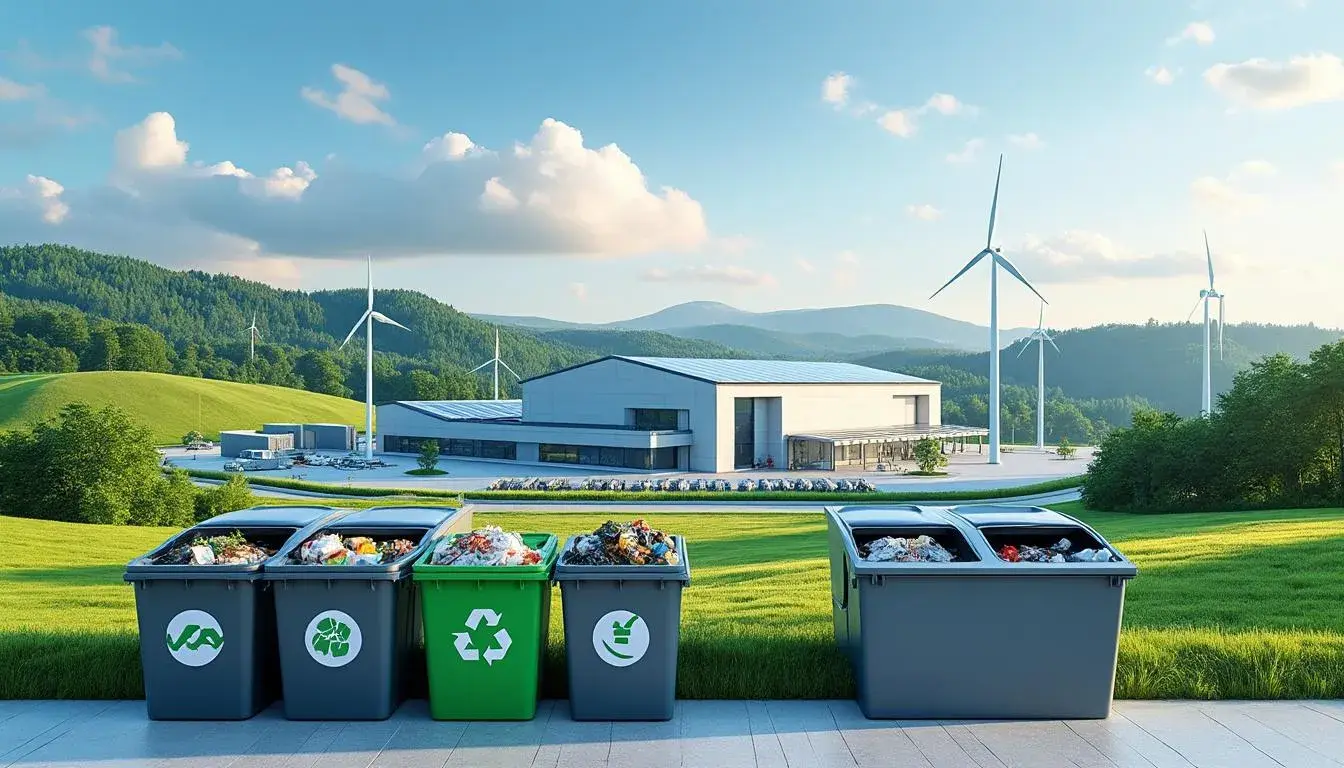
Near Dinan, energy and heating will soon be generated from household waste.
8 min read
The management of household waste is evolving considerably near Dinan, thanks to an innovative project that will transform this waste into a source of energy. By 2027, the waste collected in the area will no longer be just a treatment problem, but a valuable resource to supply urban heating networks. The energy transformation relies on a modernized plant in Taden, which is already establishing itself as a key regional player. By combining recycling, energy recovery, and sustainability, this project marks a major advance for the environment, while providing a local response to energy production and building heating.
Modernization of the Taden Energy Recovery Plant: A Turning Point for Local Household Waste Management
The construction project launched in June 2025 at the Taden site represents a major step in the sustainable management of household waste from the 154 municipalities spread across Côtes-d’Armor and Ille-et-Vilaine. Until now, the plant processed around 106,400 tons of household waste per year, to which 10,000 tons of bulky waste from recycling centers were added. However, this capacity was insufficient to fully absorb the produced volumes, forcing the union to transport some waste to external facilities, particularly during the summer period.
With the expansion and modernization, the treatment capacity will increase to 150,000 tons of waste per year. This increase will be made possible by two incineration lines: a complete renovation of an existing furnace and the construction of a new high-performance furnace. This double-line system will allow for efficient and optimal treatment, ensuring maximum energy yield.
The total budget allocated to this equipment amounts to 132 million euros, demonstrating the strong commitment of local authorities and the industrial partner Suez. This funding covers not only physical infrastructures but also the implementation of technologies capable of reducing environmental impacts, such as dry flue gas treatment. This method significantly limits air emissions, aiming for "zero discharge" operation for water and strict control of atmospheric emissions.
Beyond the technical aspects, this project is also part of an important social and territorial dynamic. The public service delegation signed for 20 years includes a professional integration component and promotes collaborations with local structures. Educational visits are planned to raise awareness among residents about the challenges of recycling and energy recovery, which reinforces cohesion and citizen ownership of the project.
Feature | Before modernization | After modernization (planned 2027) |
|---|---|---|
Waste treatment capacity (tons/year) | 106,400 + 10,000 bulky waste | 150,000 tons |
Number of furnaces | 1 (old) | 1 renovated + 1 new |
Investment | – | 132 million euros |
Annual electricity production | – | Up to 39 GWh |
Personnel employed | 28 people | Forecasted growth |
This project, aligned with national energy transition guidelines, also responds to the need to reduce energy imports and optimize local resources in a circular economy approach. More information on the subject is available in this detailed article In 2027, heat in pipes in the Dinan Agglomeration area.
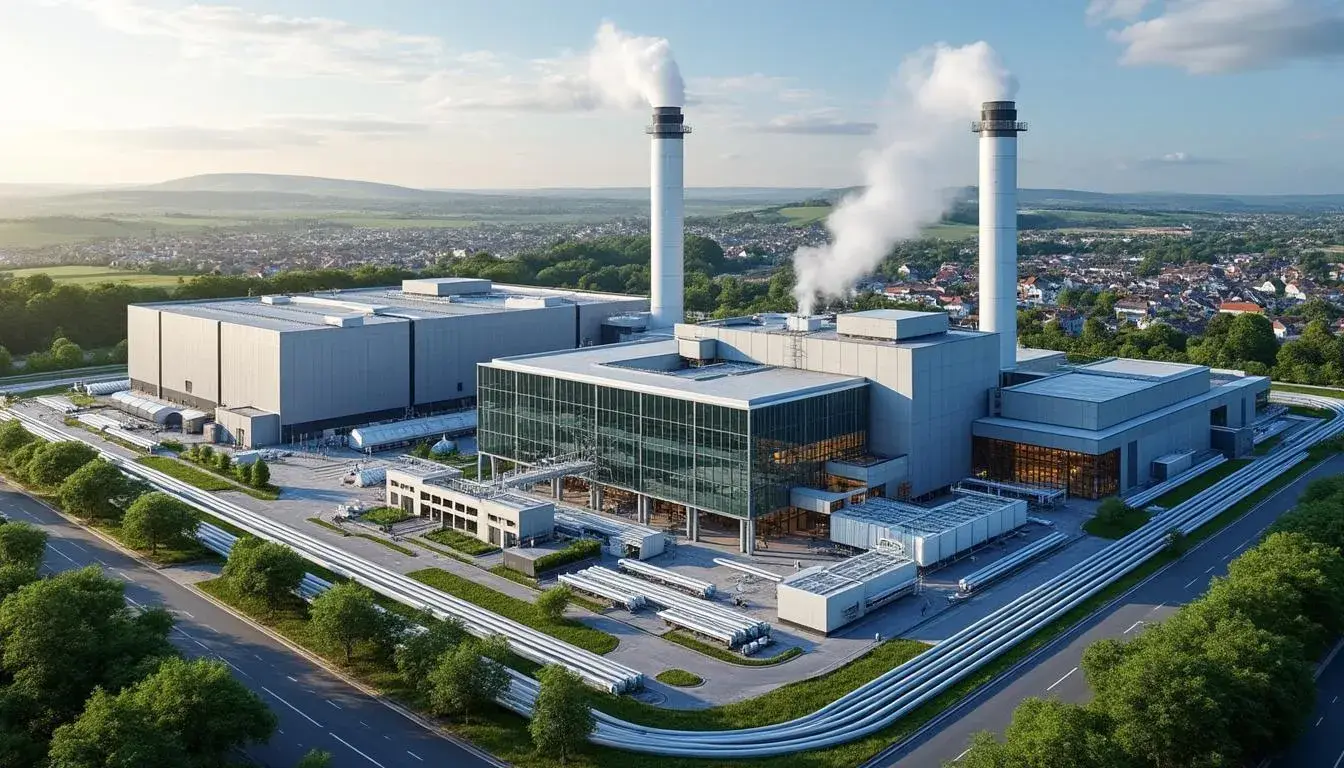
Energy Production and Heating Network Powered by Household Waste in Dinan
The transformation of household waste into energy goes beyond their treatment. One of the key objectives of the project around Dinan is to utilize this resource to supply a high-performance and sustainable urban heating network. This network, scheduled for commissioning by 2027, will mainly serve Dinan and Taden, as well as other local public and private infrastructures.
This innovative installation will integrate the energy produced by the Energy Recovery Unit (UVE) on site. Among the major advantages is the provision of heat derived from household biomass, gradually replacing traditional fossil fuels. The urban heating thus relies on a local source, limiting greenhouse gas emissions and improving air quality in the area.
Heating networks constitute a robust and reliable technical solution, requiring a tailored construction installation that includes thermal pipelines, delivery points, and management systems. For individuals or professionals, connecting to this type of network is often a guarantee of secure heating, less maintenance-intensive, and at the forefront of sustainability, according to field experience feedback.
Here is an overview of the main benefits highlighted:
Use of renewable energy derived from household waste, promoting the circular economy.
Significant reduction in pollutant emissions thanks to efficient flue gas treatment.
Support for local energy transition, with a stabilized and controlled supply source.
Improvement in comfort and reliability of heating installations in connected buildings.
Access to financial aid and grants to facilitate the adoption of urban network heating systems (territorial heat fund of Dinan Agglomeration).
The use of this alternative energy fits perfectly into strategies aimed at combating climate change. Local industrial partners, such as NGE, Igeo, and BreizhEnergie, have been selected to finance, construct, and operate the urban network. This technical alliance ensures quality execution throughout the operational lifecycle (see details of the concession grouping).
Element | Description | Advantages |
|---|---|---|
Energy source | Energy recovery from household waste | Renewable, circular economy |
Installed power | 15.5 MW on two sites | Effective management of local needs |
Served areas | Dinan, Taden, Quévert, and others | Optimal local coverage |
Technologies used | Dry flue gas treatment, urban heating | Less emissions, reliability |
Investment | 22 million euros for the heating network | Large-scale project in detail |
For anyone wishing to engage in a sustainable approach at their level, considering heating systems that use biomass derived from household waste represents a credible and efficient alternative. Autonomous heating, especially in constructions like tiny houses, can also benefit from these advancements if they are adapted to local structures (autonomous heating tiny house).
Environmental Impact of the Energy Recovery Project in Dinan: Towards an Exemplary Circular Economy
This vast construction project is part of a strong circular economy logic, where household waste becomes a renewable resource for the community. Beyond simple treatment, the objective is to reduce the ecological footprint while creating a virtuous circle around waste management and energy production.
Reducing pollutant emissions involves several technical innovations. The dry flue gas treatment implemented in the new plant is a notable advance. It guarantees controlled and minimal emissions, thus contributing to improved air quality. The zero water discharge operation on the network also demonstrates a strong commitment to preserving natural resources.
The project also aims to minimize external waste transport by expanding local capacity. Thus, maintaining management within the territory avoids energy overconsumption related to heavy hauls and reduces logistical costs.
The economic benefits of this development are also noteworthy. By generating electricity and heating from waste, the territory bordering Dinan reduces its dependence on fossil energies that are often imported, reinforcing its energy resilience. This fosters the creation of local jobs, particularly in maintenance, recycling, and network management.
Technical innovations to reduce waste and emissions
Local dynamics to strengthen cooperation among unions
Reduction in waste transport journeys
Valuation of waste as a renewable energy resource
Positive impacts on air and water quality
Environmental indicator | Current situation | Project objective 2027 |
|---|---|---|
Atmospheric emissions | Variable depending on installation | Dry treatment to limit as much as possible |
Water consumption | Average consumption | Zero water discharge on the network |
Average distance waste transport | > 10 km sometimes | Significant reduction through local management |
Carbon emissions | Moderate, related to transport and treatment | Reduction through local recovery and biomass |
Creation of local jobs | 28 currently | Favorable expected evolution |
Moreover, the emphasis placed on social aspects, with hours of insertion and local contracts awarded, contributes to harmonious development, balancing energy transition and social responsibility. Find additional information on the societal and environmental commitment in this project through this link Around Dinan, businesses and local authorities will have grants to heat greener.
Regional Synergies and Resource Sharing for Better Household Waste Recovery
A fundamental aspect of this project is the close cooperation between various waste management unions in Brittany. Rather than multiply infrastructures in a fragile territory, the strategic choice is orientated towards pooling capacities through an enlarged and modernized plant capable of accommodating a growing volume of household and bulky waste.
This approach avoids setting up competing new plants, fosters skill concentration, and optimizes operating costs. It also ensures a balanced distribution of flows, especially in the face of the gradual closure of older sites, such as that of Planguenoual, which alters the local landscape.
The established partnerships aim for true territorial solidarity, where delegation contracts allow the coordination of interventions and waste treatment at the regional level. This operation is part of a global environmental dynamic, with the ambition to position Brittany as an exemplary model in terms of circular economy.
Pooling tools between unions
Cost and technical means optimization
Balanced distribution of waste flows
Coordinated management of old site closures
Sustainable development fostered by cooperation
Partner | Role | Advantages |
|---|---|---|
SMPRB (Syndicat mixte Pays de Rance & Baie) | Main manager of the Taden site | Territorial management, local integration |
Suez (Dewen subsidiary) | Industrial construction and operation | Technical expertise, modernization |
Group NGE, Igeo, BreizhEnergie | Funding, construction, and operation of the heating network | Regional synergies, quality assurance |
Neighboring union partners | Supplementary waste supply | Economies of scale |
Local authorities | Political and financial support | Sustainable commitment |
This regional coordination is to be closely monitored, as it heralds a model of effectiveness and sustainability that could inspire other territories in terms of energy and environmental management. Learn more about the involvement of each actor here: NGE, Igeo, BreizhEnergie concessionaires of the network in Dinan.
Advice and Perspectives for Optimizing the Use of Heating from Household Waste in Local Homes
Using energy produced from household waste offers a major advantage in terms of sustainability, but it remains essential to optimize daily heating use to maximize its benefits. Having an efficient installation, well-maintained, and integrating responsible energy practices helps limit losses and reduce bills.
As a plumbing professional, Paul Leclerc recommends several key steps to consider:
Assessment of insulation: A good seal of hot water pipes and thermal insulation of walls directly contributes to the performance of heating from the urban network. A well-insulated house requires less energy to be heated.
Regular maintenance of installations: Periodic checking of taps, bleeding of radiators, inspection of circulators ensure optimal functioning and prevent unnecessary overconsumption.
Optimization of regulation systems: Using room thermostats and timers improves comfort while limiting consumption.
Choice of compatible equipment: For new constructions or renovations, integrating a heating system designed to work efficiently with an urban biomass network is crucial (energy renovation and adapted heating).
Information and awareness: Knowing the source of the energy and adopting eco-responsible behaviors daily reinforces the positive impact on the environment.
Adopting these recommendations allows for the best exploitation of this new source of energy near Dinan. Connecting to the urban heating network is a reliable, sustainable solution that meets current standards. If needed, a professional plumber like Paul Leclerc is available to advise, repair, or install suitable equipment to ensure the best service.
Advice | Detail | Benefits |
|---|---|---|
Thermal insulation | Sealing of pipes, insulated walls | Less loss, energy savings |
Maintenance of installations | Bleeding, regular checks | Sustainable performance, reliability |
Regulation and thermostat | Adapted programming | Optimal comfort, reduced consumption |
Compatible material | Certified choice for biomass urban network | Increased energy efficiency |
Eco-responsible actions | Understanding and commitment | Reduced environmental impact |
To further pursue the autonomous approach, some are turning to innovative heating solutions in small habitats, such as tiny houses. These installations require specific design to fully benefit from energy advancements such as biomass (autonomous heating tiny house).