Sustainable heating in Auvergne-Rhône-Alpes: a responsible energy future
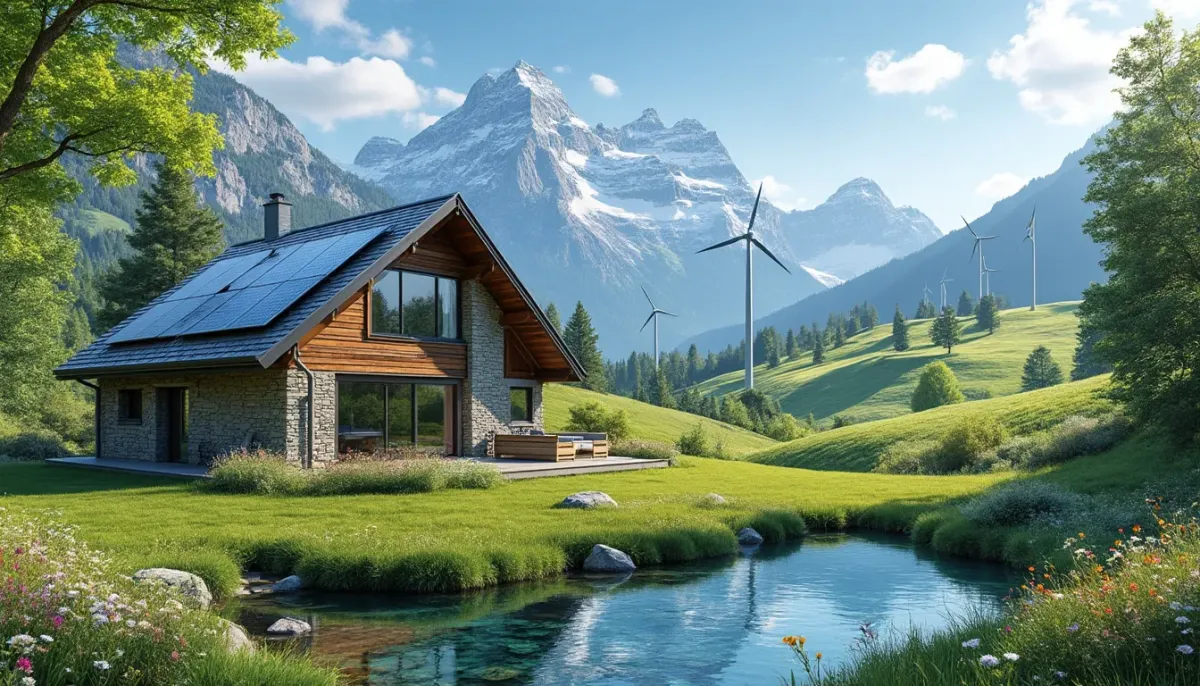
In a world where the climate emergency is becoming increasingly urgent, the Auvergne-Rhône-Alpes region positions itself as a pioneer in energy transition. With its multiple initiatives aimed at promoting sustainable heating, it offers a fascinating glimpse into the possibilities offered by renewable energies. Let us take the time to explore how this region showcases innovative, affordable, and environmentally friendly solutions while remaining aware of economic and social challenges. Let’s follow the path of this change towards a more responsible energy consumption.
Regional initiatives for sustainable heating
Auvergne-Rhône-Alpes is firmly committed to a sustainable energy future through several flagship projects. The DREAL (Regional Directorate for the Environment, Planning and Housing) plays a key role in supporting and implementing a regional roadmap. Launched in 2023, this initiative aims to enrich knowledge about renewable energies, highlighting a strong commitment to the social and solidarity economy, particularly in 2024.
This roadmap engages the region in a necessary transition path, combining infrastructure renovations and the promotion of renewable energies. For example, energy efficiency projects are being implemented to renovate buildings and infrastructures that can significantly reduce energy consumption.
Overview of companies and the energy transition
Entrepreneurs in the construction and public works sectors are becoming aware of their crucial role in this transition. According to reports, the maintenance and renovation activity is experiencing a clear improvement in the region, indicating a return to levels of activity prior to the health crisis. However, the realization of this dynamic is still hindered by supply difficulties in materials. Companies must therefore adapt to this new reality to work effectively.
The establishment of the Eco Energie Tertiaire scheme has also targeted 18% of the establishments subject to this program, representing up to 65% of total energy consumption. Monitoring energy performance is an essential step for systematizing evaluation and necessary corrective actions.
Year | Energy consumption (TWh) | |
|---|---|---|
2022 | 25 | 10 |
2023 | 22 | 15 |
2024 | 20 | 20 |
Efforts in favor of energy renovation
Instruments such as MonSuiviRénov are gaining traction, facilitating the monitoring of energy renovation operations. This innovative scheme allows access to various indicators, including available financial aid and a network of certified RGE (Recognized Guarantor of the Environment) companies. This is an undeniable advantage to help households design their projects clearly and structured.
Certain trends are also emerging, such as the use of local and sustainable materials in construction. The demand for these materials, such as wood, is increasing in Auvergne-Rhône-Alpes, directly linked to a growing environmental awareness.
The challenge of energy renovation: opportunities and barriers
Despite the considerable advances made by the region in sustainable heating, barriers still exist. The study conducted on household behaviors in metropolitan areas such as Clermont, Grenoble, and Lyon reveals various motivations for renovation. On one hand, energy comfort drives households to undertake work, but on the other hand, financial barriers stand in their way.
Motivations for renovation
The main motivations identified for undertaking renovation work include:
Improvement of comfort in the home.
Reduction of energy consumption.
Environmental concerns.
Obstacles to overcome
Nevertheless, various barriers arise, notably:
The costs associated with the completion of work.
The lack of information on available aid.
The administrative complexity of procedures.
Type of barrier | Number of affected households (%) |
|---|---|
Cost of work | 47 % |
Lack of information | 33 % |
Complexity of procedures | 20 % |
The importance of financial aid
In response to these challenges, assistance schemes are being put in place, promoting the use of options such as BioChauffage Rhône-Alpes or other renewable energy solutions. The use of schemes like MaPrimeRénov' has facilitated the improvement of habitat rehabilitation, despite a fluctuating context.
The future prospects for sustainable heating in Auvergne-Rhône-Alpes
Looking towards the future, it is clear that the path laid out by Auvergne-Rhône-Alpes for sustainable heating is still fraught with challenges but also looks inspiring. The evolution of energy costs, which are continually rising, pushes households to explore sustainable long-term solutions. These trends are accompanied by regulatory changes that encourage investments in Ecological Heating 69.
A thriving local dynamic
Energy producers and specialized companies are joining the collective effort, with ambitious district heating projects promoting the use of renewable energies. Think for example of the heating networks that are developing in cities like Clermont-Ferrand or Aurillac, integrating optimal management of local resources.
Standards and labels for a sustainable future
The development of labels such as Flamme Verte allows consumers to navigate more easily among a growing offering. This label ensures the quality and compliance of heating devices while facilitating access to financial aid for households wishing to make investments.
Label | Criteria | Possible financial aid |
|---|---|---|
Flamme Verte | Energy performance and low emissions | Up to €2000 |
European Ecolabel | Reduction of environmental impact | To be determined according to the scheme |
A future to build together
Together, through initiatives such as Avenir Energies, Solaire Auvergne, and ThermoAuvergne, we must contribute to an energy future that respects both the environment and the well-being of citizens. A complete transformation is not always immediate, but the collective efforts of all layers of society are essential to build this desired future.
FAQ
1. What are the best options for sustainable heating in Auvergne-Rhône-Alpes?
The best options include wood heating, heat pumps, and pellet boilers, all having a low environmental impact.
2. What financial aid exists for energy renovations?
The aids include MaPrimeRénov', local subsidies, and tax credits for energy renovation work.
3. How can I monitor my home's energy consumption?
Tools like MonSuiviRénov allow for comprehensive monitoring of your home's energy consumption.
4. What labels should I look for in environmentally friendly heating?
Look for labels such as Flamme Verte or European Ecolabel that guarantee high environmental performance.
5. What are the main barriers to energy renovation?
The costs of work, the lack of information on available aids, and the complexity of procedures are significant barriers.