The future of wood heating in Indre-et-Loire: challenges and perspectives
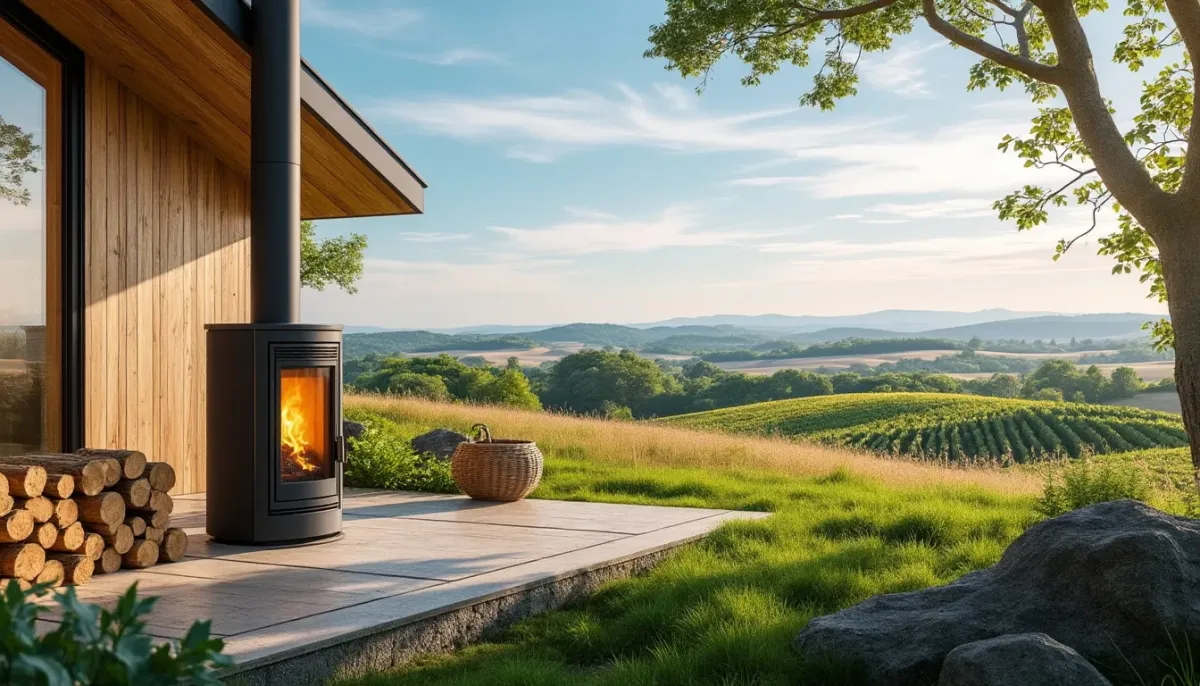
Wood heating, long valued for its authentic and economical aspects, is facing major changes in Indre-et-Loire. As environmental concerns and European standards tighten, the residents of the region are wondering what future lies ahead for this traditional heating method. Between stricter regulations and technological innovations, Indre-et-Loire finds itself at a crossroads in defining its energy future.
The impact of new standards on wood heating
In 2025, European legislation is strengthening to limit the pollutant emissions of wood heating appliances. In Indre-et-Loire, this evolution imposes considerable challenges on the 7 million French households using wood as their primary heating means, the majority of which are in rural areas. Open fireplaces, for example, are particularly targeted due to their inefficiency and environmental impact.
Open fireplaces: a priority target
Open fireplaces represent a major issue in the transition towards a Green Heating. Currently, 45 minutes of using these installations emit as many fine particles as a diesel car traveling 500 km. In comparison, a closed fireplace emits up to two times fewer particles, and a recent wood boiler emits up to 20 times less.
Very high fine particle emissions
Energy efficiency often below 15%
Negative impact on local air quality
These alarming figures are pushing authorities to consider severe restrictions, even a gradual ban on open fireplaces. However, more environmentally friendly alternatives are beginning to multiply, offering viable solutions for homeowners wishing to remain within wood energy.
Wood stoves: towards better energy performance
In the face of new regulations, modern wood stoves, certified EcoWood and labeled 7-star green flame, are gaining popularity. These appliances offer an energy efficiency greater than 70%, far from the less than 15% of traditional open fireplaces. Furthermore, they significantly reduce fine particle emissions, thereby meeting environmental requirements.
Type of appliance | Energy efficiency | Fine particle emissions |
|---|---|---|
Open fireplace | <15% | 2x fine particles of a closed fireplace |
Closed fireplace | 70% | 20x less than an open fireplace |
Recent wood boiler | 80% | Very low |
The adoption of these high-performance stoves is encouraged not only by regulation but also by a growing ecological awareness. Homeowners are encouraged to opt for sustainable solutions, ensuring efficient warmth while respecting the environment.
Technological innovations and quality labels
To ensure a smooth transition to a cleaner Natural Heating, manufacturers are investing in technology and certification. The 7-star green flame label, for example, is the strictest standard in terms of fine particle emissions and energy efficiency. With over 115 brands and 6,500 certified models, consumers now have a wide choice to equip their homes with DurableWood solutions.
7-star green flame: the strictest standard
Over 6,500 certified models
Significant reduction in pollutant emissions
Jean-Baptiste, from Äasgard in Chambray-lès-Tours, emphasizes the trust he places in these devices: “All our models – Scandinavian – have been labeled with 7-star green flame since 2022. We are already complying with the Ecodesign standards of 2022 and 2024. And even Nordic Swan.” This quality assurance allows consumers to make informed and responsible choices.
Quality wood and best practices: keys to success
Beyond the modernization of equipment, using dry wood and adopting good practices are essential for optimizing energy efficiency and reducing harmful emissions. The Agency for Energy Transition (Ademe) emphasizes the importance of these elements for a Wood Energy Indre-et-Loire that respects the environment.
Importance of dry wood for effective heating
Dry wood is essential for clean and efficient combustion. Wood with a moisture content below 20% ensures better energy performance and minimizes fine particle emissions. Ademe recommends adequate storage of wood in a dry and ventilated place to guarantee its quality at the time of use.
More efficient combustion with dry wood
Reduction of fine particle emissions
Better energy performance
By adopting these practices, users can not only extend the lifespan of their devices but also contribute to preserving the local environment. Adhering to EnergyWood recommendations then becomes an essential civic gesture.
Managing air intakes and top-down lighting
An effective management of air intakes is crucial for optimizing combustion and reducing pollutant emissions. Top-down lighting, for example, allows the flue to heat up more quickly, thereby limiting the production of smoke laden with fine particles. These simple gestures can have a significant impact on the overall performance of the appliance.
Practice | Advantages | Impact on emissions |
|---|---|---|
Use of dry wood | More efficient combustion | Reduction of fine particles |
Management of air intakes | Better combustion | Decrease in emissions |
Top-down lighting | Heats the flue quickly | Limits smoke production |
Émilie Machefeux, head of the renewable heat service at Ademe, explains: “A new properly sized equipment for the housing, using well-dried fuel, good management of air intakes, top-down lighting, and good maintenance of the appliance… allow for a reduction in particle emissions.” These recommendations are essential for those wishing to continue using wood as a heating source while adhering to environmental standards.
Regular maintenance for optimal performance
Regular maintenance of wood heating appliances is essential to ensure their effectiveness and extend their lifespan. Periodic cleaning of flues and checking components ensure optimal and safe operation. Moreover, it contributes to maintaining a low level of pollutant emissions, aligned with the objectives of ThermoEnergies.
Cleaning of flues
Checking of components
Optimization of energy efficiency
By following these practices, users can not only reduce their ecological footprint but also achieve long-term savings through better energy efficiency of their installations.
The alternatives to wood heating in Indre-et-Loire
As new standards make wood heating more restrictive, many alternatives are emerging to meet the needs of the residents of Indre-et-Loire. These innovative solutions combine energy performance, environmental respect, and practicality, thus offering viable options to replace or complement Natural Heating with wood.
Wood pellets: an ecological and effective option
Wood pellets represent an interesting alternative to traditional wood. Made from compressed wood residues, they offer cleaner combustion and high energy efficiency. Moreover, pellet boilers are often equipped with advanced technologies allowing precise temperature regulation, ensuring optimal comfort while minimizing pollutant emissions.
Clean and efficient combustion
High energy efficiency
Advanced regulation technologies
Recent models meet the 7-star green flame standards, guaranteeing an environmentally friendly use. This option is increasingly appealing to households in search of DurableWood heating solutions.
Solar heating: a renewable and economical solution
Green Heating is not limited to wood alone. Solar heating is a promising alternative, harnessing solar energy to heat homes. By combining solar thermal panels with storage systems, it is possible to provide constant heat throughout the year, thus reducing dependence on fossil fuels and wood resources.
Type of heating | Advantages | Disadvantages |
|---|---|---|
Wood pellets | Clean combustion, high efficiency | Requires regular supply |
Solar heating | Renewable energy, economical in the long run | Dependent on sunlight, high initial investment |
Heat pump | High energy efficiency, environmentally friendly | High installation cost |
To learn more about the benefits of solar heating, check out this article on solar energy and its potential in the energy transition.
Heat pumps: performance and ecology
Heat pumps are another effective alternative to wood heating. They use energy from air, water, or soil to produce heat, offering exceptional energy efficiency. Besides their effectiveness, heat pumps are quiet, easy to maintain, and can be integrated into various existing heating systems.
High energy performance
Ecological and environmentally friendly
Adaptable to different types of housing
These devices are particularly suitable for regions like Indre-et-Loire, where the climate allows optimal use throughout the year. Additionally, financial incentives and local aid promote their adoption, making these solutions more accessible to homeowners.
Combination of systems for increased efficiency
To maximize energy and environmental benefits, many households choose to combine several heating systems. For example, using a heat pump in conjunction with a pellet stove allows for constant heat while optimizing energy consumption.
Combination | Advantages | Energy impact |
|---|---|---|
Heat pump + pellet stove | Constant heat, energy efficiency | Significant reduction in consumption |
Solar heating + heat pump | Maximizes the use of renewable energies | Optimization of energy performance |
By adopting a hybrid approach, the inhabitants of Indre-et-Loire can enjoy the benefits of each system while reducing their carbon footprint and energy costs.
Financial aid for the energy transition
The transition to more environmentally friendly heating systems is supported by various financial aids and subsidies. These mechanisms facilitate investment in high-performance equipment and encourage the inhabitants of Indre-et-Loire to adopt sustainable energy solutions.
Government subsidies and tax credits
The French government offers several subsidies and tax credits to encourage the installation of Green Heating systems. Among the main aids are the Tax Credit for Energy Transition (CITE) and the zero-interest eco-loan, which cover part of the costs of purchasing and installing ecological equipment.
Tax Credit for Energy Transition (CITE)
Zero-interest eco-loan
Energy savings certificates (CEE)
These aids make investments more accessible and favor faster adoption of ecological technologies, such as certified EnergyWood pellet stoves.
Local and regional aids
In addition to national subsidies, many local and regional authorities in Indre-et-Loire offer specific aids for the energy transition. These financial supports can take the form of direct subsidies, low-interest loans, or aid for energy renovation of buildings.
Type of aid | Description | Eligibility |
|---|---|---|
Local subsidies | Financial aids for the purchase of ecological equipment | Residents of the region |
Low-interest loans | Facilitate investment in high-performance heating systems | Individuals and businesses |
Renovation aids | Support for upgrading existing infrastructures | Property owners |
To benefit from these aids, it is recommended to contact local social services or consult dedicated platforms like Prime Coup de Pouce Chauffage, which centralize information on the various available subsidies.
Tax incentives for renewable energies
The government also encourages the adoption of renewable energies through tax incentives. By investing in DurableWood systems, taxpayers can benefit from significant tax deductions, thus reducing the overall cost of their energy renovation project.
Tax deductions for the installation of ecological systems
Tax reductions for energy renovations
Additional tax credits for technological innovations
These fiscal measures are designed to lighten the financial burden on households and stimulate investment in Green Heating solutions, aligned with the objectives of the energy transition.
Practical tips to optimize wood heating
To get the most out of their wood heating system, the inhabitants of Indre-et-Loire can adopt certain practices and strategies. These tips not only improve energy efficiency, but also extend the lifespan of the equipment and reduce its environmental impact.
Proper sizing of the equipment
Well-sized equipment is crucial to ensure optimal performance and avoid energy waste. It is essential to choose a device suited to the area of your home and your heating needs. Models that are too powerful or insufficient can lead to excessive wood consumption and an increase in pollutant emissions.
Assess the area of the house
Calculate heating needs
Choose a device suited to the demand
To do this, it is recommended to consult a professional such as Systeme Chauffage Maison Bois, who can carry out a personalized study and advise you on the choice of the most suitable equipment.
Thermal insulation and energy efficiency
Improving the thermal insulation of your home is a crucial step to optimize the use of wood heating. Good insulation allows for heat retention inside, thus reducing the need for constant heating and consequently, wood consumption.
Type of insulation | Advantages | Impact on consumption |
|---|---|---|
Wall insulation | Reduction of heat loss | Decrease in wood consumption |
Attic insulation | Improvement of heat retention | Less need for heating |
Window insulation | Minimization of thermal losses | Optimization of energy efficiency |
By investing in good insulation, homeowners can not only reduce their wood consumption but also improve their thermal comfort. Advice and insulation solutions are available on specialized sites like Prime Coup de Pouce Chauffage.
Regular maintenance and fire prevention
Regular maintenance of your wood heating system is essential to ensure its safety and effectiveness. This includes cleaning flues, checking components, and inspecting installations to detect potential anomalies. Furthermore, adopting fire prevention measures is crucial to protecting your home and loved ones.
Periodic cleaning of flues
Inspection of components
Implementation of safety devices
Useful resources on fire prevention and good maintenance practices can be found at Prime Coup de Pouce Chauffage.
FAQ
What are the advantages of modern wood stoves compared to open fireplaces?
Modern wood stoves offer significantly higher energy efficiency, greatly reduce fine particle emissions, and comply with the strictest environmental standards. They allow for cleaner combustion and provide better heating efficiency.
What financial aids are available for installing an efficient wood heating system in Indre-et-Loire?
There are several financial aids, including the Tax Credit for Energy Transition (CITE), the zero-interest eco-loan, as well as local and regional subsidies. These aids can cover part of the costs of purchasing and installing ecological equipment.
How to choose the right wood for effective and ecological heating?
It is essential to use well-dried wood, with a moisture content below 20%. Dry wood ensures more efficient combustion, reduces fine particle emissions, and optimizes the energy efficiency of the appliance.
Are heat pumps a viable alternative to wood heating?
Yes, heat pumps are an effective and ecological alternative. They offer high energy efficiency, are environmentally friendly, and can be integrated into various heating systems. Moreover, they often benefit from financial incentives for their installation.
What are the criteria for choosing a wood stove certified EcoWood?
When choosing a stove certified EcoWood, it is important to check the 7-star green flame label, energy efficiency, fine particle emissions, and the quality of the materials used. Also, opt for recognized brands with solid warranties.