Different Types of Heating
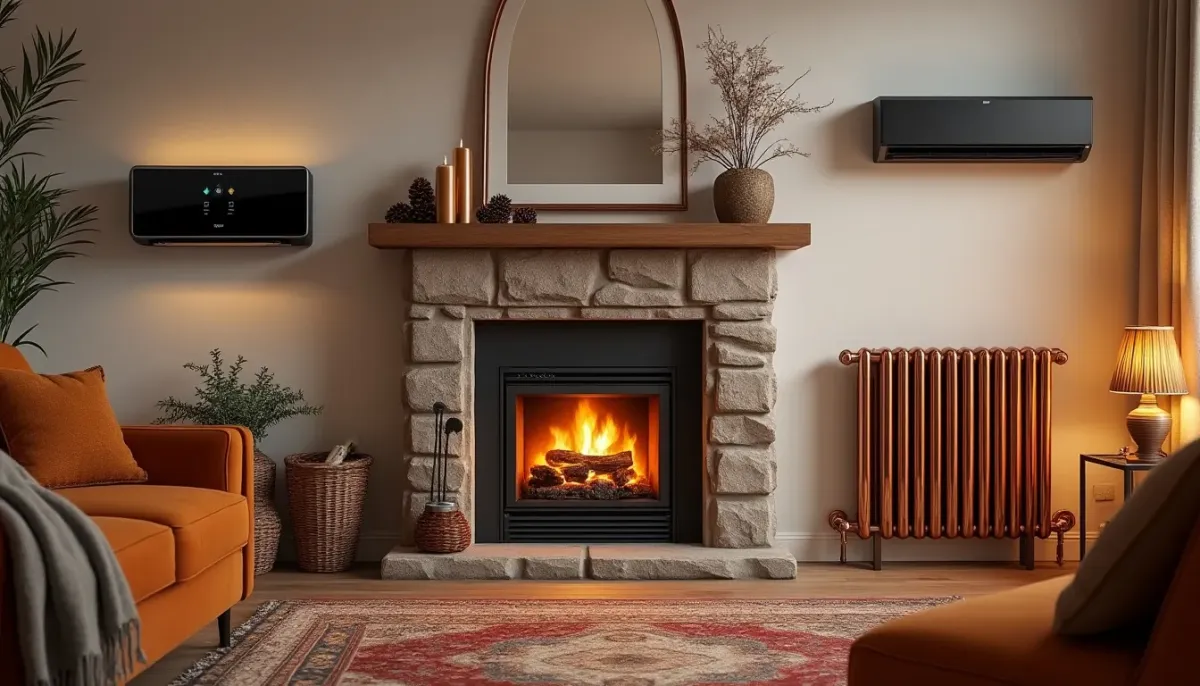
The warmth of a home is essential for comfort, especially during the winter months. Choosing an adequate heating system is therefore crucial. This choice should take into account the different types of heating available, their advantages and disadvantages, as well as their environmental impact. A good understanding of these elements will allow you to make an informed decision to meet your needs. This article thoroughly examines various heating systems, ranging from gas boilers to heat pumps, including biomass heating and solar options. Throughout the sections, you will also discover practical tips and information on energy efficiency, financial matters, and the possible aids available to you.
The different types of heating
In the world of domestic heating, options are multiplying. Each system has unique characteristics shaped by the evolution of technologies and environmental needs. Understanding these systems can help you make a wise choice.
Gas heating
Gas heating remains one of the most popular systems, as it is associated with relatively low operating costs. It primarily uses natural gas to generate heat, thus ensuring high efficiency. Condensing gas boilers represent one of the most effective options due to their ability to recover heat from exhaust gases.
Advantages of gas heating:
High efficiency : Condensing gas boilers often achieve efficiencies over 90%.
Reduced operating costs : Cheaper than oil heating, with optimized consumption.
Relatively low environmental impact : Lower CO2 emissions compared to other systems, such as oil.
Disadvantages:
Dependence on the network : Requires access to natural gas, which may not be available in some areas.
Initial installation : Installation costs can vary significantly.
Electric heating
Electric heating is also gaining popularity, especially in areas far from the gas network. This system is both fast and convenient, providing immediate warmth to rooms.
Advantages:
Simple installation : Easy to install without needing complex ducts.
Broad choice : Many models like electric radiators or infrared heaters.
Disadvantages:
High operating costs : The price of electricity can lead to significant bills.
Not environmentally sustainable : Depending on the sources of electricity generation, it can have a significant environmental impact.
Biomass boilers
Eco-friendly and renewable, biomass boilers use organic materials like wood and pellets to produce heat. These offer a modern alternative to traditional heating and contribute to reducing greenhouse gas emissions.
Heat pump
The heat pump is a versatile system that captures heat from the outside to transfer it inside your home. It is particularly effective in optimizing energy consumption.
Advantages:
Energy efficiency : Can save up to 70% on energy consumption.
Heating/cooling alternation : Usable for both heating in winter and cooling in summer.
Significant financial aids : Many subsidies facilitate its installation.
Disadvantages:
High initial investment cost : Installation requires a significant budget, although it is recouped over the long term.
Sensitive to extreme temperatures : Less effective during severe cold periods.
Solar heating
Solar heating uses sunlight to produce heat, making it one of the most sustainable options. It generally operates using thermal solar panels and can be coupled with other heating systems for optimal results.
Advantages:
Significant energy savings : Can allow up to 80% savings on heating and hot water bills.
Non-polluting : Produces no direct CO2 emissions.
Disadvantages:
Dependence on sunlight : Less effective on cloudy days or during winter.
Initially high costs : Although cost-effective in the long run, installation costs can be discouraging.
Supplementary heating equipment
In addition to primary heating systems, many households resort to supplementary heating equipment. These allow for optimizing comfort without necessarily increasing oil or gas costs.
Forced air heating
Forced air heaters stand out for their ability to quickly distribute heat in a room. Convenient for heating temporary spaces, they are often used in auxiliary scenarios.
Advantages:
Quick heating : Ideal for quickly warming small volumes.
Ease of use : Often portable and requiring little maintenance.
Disadvantages:
High energy consumption : Can lead to high electricity bills if used for prolonged periods.
Environmental impact : Depends on electricity sources, potentially generating indirect emissions.
Electric thermal storage radiators
These radiators store heat during the night, at a reduced rate, to release it during the day. A highly flexible solution for climate control in spaces at a controlled cost.
Advantages:
Potential profitability : Taking advantage of the best rates to reduce the electricity bill.
Flexible and easy to install : No plumbing work needed.
Disadvantages:
Efficiency limitations : Less effective in large or poorly insulated spaces.
Intermittent operation : Provide constant heat but may not be adequate during peak demand times.
Criteria for choosing a heating system
The choice of a heating system should never be taken lightly. Several criteria must be considered to ensure that the investment is profitable and that the chosen system meets your comfort, cost, and efficiency needs.
Criteria | Description |
|---|---|
Initial cost | The purchase and installation price of the heating system. |
Operating costs | The monthly or annual expenses associated with its operation (electricity, gas). |
Energy efficiency | The system's efficiency, expressed in percentage or kWh. |
Environmental impact | The emissions generated and the sustainability of the resources used. |
Comfort | The level of thermal comfort it can provide. |
The elements to consider when choosing a heating system must integrate these dimensions. The cost/efficiency ratio is often a good starting point, but one should not underestimate personal and environmental comfort. If you wish to explore these systems in depth, consider heating comparison tools or consult industry experts. To guide you, several resources are available online, such as heating options for winter 2024 at Effy or the Expertise-Rénovation guide.