Biogas: how to produce your own home heating autonomously?
4 min read
In an increasingly sustainability-oriented world, the search for renewable energy solutions is becoming crucial. Biogas is emerging as a promising alternative, offering the possibility not only to valorize our organic waste but also to produce autonomous and economical heating for homes. In 2025, as environmental issues are more than ever at the heart of concerns, let us understand how domestic biogas production can transform our energy approach.
What is biogas?
Biogas is essentially a mixture of gases, primarily made up of methane and carbon dioxide, produced by the methanization of organic materials. This process, which occurs in the absence of oxygen, can happen naturally, notably in landfills, but it can also be optimized through specialized facilities.
From an ecological point of view, biogas plays an essential role in the transition to renewable energies. By valorizing waste such as food scraps, garden waste, or wastewater sludge, we contribute to reducing our carbon footprint while generating a renewable energy source.
How is biogas formed?
The production of biogas is based on a biological cycle that can be broken down into several key stages:
Hydrolysis: Organic materials are broken down by enzymes into simpler molecules.
Acidogenesis: New microorganisms transform these molecules into organic acids.
Acetogenesis: Other bacteria produce acetates from organic acids.
Methanogenesis: Finally, archaea convert the acetates and other compounds into methane.
Applications of biogas
Once produced, biogas can be used in different ways:
Heat production: By using it as fuel for boilers or stoves.
Electric energy: It can power gas engines to generate electricity.
Fertilizer: The digestate, a residue of methanization, can be used as organic fertilizer.
Producing biogas at home
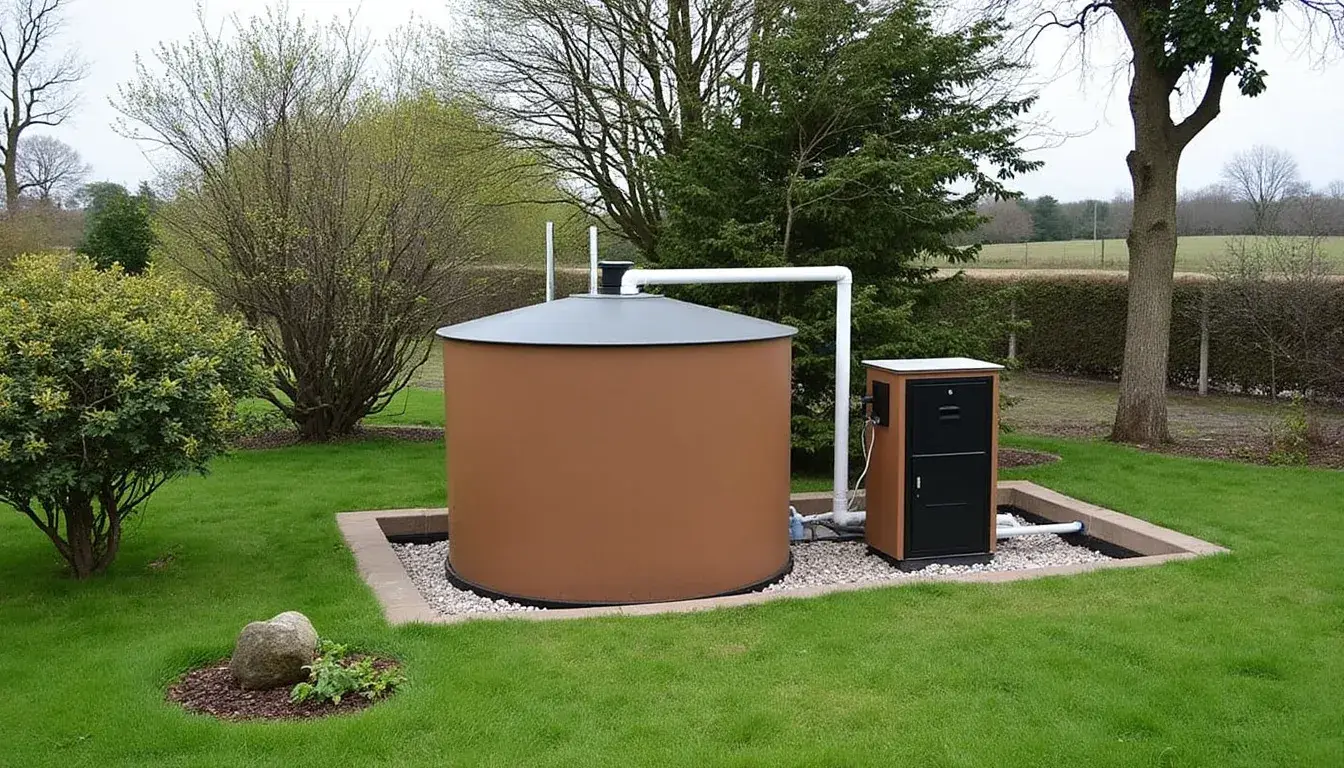
Producing your own biogas at home has become more accessible in recent years. Thanks to a device called a digester, it is now possible to transform organic waste into a valuable source of energy. The method is accessible and tailored to the needs of each household.
It all starts with the preparation of organic waste that can be easily collected daily. Here are the main steps to carry out biogas production at home:
Gather the waste: Collect your food scraps, mowed grass, and other biodegradable waste.
Mix with water: Create an appropriate consistency to facilitate fermentation.
Load the digester: Introduce the mixture into the digester, a device designed to optimize biogas production.
Control the conditions: Maintain a favorable temperature and environment for the methanization process.
This ecosystem will not only allow you to reduce your waste but also to enjoy energy autonomy in your home while participating in a circular economy where waste is valorized.
The necessary equipment
To set up a biogas production system at home, here is a list of important equipment:
A hermetic digester for fermentation.
Temperature measuring tools to control fermentation conditions.
Biogas collection pipes.
A biogas utilization system (such as a burner or a water heater).
The advantages and disadvantages of biogas
The production of biogas at home presents many undeniable advantages, but it is not without challenges. Here is an overview of the positive and negative aspects to consider:
Advantages | Disadvantages |
|---|---|
Waste reduction: Decrease the volume of organic waste sent to landfills. | Initial cost: Investments for the system can be high. |
Renewable energy source: Enjoy economical and ecological heating. | Technical management: Learning is necessary to master the system. |
Contribution to ecology: Reduction of greenhouse gas emissions. | Variable quality: Biogas production can depend on the organic materials used. |
Assessing profitability
Investing in a biogas production system may seem costly, but several factors can offset these investments. It is essential to conduct a thorough calculation considering savings on energy bills and available subsidies. In 2025, government grants for renewable energies further enhance the attractiveness of this type of project.
The role of biogas in the energy transition
In a context where the energy transition is vital, biogas occupies a central place. By integrating this tool into existing heating systems, we can reduce our dependence on fossil fuels while providing an innovative solution for waste valorization.
Methanization in the service of ecology
Waste valorization through methanization promotes a sustainable and environmentally friendly approach. By reducing organic waste, this technique contributes to better resource management and the development of a more ecological society.
Encouraging energy autonomy
Producing biogas at home enhances energy autonomy. Each household can thus become an actor in its energy consumption, participating in both the fight against climate change and the reduction of energy expenses.
Initiatives to promote methanization
Diverse initiatives are emerging, fostering the creation of local circuits and strengthening the emergence of a more responsible society. These projects include awareness programs, training on methanization, and the expansion of waste treatment infrastructures.
FAQ on biogas production
1. How much waste should I gather to produce biogas?
The amount of waste depends on the chosen digester model, but in general, a household can produce biogas with a few kilograms of organic waste per week.
2. What type of waste is most suitable for methanization?
Food waste, vegetable peels, and garden waste are ideal. Avoid fats and oils to not disrupt the process.
3. Is biogas production legal at home?
In France, the production of biogas at home is regulated. Therefore, it is essential to consult local standards and comply with installation regulations.
4. How long does it take to start seeing results?
In general, the methanization process can take between 2 to 8 weeks before biogas is produced and usable.
5. Can I use biogas to power my boiler?
Yes, by properly purifying it, biogas can be used in suitable boilers to provide efficient and ecological heating.