Heating savings: 10 daily actions to reduce your bill
3 min read
As the end-of-year holidays approach, the skyrocketing energy prices remind us of the importance of adjusting our consumption habits. The twinkling lights, the delicious dishes that cook for hours, and the heating system running at full blast: our electricity consumption often skyrockets during this period. However, by adopting a few simple habits, it is possible to significantly reduce our electricity and heating bills. Let’s review these daily gestures that not only lighten our budget but also promote a sustainable heating.
1. Choose energy-efficient lighting
During the festivities, lighting is a must. However, this should not come at the cost of our energy consumption. Did you know that incandescent bulbs consume up to ten times more energy than LED models? By opting for the latter, you can create a festive atmosphere while keeping your budget in check. Here are some tips to optimize your lighting during the holidays:
Favor LED light strings that consume less.
Turn off the lights when the house is empty.
Use a timer to schedule the lighting of your outdoor decorations.

Impact of cooking on consumption
During the festive season, cooking also generates a high electricity consumption. Between holiday dishes and desserts, minimizing our impact is essential. To achieve this, you can:
Cook multiple dishes at the same time to optimize oven use.
Limit door openings to keep heat inside.
Use the electric kettle to heat water more quickly and economically than on the stove.
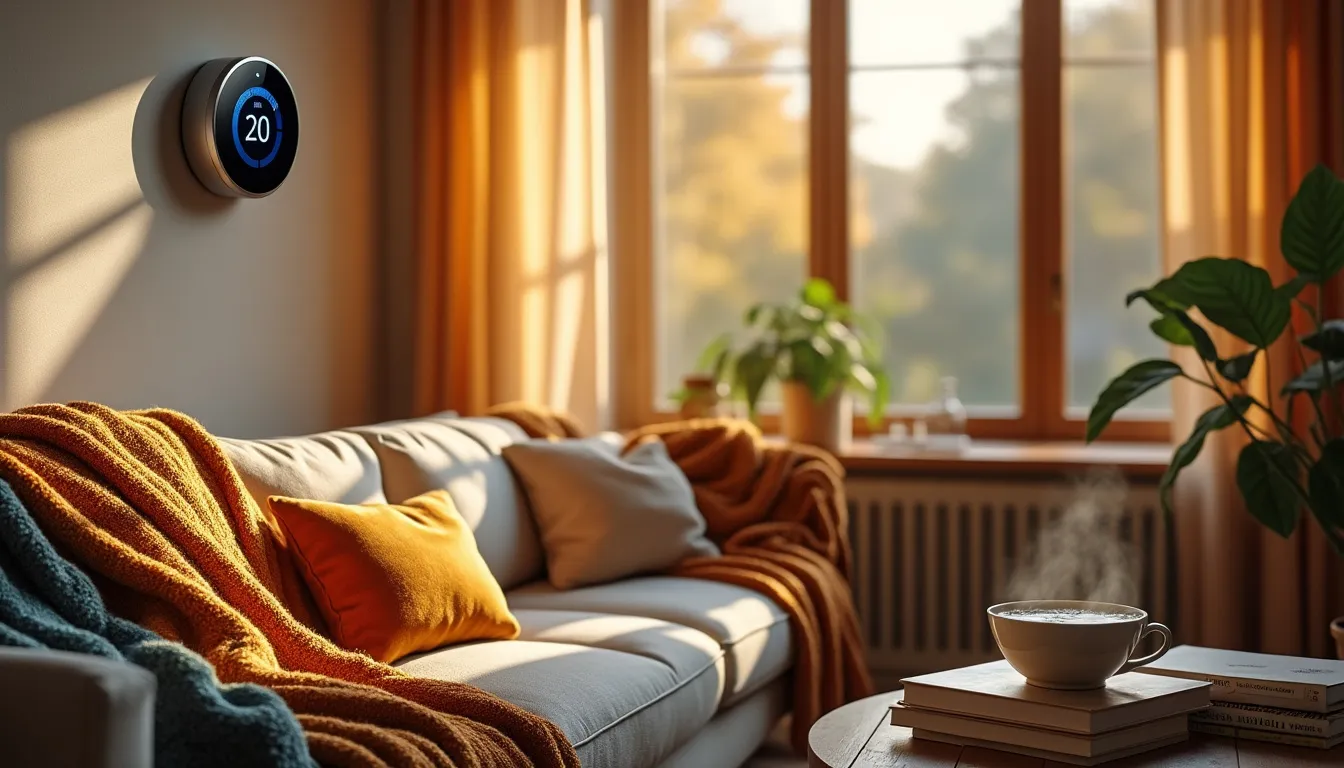
2. Optimize heating with smart thermostats
For an eco-friendly and economical heating solution, using programmable thermostats is a wise choice. On average, a thermostat can save up to 20% of energy consumption.
Type of thermostat | Potential savings |
|---|---|
Ambient thermostat | 10 % |
Programmable thermostat | 20 % |
Connected thermostat | 15 to 25 % |
These devices can be set to heat your home only when you are present. By setting the temperatures to 19°C in living areas and 16-17°C in bedrooms, you ensure thermal comfort without overconsumption.
Avoid unnecessary heating
It is essential to consider the times when heating is truly necessary. Here are some tips:
Lower the temperature at night or when you are absent.
Do not heat rooms that are rarely used, like bathrooms.
If you are away for several days, activate the frost protection mode to protect your pipes without wasting energy.
3. Maintain your installations to maximize efficiency
Poor maintenance of your heating appliances can lead to significant extra costs. Make sure to have your boiler and radiators checked annually. Regular maintenance helps ensure optimal combustion and prevents breakdowns.
It is also advisable to install reflective plates behind radiators to better distribute heat in the room. This type of improvement is often simple and cost-effective, allowing you to gain a few degrees without effort.
Adopt simple daily gestures
There are many daily gestures to consume less. Here are some practical examples:
Regularly dust your radiators to ensure efficient operation.
Close shutters in the evening to retain heat.
Action | Energy impact |
|---|---|
Set heating to 19°C | -10 % |
Use thick curtains | -5 % |
Dust radiators | -7 % |
4. Save hot water to reduce bills
Producing hot water accounts for a significant portion of household energy consumption. To reduce your expenses:
Set your water heater to a reasonable temperature (55 to 60°C).
Avoid letting hot water run unnecessarily, for example, by washing your hands in cold water instead of hot.
Take showers instead of baths to reduce consumption.
Efficient use of appliances
Also, use your household appliances wisely. Here are some tips:
Use eco programs on your washing machine and dishwasher.
Thaw your food in the fridge rather than in the microwave to gain efficiency.
Turn off appliances rather than leaving them on standby.
FAQ
1. What are the most energy-consuming appliances at home?
The appliances that consume the most energy are generally heating, hot water, the refrigerator, and the oven.
2. How can I tell if my boiler is efficient?
There are energy labels that indicate the efficiency of boilers. Additionally, regular maintenance helps maintain its efficiency.
3. Are there subsidies to improve energy efficiency?
Yes, several financial aids are available, including tax credits and local subsidies for energy improvement work.
4. Are LED bulbs really more economical?
Yes, LED bulbs consume up to 80% less energy than traditional bulbs and last much longer.
5. What should I do if there is a water leak in the heating system?
It is crucial to contact a professional to identify and repair the leak to avoid energy loss and damage.