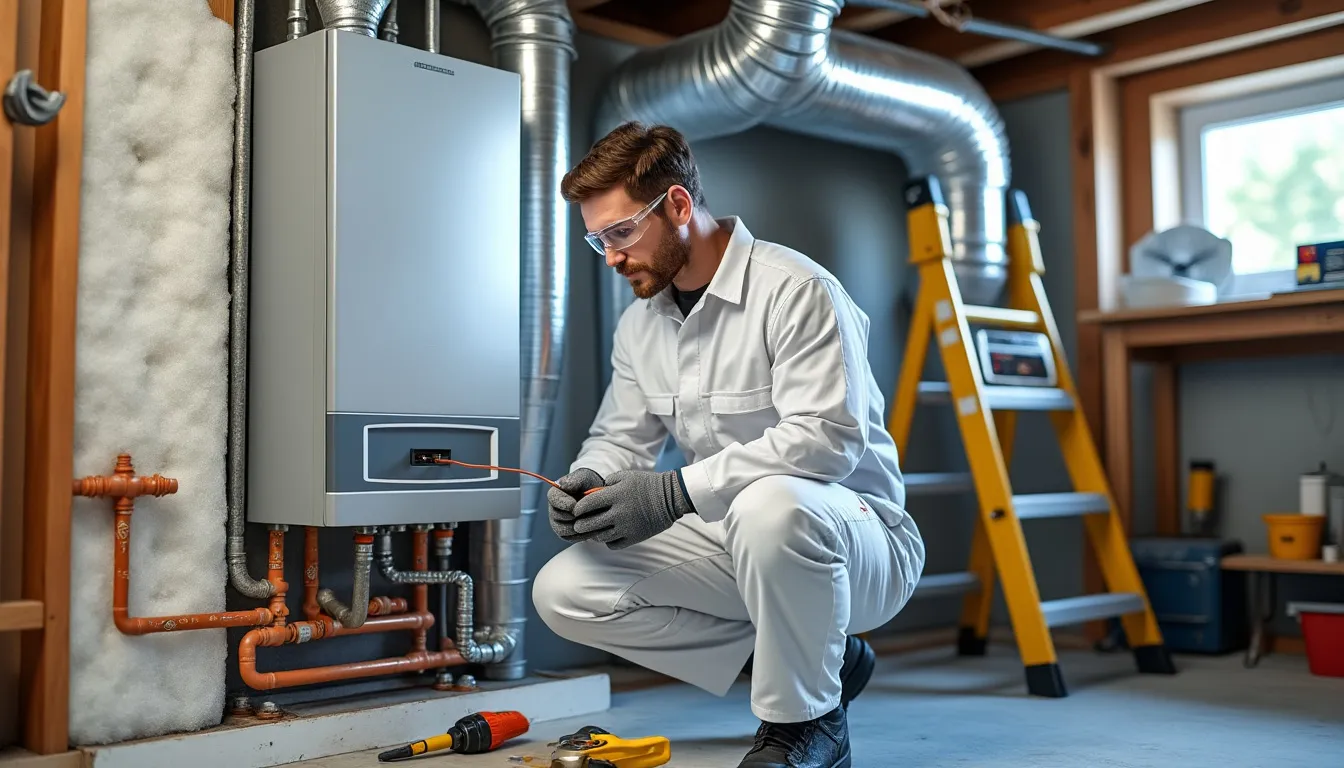
What are the technical constraints when installing a condensing boiler?
4 min read
Installing a condensing boiler is a wise choice to optimize the thermal comfort of your home while reducing your energy footprint. However, this operation can be complex and requires taking into account a number of unavoidable technical constraints. If you are considering this installation, it is essential to prepare well in order to avoid common pitfalls that can compromise not only the performance of your appliance but also the safety and durability of your heating system. Together, let's discover the key elements to consider when installing a condensing boiler, including model choices, regulatory requirements, and the importance of maintenance.
The choice of your boiler model and power
The first step towards a successful installation is selecting the right model of condensing boiler and evaluating its power. This plays a crucial role in the energy efficiency of your heating system.
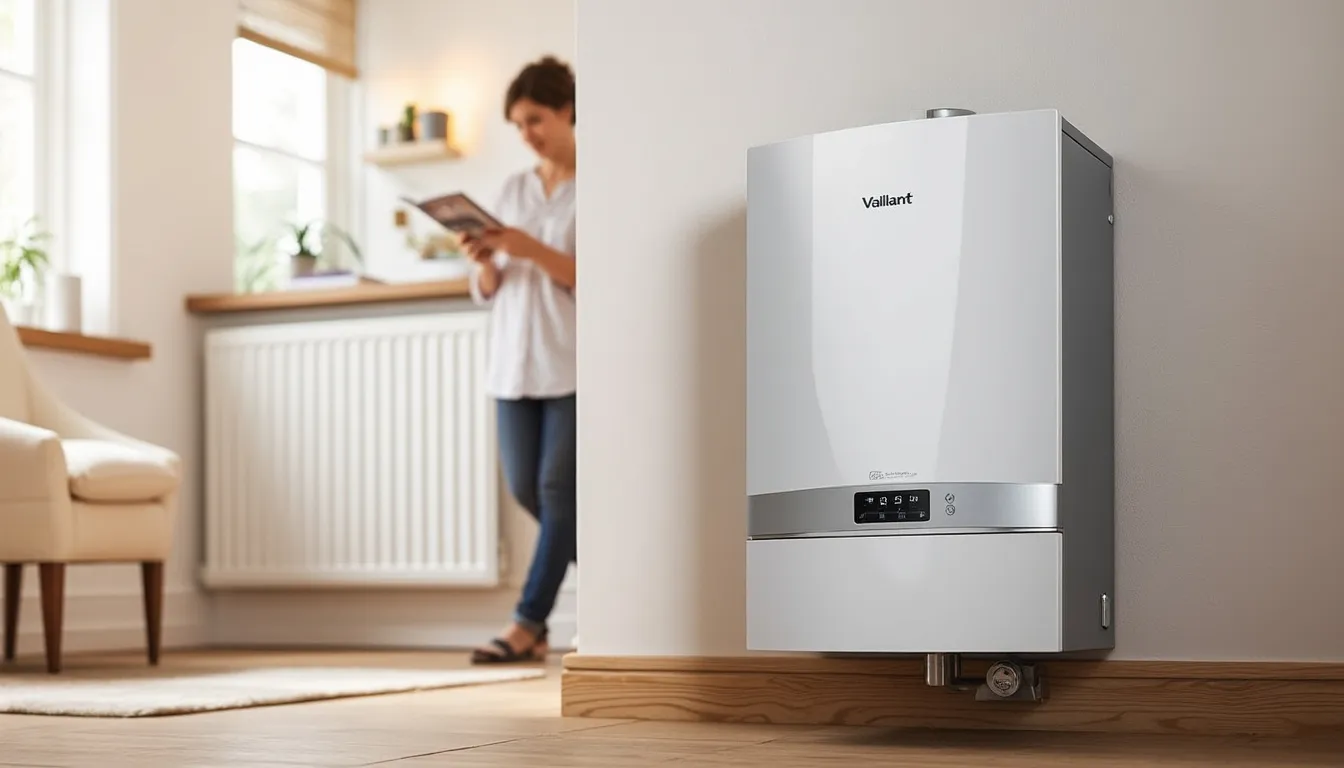
Why is choosing the right model crucial?
Every home has unique characteristics. Thus, it is essential to understand the available options, such as those offered by reputable brands like Saunier Duval, Viessmann, Chaffoteaux, and Buderus. Here are some elements to consider:
The type of boiler: Choosing a wall-mounted condensing boiler can be advantageous in terms of space and efficiency.
The power: An appropriate power rating ensures optimal thermal comfort. A professional can perform a thermal assessment to evaluate your needs.
The cost: Compare the prices of different models and consider the long-term energy savings.
How to choose the right power?
Determining the adequate power of the boiler is an essential step. A power that is too low will not sufficiently heat your home, while excessive power will lead to energy wastage. Here’s how to proceed:
Calculate the area of your home.
Consider the insulation of your house.
Evaluate the number of people residing in the accommodation.
Type of accommodation | Area (m²) | Power (kW) |
|---|---|---|
Single-family house | 100 - 150 | 20 - 30 |
Apartment | 50 - 80 | 12 - 20 |
Compliance with local standards and regulations
A proper installation cannot be carried out without adhering to the applicable standards. In 2025, the legislative framework regularly changes, making it essential to stay informed. This includes guidelines regarding flue gas evacuation and ventilation of your heating device.
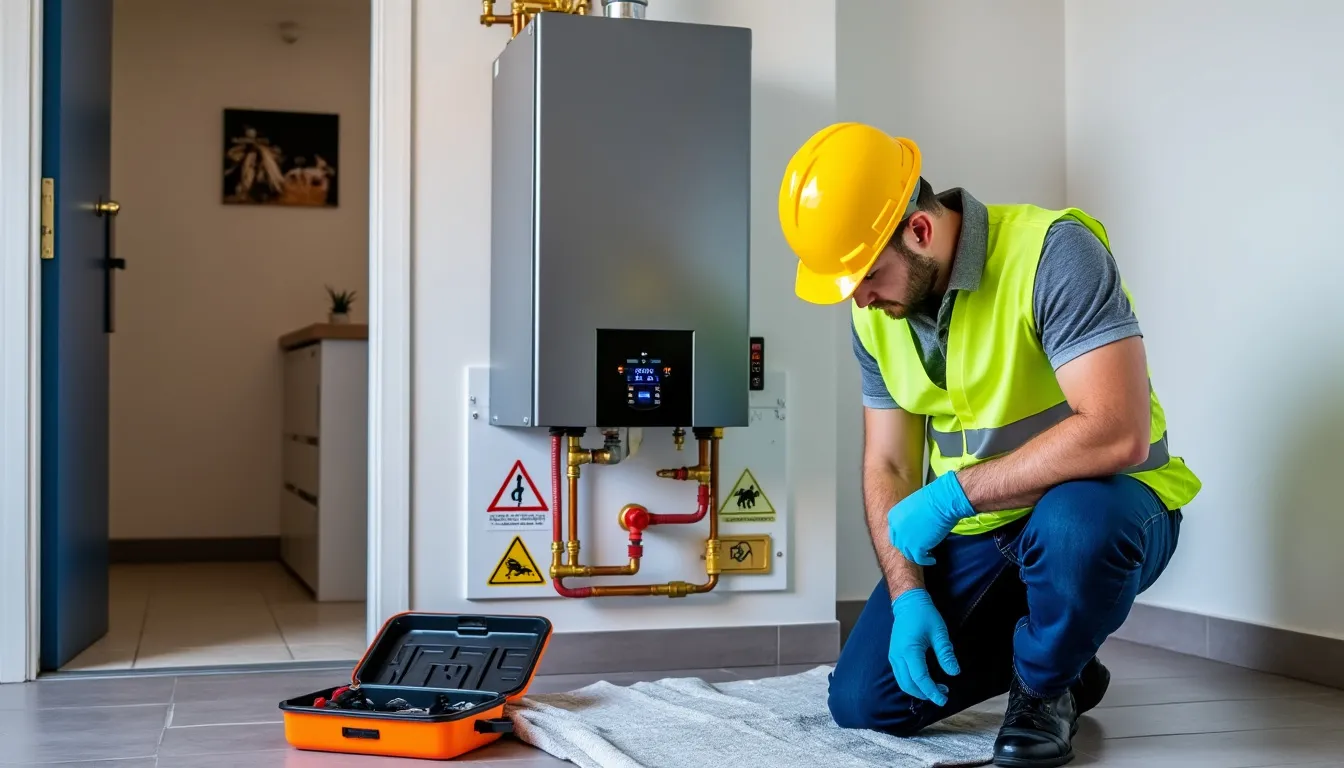
The rules to follow for flue gas evacuation
Condensing boilers, particularly those from brands Ferroli and Wolf, must adhere to specific flue gas evacuation criteria. This involves:
Installation of an appropriate evacuation duct: This may require a double-walled exhaust or a liner system.
Sufficient ventilation: Ensure the area is well-ventilated, in compliance with safety requirements.
Compliance checks: Hire a professional to verify that your installation meets local regulations.
The necessary precautions
Taking appropriate measures can prevent accidents. Here are some recommendations:
Avoid installing the boiler in a cluttered space.
Ensure the evacuation system is accessible for maintenance.
Install carbon monoxide detectors in areas close to the boiler.
The importance of boiler maintenance
Once your condensing boiler is installed, it is crucial to plan for its maintenance. Neglecting this step could compromise its performance and longevity.
The benefits of regular maintenance
Maintenance offers numerous advantages, including:
Safety: A maintained appliance reduces the risk of accidents related to breakdowns.
Energy savings: Proper maintenance optimizes the energy efficiency of your boiler.
Durability: A well-maintained boiler will have a prolonged lifespan.
How to plan maintenance?
During installation, discuss with your professional arrangements for regular maintenance. Here are some key points to consider:
Schedule annual maintenance appointments.
Check essential components: burner, heat exchanger, and evacuation ducts.
Document each visit and the repairs carried out.
Maintenance frequency | Recommended actions |
|---|---|
Annual | Complete inspection of the boiler |
Quarterly | Check safety components |
Considering available financial aid
Investing in a condensing boiler installation can represent a significant cost. Fortunately, many financial aids exist to alleviate this burden.
The most common aids
Here’s an overview of the financial aids available for your installation project:
Tax credit for energy transition (CITE): This scheme allows for a 30% tax credit on certain high-performance boilers.
Zero-interest eco-loan (ECO-PTZ): A zero-interest loan to finance energy improvement work.
Energy bonuses: Grants from certain local authorities to promote ecological work.
How to benefit from them?
To take advantage of these aids, here are some tips:
Inquire about eligibility criteria.
Obtain clear and precise quotes that outline the nature of the work.
Contact certified professionals to ensure eligibility for aid.
FAQ
What are the key steps in installing a condensing boiler?
The steps include assessing heating needs, selecting the model, complying with installation standards, carrying out necessary connections, and final commissioning. It is essential to entrust these steps to a professional.
How to ensure the installation is compliant?
It is recommended to hire a qualified professional who is familiar with current standards to ensure that the installation meets all safety and performance criteria.
Which brands of condensing boilers are recommended?
Brands such as De Dietrich, Viessmann, Atlantic, Baxi, and Vaillant are recognized for their reliability and energy performance.
What are the benefits of a condensing boiler?
A condensing boiler reduces energy consumption, improves thermal comfort, and provides a lower ecological footprint thanks to superior efficiency compared to conventional models.
What is the lifespan of a condensing boiler?
With proper maintenance, a condensing boiler can have a lifespan of 15 to 20 years, depending on usage and maintenance conditions. This underscores the importance of ensuring regular maintenance.