
MaPrimeRénov: what are the deadlines for payment when replacing your heating system?
5 min read
With the rise of environmental concerns and the need to reduce energy bills, the MaPrimeRénov' program serves as a valuable aid for homeowners wishing to undertake energy renovation work. Launched in January 2020, this scheme replaces traditional tax credits, thereby facilitating access to financial assistance for energy improvements in housing. But what are the payment deadlines for this subsidy, particularly when replacing a heating system? Let’s examine this more closely.
MaPrimeRénov: an aid for energy renovation
MaPrimeRénov' is a state-funded initiative that allows homeowners and co-owners to obtain a subsidy for work aimed at improving the energy efficiency of their homes. This assistance is calculated based on two main criteria: the nature of the work carried out and the household's income. The program was designed to simplify the processes for homeowners by replacing several existing schemes.
The key to a successful renovation lies in a good understanding of the available aids. Indeed, replacing a heating system is often at the heart of concerns, not only for its impact on comfort but also for its role in reducing energy bills. With MaPrimeRénov', this type of work can be significantly funded.
How does the subsidy payment work?
To benefit from MaPrimeRénov', it is essential to follow certain steps. First, it is necessary to submit an online application to the National Housing Agency (Anah). After approval, the payment of the subsidy is made in a single payment. Generally, this occurs within a period of four months after the submission of supporting documents, such as invoices related to the work and a bank identity statement (RIB).
This timeframe is crucial for homeowners, especially those planning significant expenses for replacing their heating systems. It is advisable to prepare well and have all documents ready to avoid any delays in processing the application.
Specificities related to replacing your heating system
When it comes to replacing a heating system, several considerations need to be kept in mind. On one hand, it is crucial to choose a system that meets the criteria of MaPrimeRénov', such as condensing boilers, heat pumps, or solar heating systems. On the other hand, an energy audit must be conducted, which is often required for large-scale projects.
What are the conditions to benefit from the subsidy when replacing heating?
To qualify for a MaPrimeRénov subsidy during this operation, certain criteria must be met:
The housing must have been completed for at least 15 years.
The work must be carried out by certified professionals to ensure the quality and durability of the installations.
An energy audit report must be prepared to determine the precise nature of the work to be done.
Eligible types of heating include: condensing boilers, heat pumps, thermal solar systems, etc.
The amount of financial aid
The amount of the subsidy depends on several factors. It is calculated as a percentage of the expenses incurred, within the limit of a ceiling set by Anah. Indeed, the total expenses for replacing the heating are multiplied by a funding rate, which varies according to the household's financial resources. Here’s a summary table of aid amounts based on income categories:
Income category | Funding rate |
|---|---|
Very low resources | 80% |
Low resources | 60% |
Intermediate resources | 40% |
Higher resources | 10% |
It is important to note that significant reductions in aids are expected in 2025 for households with higher incomes.
Impact of payment deadlines on the choice of work
The payment deadline of the subsidy can influence the decisions made by homeowners regarding the nature and extent of renovation work. For example, if a homeowner needs to renovate their heating system quickly to avoid excessive bills, they may be tempted to opt for cheaper and less efficient solutions. Indeed, the speed of payment can have a direct impact on the quality of the work undertaken.
Anticipating deadlines for good planning
It is wise to plan the work in advance and to start the subsidy application process as early as possible. Here are some steps to follow:
Assess the energy needs of your home.
Consult professionals to obtain accurate quotes.
Submit an energy audit request.
Request quotes from qualified companies.
Submit the required documents to Anah to obtain the subsidy.
Transparency and communication with professionals
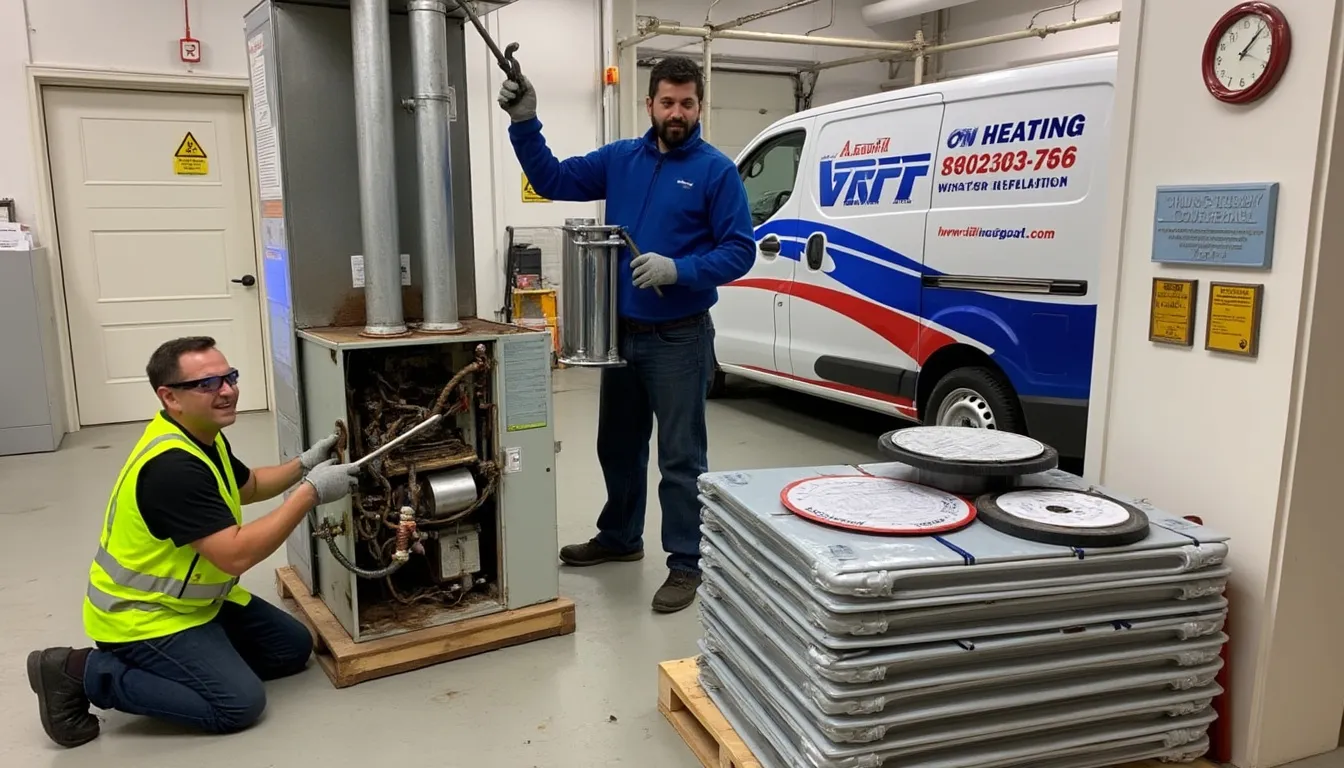
For heating replacement work, communication with heating engineers and renovation companies is essential. It is important to discuss deadlines, potential costs, and the eligibility requirements of MaPrimeRénov'. A good understanding of the procedures can also minimize delays in the payment of the subsidy.
Other financial aids to consider
In addition to MaPrimeRénov', several other financial aids can complement the budget allocated for heating replacement. Every homeowner should inquire about the possible options, such as:
Energy saving certificates (CEE).
Local aids offered by communities (municipalities, departments).
Interest-free eco-loans (éco-PTZ).
These aids help reduce the remaining costs, which is essential for many households, especially those with modest incomes.
Cumulative aids: the benefit for households
It is possible to combine different aids, provided that the established ceilings are respected. For households with modest incomes, this can represent an opportunity to significantly improve the comfort of their home while limiting expenses related to the energy transition. Through adapted subsidies and loans, the shift to greener energy becomes accessible.
In 2025, the cut-off amount has also been adjusted to allow for a more sustained contribution to households with very low incomes, which represents a significant advancement in supporting energy renovation.
Best practices to avoid payment delays
To ensure the proper processing of your file and to avoid delays in your MaPrimeRénov' subsidy payment, it is essential to follow certain recommendations.
Prepare your application in advance
Gather all necessary documents as soon as the project starts.
Ensure to choose RGE-certified companies for your work.
Complete the energy audit as soon as possible.
Submit the subsidy application before the work begins to avoid losing eligibility.
These best practices guide homeowners in their procedures and ensure an optimized approach to receive financial aids.

Monitor the status of your file
A regular follow-up on the progress of the application with Anah is also recommended. Through your personal space on the MaPrimeRénov' site, you can stay informed about the processing stages of your file.
FAQ
What documents are necessary to obtain MaPrimeRénov'?
To apply, you will need to provide: the invoices for the work, a RIB, and the energy audit report.
How long does it take to receive the subsidy?
The subsidy is generally paid within a period of four months after the submission of supporting documents.
Can I benefit from MaPrimeRénov' for different types of work?
Yes, MaPrimeRénov' allows financing for several types of renovation work, including the replacement of your heating system.
Can local aids be combined with MaPrimeRénov'?
Yes, local aids can be combined, provided that the cut-off ceilings are respected.
What is the impact of the energy audit on the subsidy?
The energy audit helps to determine the actual needs regarding the work and is a prerequisite to obtaining MaPrimeRénov' for large-scale renovations.