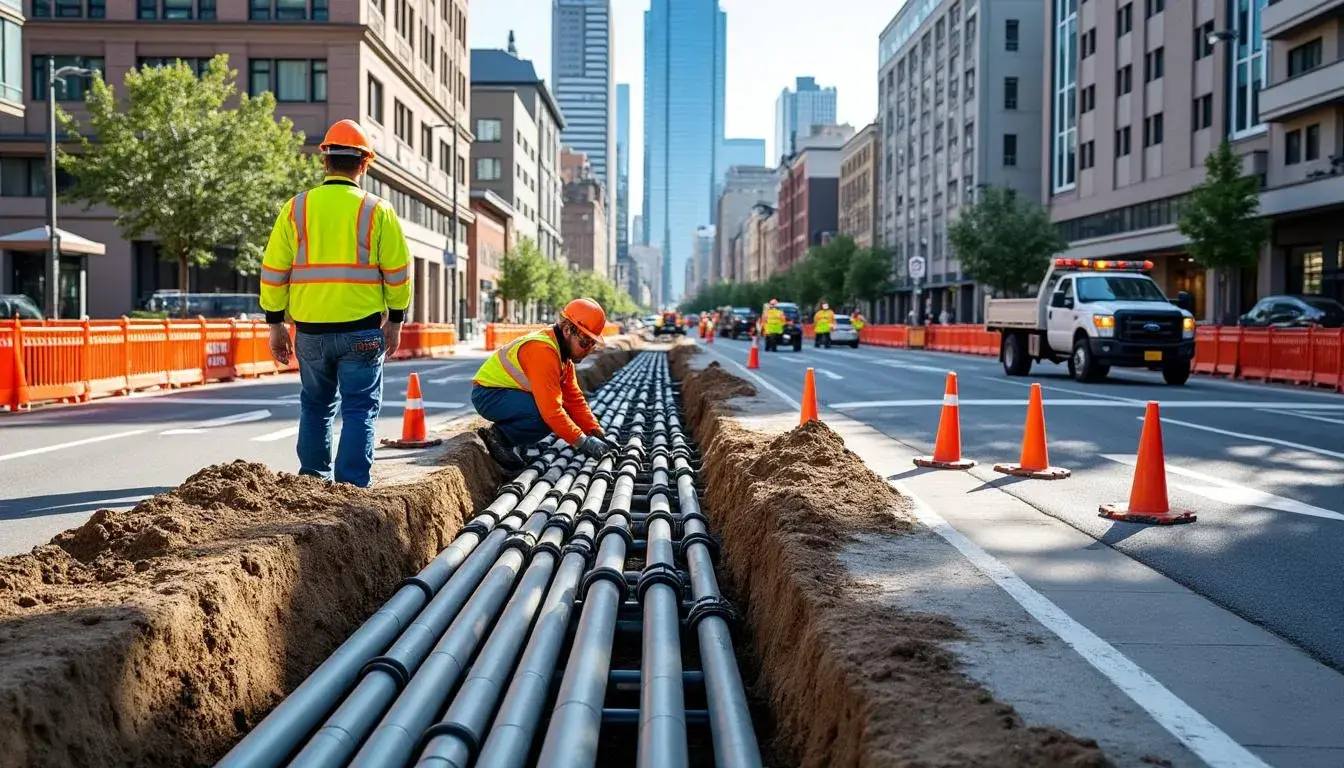
Improvement of the district heating network: ongoing works on Xaintrailles Street
7 min read
The improvement works on the urban heating network on Rue Xaintrailles mark an important step in the modernization of the city's energy infrastructure. Between extension and renovation, this essential project led by the Orléans company SODC aims to optimize the distribution of hot water and strengthen the energy efficiency of an already well-established heating network. The residents and merchants in the area see their daily lives impacted by these adjustments, but their future thermal comfort will be significantly reinforced.
Extension of the urban heating network on Rue Xaintrailles: objectives and technical interventions
The intervention undertaken on Rue Xaintrailles is part of ongoing efforts to improve urban heating with solutions that combine reliability and respect for the environment. The works conducted from July 21 to October 31 consist of an extension of the existing network, aiming to increase its capacity and performance.
The urban heating network is a collective installation that groups several users around a thermal power plant, ensuring a coherent distribution of heat. Here, SODC optimizes the routing of hot water pipes from the thermal power plant to the urban heating groups that supply the buildings. This operation guarantees effective eco-heating and supports the transition to a sustainable city.
Technically, the site is segmented into several key phases:
From July 21 to August 14: narrowing of the roadway on Boulevard Rocheplatte and a diversion implemented, notably via the temporarily redirected Rue de Lahire.
From August 18 to September 5: access to Rue Xaintrailles via Boulevard Rocheplatte, while prohibiting traffic on Rue de Lahire and transforming it into a dead end accessible from Rue du Maréchal Foch.
From August 25 to September 26: neutralization of parking spaces between numbers 1 and 7 on Rue Xaintrailles, nevertheless ensuring the maintenance of a traffic lane; Rue de Lahire is then reopened to traffic.
From September 29 to October 31: neutralization of parking spaces between numbers 7 and 13 on Rue Xaintrailles with a traffic lane maintained.
These specific phases help limit disruptions while efficiently advancing the installation of new reinforced thermoflux and isolux piping, which ensure better insulation and increased energy efficiency.
Work Phase | Period | Traffic Modifications | Parking Implications |
|---|---|---|---|
Narrowed roadway and diversion | July 21 – August 14 | Diversion via Rue de Lahire (in reverse direction) | No parking neutralization |
Prohibition of access to Rue de Lahire | August 18 – September 5 | Access to Rue Xaintrailles via neighborhood, Rue de Lahire blocked | No change in reported parking |
Neutralization of parking from 1 to 7 | August 25 – September 26 | One traffic lane maintained, Rue de Lahire open | Spaces neutralized on both sides |
Neutralization of parking from 7 to 13 | September 29 – October 31 | One traffic lane maintained | Spaces neutralized on both sides |
While modernizing, waste collection and access to garages are maintained, a crucial point to limit inconvenience for residents and merchants. The ultimate goal is a better energy distribution ensured by SODC, a guarantee of sustainability and optimal thermal efficiency.
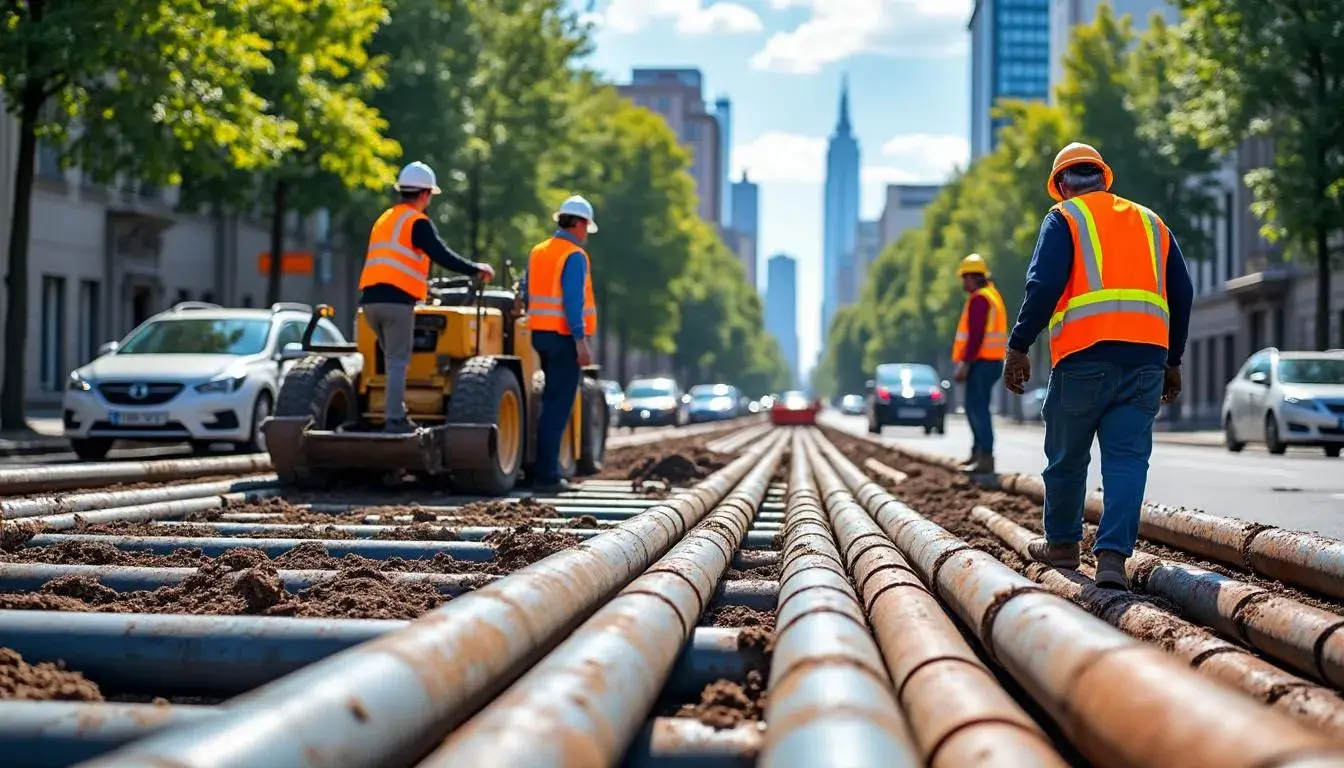
Technical focus on the energy solutions employed: isolux, thermoflux, and thermal power plant
The choice of materials and technologies is fundamental for the success of a sustainable and efficient heating network. Rue Xaintrailles benefits from cutting-edge installations such as isolux pipes, designed to reduce thermal losses during hot water transport. These insulated tubes optimize the efficiency of the urban heating system, limiting energy losses that can increase both utility bills and ecological impact.
The thermoflux technology is also integrated into the installation. This is a technical innovation that improves the thermal conductivity of collective heating networks. By using these advanced systems, hot water circulates more efficiently, reaching users with less loss and more consistent temperatures.
The thermal power plant plays a central role in this mechanism, ensuring reliable energy production tailored to the growing needs of the neighborhood. In this centrality, smart management and continuous maintenance strengthen the robustness of the entire system every day. Such an organization perfectly illustrates the transition to managed renewable energy, a guarantee of a sustainable city.
Isolux: high insulation tubes to reduce thermal losses.
Thermoflux: improved heat transmission technology.
Thermal power plant: optimized production and efficient energy management.
These technologies integrated into the urban context meet the growing needs for heating and domestic hot water, while reducing greenhouse gas emissions. More than just infrastructure, the heating group creates a sustainable thermal synergy essential for residents.
Component | Function | Impact on urban heating |
|---|---|---|
Isolux | Thermal insulation of pipes | Significant reduction in energy losses |
Thermoflux | Optimization of thermal conductivity | Improvement of overall energy performance |
Thermal power plant | Centralized energy production and management | Support for sustainable and reliable supply |
To deepen the understanding of urban heating networks and their regulations, detailed documents are available, notably on sites such as XPair or the complete report accessible via the CIBE.
Impacts of the works on traffic and local life on Rue Xaintrailles: management and communication
The successive phases of the works result in notable modifications to traffic and parking in the neighborhood. Safety and the smooth flow of traffic are essential issues that SODC meticulously addresses to avoid disrupting local activities unnecessarily.
For example, the implementation of a diversion via Rue de Lahire, temporarily in the reverse direction, requires coherence in informing residents to ensure their quick adaptation.
Maintaining a traffic lane during parking neutralizations is another measure that illustrates the concern to reduce inconveniences.
Particular attention is paid to the continuity of essential services:
Special mention for the maintenance of waste collection to avoid congestion
Permanent access to private garages
Regular information via email and phone (contact SODC at 02 38 42 10 93 or [email protected])
The local management of these works is an example of coordinated intervention involving municipal services, the urban heating company, and residents. This collaborative approach is crucial for the success of the project and for maintaining the trust of the inhabitants.
Aspect | Measure Taken | Expected Consequence |
|---|---|---|
Traffic | Diversion and maintenance of one lane | Reduction of traffic jams, ensured safety |
Parking | Targeted neutralization of spaces | Less inconvenience for residents and merchants |
Services | Maintenance of waste collection, garage access | Continuity of local activities guaranteed |
To follow the developments and practical details, an interactive digital mapping platform is accessible, providing a clear view of ongoing and upcoming construction sites.
The environmental and economic challenges related to the modernization of urban heating
The renovation and extension of the heating network on Rue Xaintrailles fully align with efforts to reduce the carbon footprint of cities while ensuring comfortable and accessible heating.
The integration of solutions utilizing renewable energy ensures a significant reduction in CO2 emissions compared to traditional systems. The hot water produced by the thermal power plant is distributed via renewed infrastructures that maximize thermal yield and save energy.
The economic benefits are also considerable:
Reduction of operating costs due to decreased energy losses
Increase in property values by integrating into a sustainable and modern city
Access to financial aid dedicated to energy modernization (more information on Prime Coup de Pouce Chauffage)
The commitment made in these works is thus a lever for sustainable savings and a better quality of life. These efforts are part of the continuation of other national initiatives that can be found documented in various public analyses such as those available on Connaissance des Énergies.
Aspect | Expected Benefits | References |
|---|---|---|
Environment | Reduction of greenhouse gases, renewable energy | Complete report |
Economic | Reduction of costs, accessible financial aids | Prime Coup de Pouce |
Social | Improvement of comfort, property enhancement | Sustainable City Initiatives |
These urban heating works are part of the broader strategy of modernizing France's energy infrastructures and promote the emergence of smart and eco-responsible neighborhoods.
Advice and practical information for residents during extension works
The progress of the works imposes constraints that residents and merchants must anticipate and manage daily. Good preparation helps mitigate their impact and ensures constructive dialogue with technical teams.
Here are some useful recommendations:
Stay informed regularly: contact SODC at 02 38 42 10 93 or via email at [email protected] to follow the stages of the work and report any potential issues.
Anticipate your travels by taking into account the diversions and temporary parking restrictions.
Adopt suitable hours to limit inconveniences related to construction access, especially for deliveries and garage exits.
Maintain cleanliness: ensure that pathways remain accessible during waste collection, an essential point for the smooth running of daily life.
Patience and understanding are essential: these works, although burdensome in the short term, aim for a more efficient and ecological urban heating.
Moreover, inquiring about available aids for energy renovation and collective heating is a significant advantage. Comprehensive information is available on the Prime Coup de Pouce Chauffage portal, detailing tax measures and funding.
Advice | Description | Benefit |
|---|---|---|
Contact SODC | Personalized follow-up and information | Reduction of concerns related to the construction |
Manage travels | Planning of routes and parking | Limitation of inconveniences |
Respect schedules | Adaptation of exits and deliveries | Maintaining safe access |
Pathway cleanliness | Ensure waste collection | Guarantee of daily comfort |
Patience | Understanding of issues and duration | Acceptance of temporary constraints |
These simple recommendations contribute to making this phase of construction a successful step towards a modernized, reliable, and ecological urban heating system.