Heat pump water heater and heating: a powerful duo for your energy comfort
4 min read
In 2025, the need to make our homes more energy-efficient becomes a priority for many households. In this context, the combination of thermodynamic water heater and heating system proves to be a promising solution. By integrating these innovative technologies into your home, you can achieve significant savings while preserving the environment. This article explores in depth the functioning of these systems, the importance of comprehensive home renovation, and the financial aids that can make your life easier.
Understanding the functioning of a thermodynamic water heater
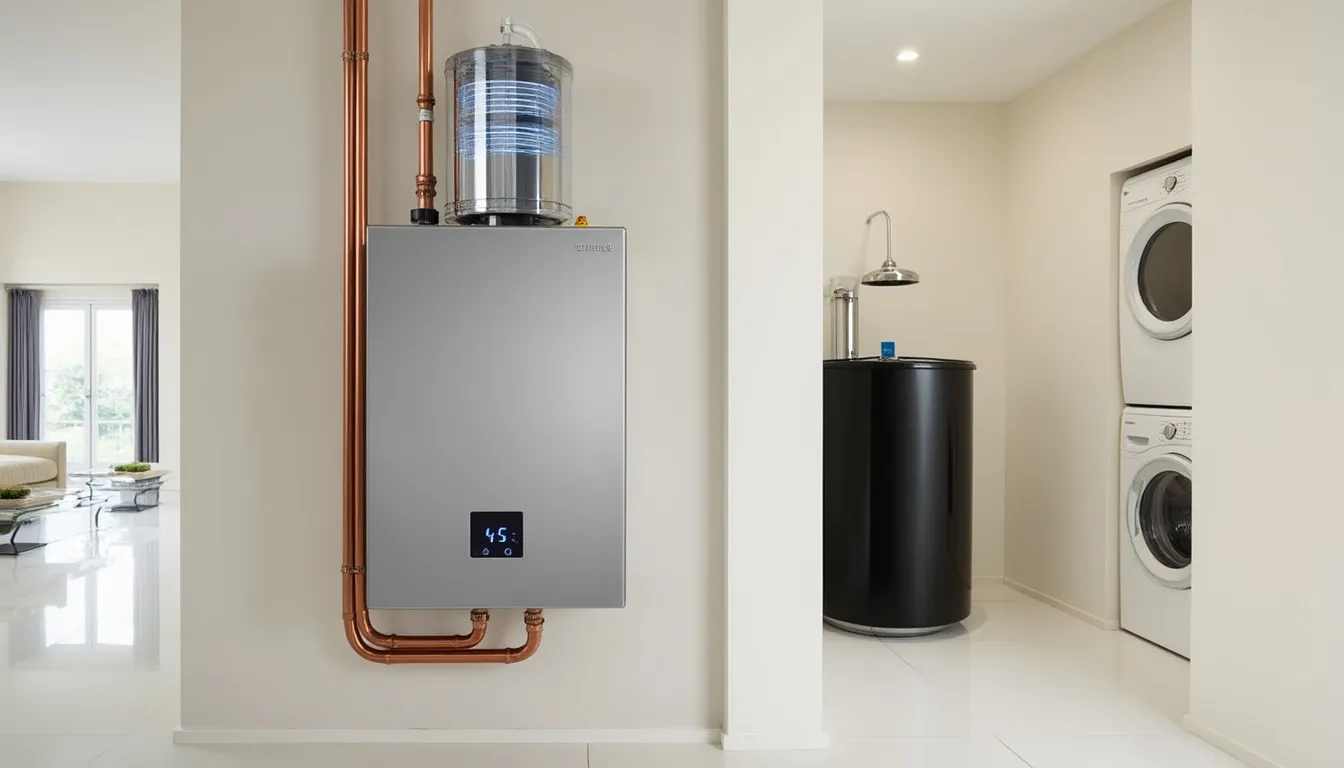
The thermodynamic water heater uses the principle of a heat pump to produce domestic hot water. This revolutionary system captures the calories present in the ambient air, even at relatively low temperatures. Through an outdoor unit, it extracts these calories and transfers them to a refrigerant fluid.
This fluid, in contact with the air, undergoes a change of state and allows for heating the water in the tank. This process enables you to enjoy a constant supply of hot water and significantly reduce energy consumption compared to traditional heaters, which are often resource-intensive.
The ecological and economic advantages of the thermodynamic water heater
In an era where eco-responsibility takes a central place, choosing a thermodynamic water heater makes sense. Here are the main advantages:
Significant savings on energy bills.
Use of renewable resources.
Reduced environmental impact.
Improvement of your home's energy performance.
By opting for this type of water heater, not only do you achieve substantial savings, but you also choose a solution that respects the planet.
Comparison with other heating systems
Although other systems, such as gas boilers from well-known brands like De Dietrich, Atlantic, or Vaillant, have their advantages, the thermodynamic water heater stands out for its ability to reduce the overall energy needs of your home. At the same time, brands like Ferroli and Chaffoteaux also offer interesting solutions, but are less focused on renewable energies.
Ultimately, the choice depends on your specific needs and the assessment of the overall energy efficiency of your home.
Criteria | Thermodynamic water heater | Standard boiler |
|---|---|---|
Installation cost | Higher initially | Lower |
Energy savings | 70 to 80% | 30 to 50% |
Renewable energy | Yes | No |
Comprehensive renovation refers to a set of works undertaken to significantly improve the energy performance of a home. The actions combine various interventions such as wall and attic insulation and the replacement of old heating systems.
The advantages of a comprehensive renovation
Wondering why you should consider an energy renovation? Here are several convincing reasons:
Energy savings. Comprehensive renovations can lead to significant savings, sometimes up to 80% of your current consumption.
Increased property value. A renovated home is more attractive on the real estate market and sees its value increase.
Reduced environmental impact. By reducing your energy consumption, you actively participate in environmental preservation.
Access to financial aids. Many government aid programs are available to support your project.
The works to consider in the context of a comprehensive renovation
The necessary works can vary, but generally, here are the actions to consider:
Insulation of attics and walls.
Replacement of windows with more efficient models.
Installation of a new boiler, possibly a condensation model from Thermor.
Implementation of an efficient ventilation system.
It is important to conduct an energy audit to target priority works and those related to current standards.
Type of work | Description | Impact on consumption |
|---|---|---|
Wall insulation | Reduction of thermal losses | 50 to 60% savings |
Window replacement | Improvement of airtightness | 30 to 40% savings |
Installation of a modern boiler | Heating optimization | 20 to 30% savings |
Financial aids to support your renovation projects
In 2025, several aid programs exist for those wishing to undertake a comprehensive renovation. These aids can alleviate the total cost of your works. Here are some of the aids that might be accessible to you:
MaPrimeRénov'. This is the flagship aid from the State for energy renovation, with the amount varying based on your income.
Energy Bonus. Offered by private actors, it can reach considerable amounts, for example with companies like Daimler or Ciat.
Reduced VAT at 5.5%. This measure helps to lower the overall cost of your works.
Zero-interest eco-loan (éco-PTZ). An interest-free loan that allows you to borrow up to €50,000.
Eligibility criteria and combining aids
Financial aids are subject to specific criteria. To maximize your chances of benefiting from them, it is essential to:
Engage in works with RGE-certified professionals (Recognized Guarantor of the Environment).
Ensure that your renovations allow for a jump of at least two energy classes.
Moreover, these aids can often be combined, significantly increasing the amount of your financial support.
Financial aid | Max Amount | Conditions |
|---|---|---|
MaPrimeRénov' | Variable according to income | Based on energy audits |
Energy Bonus | Up to €25,000 | Eligible works defined by AFNOR |
Eco-PTZ | Up to €50,000 | Satisfying at least 2 works |
FAQ about the thermodynamic water heater and energy renovation
What is the cost of a thermodynamic water heater?
The installation cost of a thermodynamic water heater can vary between €3,000 and €7,000 depending on the brands and options chosen.
How can I find out if I am eligible for financial aids?
To find out if you are eligible, it is advisable to consult with an RGE professional or check the government website.
What types of works are considered comprehensive renovation?
They generally include works combining insulation, changing heating systems, and improving ventilation.
Are financial aids cumulative?
Yes, several aids can be combined to reduce the cost of your works.
What is the lifespan of a thermodynamic water heater?
On average, the lifespan of a thermodynamic water heater is 15 to 20 years, depending on maintenance and usage.