Wood heating: understanding the specifics of thermal insulation for an efficient home
4 min read
Wood heating has become one of the most popular solutions in France for combining thermal comfort and environmental respect. However, this renewable energy is also greatly dependent on the thermal insulation efficiency of your home. Good insulation is critical for optimizing your energy consumption, reducing your bills, and ensuring a pleasant living comfort. In this article, we will explore the specifics of wood heating, the stakes of thermal insulation, and the means to improve the energy performance of your home.
Wood heating: advantages and challenges
Used for thousands of years, wood heating has evolved to meet modern demands. This heating method uses forestry materials such as logs, pellets, and other by-products to produce heat. The French are among the largest consumers of firewood in Europe, with about 51 million steres per year. However, despite its recognized efficiency, wood heating is not without challenges.
The advantages of wood heating
Competitive costs: Compared to other energy sources such as gas or electricity, the cost of wood heating remains lower, with an average price around €0.06/kWh for wood logs.
Renewable energy: Wood is a renewable resource that contributes to the reduction of CO₂ emissions, as it is considered carbon neutral.
Local availability: With 17 million hectares of forests, France has a large potential for wood production for heating, thus limiting dependencies on energy imports.
Comfort and ambiance: Wood stoves and fireplaces provide a gentle heat and a cozy atmosphere inside your home.
The challenges of wood heating
Complex maintenance: Wood heating systems require regular and rigorous maintenance as well as chimney sweeping to avoid fire risks.
Initial investment: The installation cost of a wood heating system can be high, although subsidies like MaPrimeRénov’ are available to alleviate this burden.
Variable performance: The performance of wood heating heavily depends on the quality of the thermal insulation, which leads us to the importance of good insulation.
The importance of good thermal insulation
A poorly insulated house can significantly reduce the efficiency of a wood heating system. Thermal insulation has a dual objective: to preserve heat inside the house during cold months and to reduce energy overconsumption. Therefore, the better insulated your home is, the less energy you will need to consume for heating, and the more savings you will achieve.
The different types of insulation
Several insulation methods are available to optimize the thermal comfort of your home:
External insulation (ITE): Ideal for facades, they help retain heat inside while reducing losses.
Internal insulation (ITI): Often used when ITE is not feasible, they require minimizing the impact on interior space.
Attic insulation: One of the most effective operations, as most heat loss occurs through the roof.
Floor insulation: Essential in homes with basements or cellars, it significantly contributes to reducing heat loss.
How to improve the energy performance of your home
To maximize the efficiency of your wood heating system, it is crucial to undertake specific actions aimed at optimizing the thermal efficiency of your home. Here are some recommendations:
Recommended interventions
Strengthen insulation: Improve the thermal insulation of roofs, walls, floors, and windows to limit heat losses.
Invest in high-performance equipment: Modern wood boilers achieve efficiencies above 90%, compared to older, lower-quality models.
Use quality fuels: Choose dense, well-dried wood to ensure more efficient combustion and reduce pollutant emissions.
Install an efficient ventilation system: Ventilation allows for the renewal of ambient air while avoiding excessive humidity, thus preserving comfort in your home.
Financial aid for energy renovation
Also consider financial aids and support programs available to help you undertake your renovation work. For example:
MaPrimeRénov’: Financial support allocated by the State for energy renovations.
Zero-Interest Eco-Loan: An interest-free loan to finance your energy improvement works.
Reduced VAT: In effect for certain insulation works, allowing you to reduce the cost of your projects.
Comparison of wood heating solutions
Type of equipment | Efficiency (%) | Installation cost (€) | Operating cost (€ / year) |
|---|---|---|---|
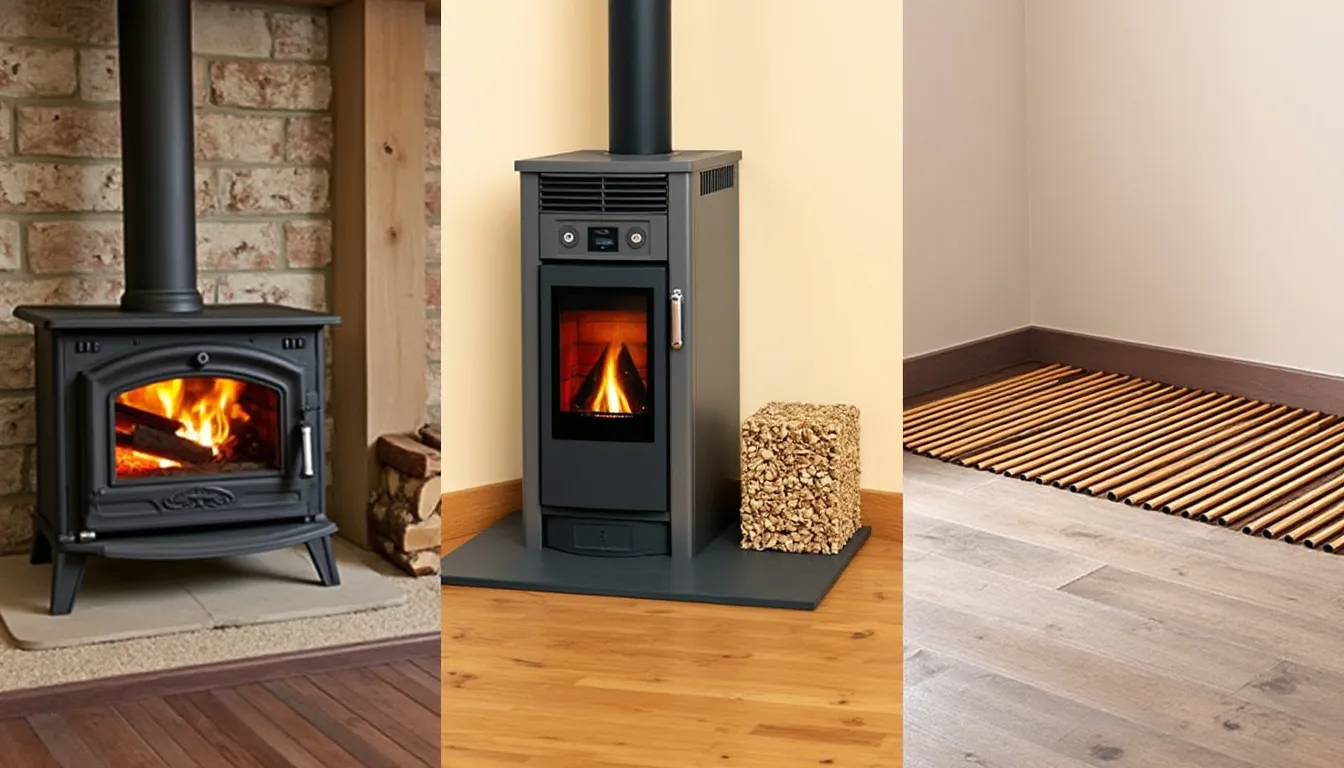
Wood boiler | 85-90 | 2000 - 20 000 | 600 - 1 000 |
Pellet stove | 90-95 | 1 500 - 10 000 | 500 - 800 |
Closed fireplace | 75-80 | 1 000 - 6 000 | 700 - 1 000 |
FAQ about wood heating and thermal insulation
What type of wood is recommended for heating?
It is advisable to use dense and well-dried wood to ensure good energy efficiency while reducing pollutant emissions.
How can I tell if my insulation is sufficient?
An energy audit can determine the areas of heat loss in your home and recommend improvements.
What are the costs associated with maintaining a wood heating system?
Maintenance costs can vary, but expect around €150 to €200 per year for chimney sweeping and maintenance visits.
Are financial aids accessible to everyone?
Yes, financial aids such as MaPrimeRénov’ are accessible to homeowners and tenants under certain income conditions.
Can I install wood heating if my house is poorly insulated?
While it is possible, it will not be effective. Good insulation is essential to optimize the operation of a wood heating system.