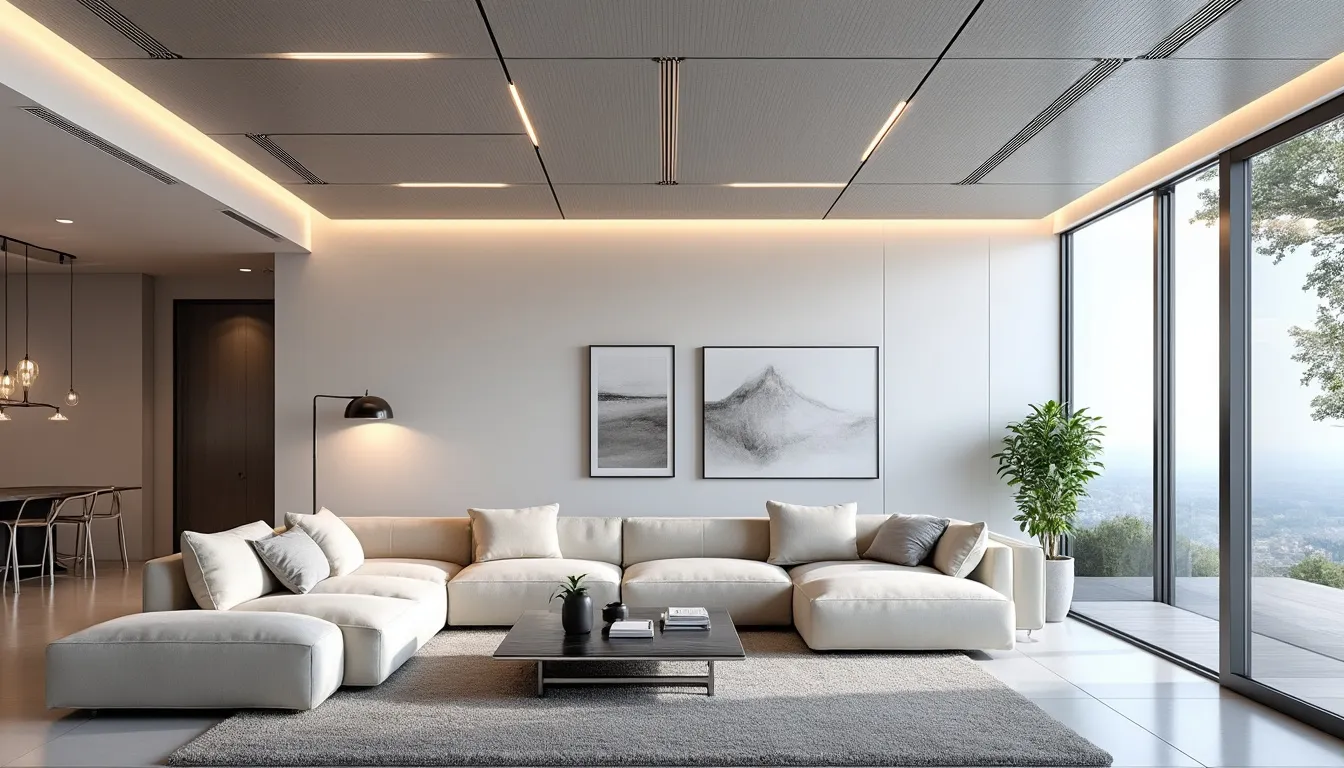
Reversible cooling ceiling: an innovative solution for your indoor comfort
5 min read
In a world where indoor comfort is essential, especially in the face of increasing climate challenges, reversible heating and cooling ceiling technology positions itself as an innovative and practical option. Since its emergence, this method of heating and cooling has transformed the landscape of indoor installations, offering a response to the ever-increasing demands for thermal regulation. At the dawn of 2025, as environmental regulations tighten, this solution offers a compromise between energy efficiency and comfort. Let’s explore together the repercussions of this technical advance at the heart of your home.
A paradigm shift: how the heating and cooling ceiling works
Traditional heating systems, such as radiators, encounter their limits in modern buildings. With the rise of the RT 2012 building standards, it has become necessary to rethink heating systems. Indeed, advancements in insulation and building design reduce the capacity of walls and floors to function as thermal accumulators. Therefore, an innovative system is required, and this is where the heating and cooling ceiling comes into play.
This system is based on two fundamental principles: the diffusion of heat through radiation and excellent cooling. Unlike traditional heating methods, radiant ceilings emit a gentle and uniform heat, capable of warming the entire room without heat loss due to convection. During summer or periods of intense heat, they prove particularly effective: by expelling heat from above, ceilings help maintain a pleasant temperature without the drawbacks of a conventional air conditioner.
Thermal regulation and indoor comfort
Thermal regulation is a key point in modern installations. The heating and cooling ceiling uses cutting-edge technology to adapt to temperature variations throughout the day. One of the most important features of this system is its responsiveness. Within an installation, a few minutes are enough to change the surface temperature, thus optimizing the distribution of heat or cold according to needs.
Imagine coming home after a sunny day. In just a few minutes, the ambient temperature can move towards pleasant levels, avoiding intense cold or overwhelming heat. This responsiveness is particularly appreciated during seasonal transitions, where the needs for heating and cooling change rapidly.
Type of system | Surface temperature | Responsiveness (degree per minute) |
|---|---|---|
Radiant ceiling | 23°C | 0.5°C |
Traditional underfloor heating | 22°C | 0.15°C |
Convection radiator | 24°C | 0.3°C |
Environmental and economic benefits
By integrating a heating and cooling ceiling into your space, you are adopting not only a technical solution but also an ecological one. Indeed, these systems consume less energy than conventional methods. The ceiling only requires low temperature operation, allowing the use of energy-efficient generators such as condensing boilers or heat pumps. This leads to significant reductions in energy costs.
With this innovative design, the radiant ceiling stands out for its reduced impact on the environment. Its ease of installation also makes it an appealing option during renovations, requiring minimal space while ensuring a high level of thermal insulation for optimal comfort.
Installation and integration: child's play
One of the main advantages of the heating and cooling ceiling lies in its ease of installation. This system, designed for use in both new projects and renovations, is installed with extreme simplicity. The flexible tubes, clipped into expanded polystyrene panels, are quickly mounted on the ceiling structure, allowing for considerable time savings compared to more complex installations.
With only 30 mm in thickness, it does not disrupt interior layout plans and remains lightweight. Whether installed on a slope, on a wall, or on the ceiling, this system does not require any construction residue or drying time.
Simplified assembly: Thanks to a ready-to-install system, it only requires a cutter and a screwdriver.
Fewer constraints: No more heavy screed pouring or waiting times, allowing for rapid startup.
Adaptability: Easily implemented in all architectural configurations.
Monitoring and maintenance: peace of mind
An essential aspect of installation is maintenance. Although these systems require little intervention, regular monitoring is recommended to ensure optimal operation. Technical teams can help properly size the system and provide assistance during installation.
In 2025, these solutions supported by connected platforms will allow you to monitor the system's performance from your smartphone, enabling you to manage your comfort in real-time while controlling your energy consumption.
Summer comfort and positive climate: a sustainable solution
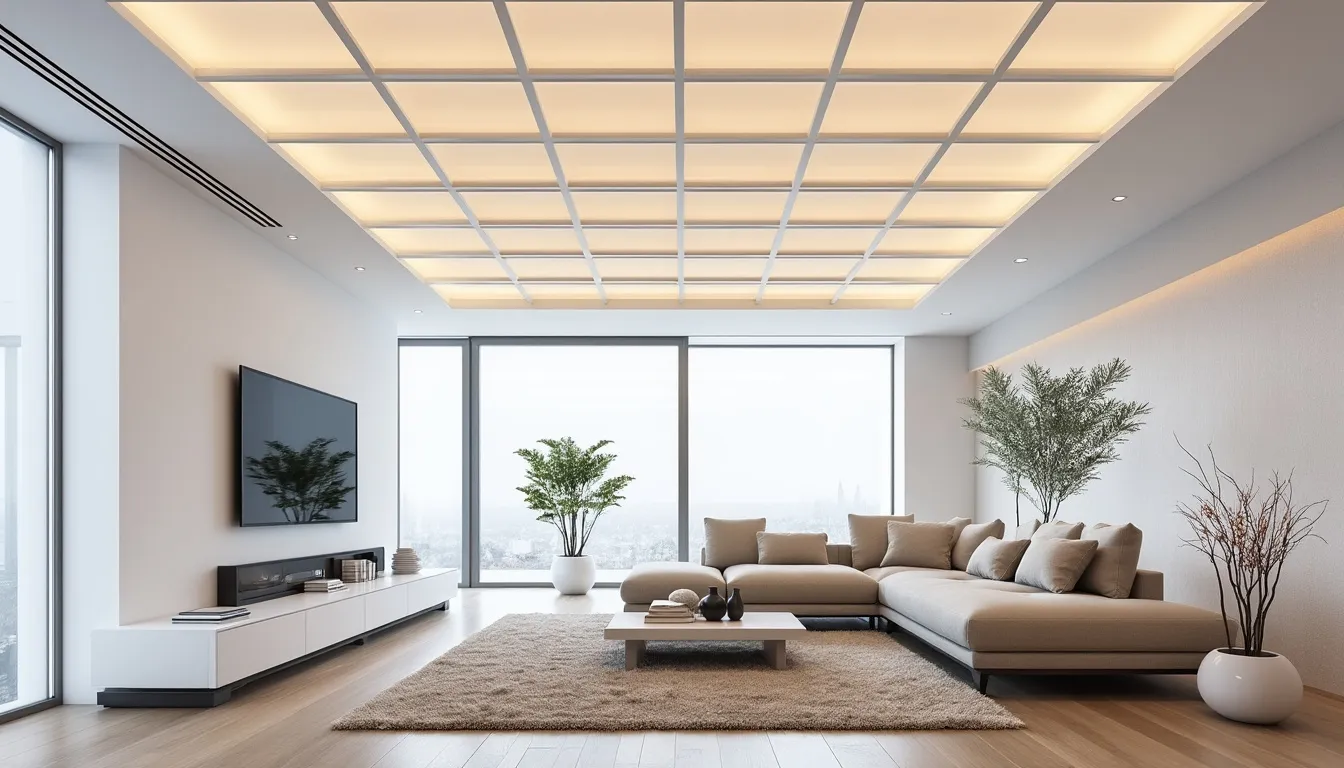
During a heatwave summer, the combination of improved cooling and reduced energy consumption makes the heating and cooling ceiling an attractive option. Unlike conventional air conditioners, it avoids creating dry and unpleasant air while maintaining a pleasant indoor environment, similar to what one experiences in an old stone house.
These ceilings offer low-consumption cooling, requiring only a slight movement of air to circulate a comfortable ambient temperature. Additionally, using solutions such as passive cooling probes, which consume no energy, ensures that summer comfort is achieved without additional constraints.
Cooling system | Efficiency (W/m².K) | Energy consumption |
|---|---|---|
Radiant cooling ceiling | 10.8 | Regular |
Underfloor heating | 5.8 | High |
Traditional air conditioner | Variable | Very high |
Comparison with other systems
It is interesting to compare the heating and cooling ceiling with other thermal regulation methods available on the market. Here is a synthetic comparison table:
System | Winter comfort | Summer comfort | Energy efficiency |
|---|---|---|---|
Radiant ceiling | High | High | Optimal |
Underfloor heating | Good | Medium | Passable |
Convection radiators | Medium | Low | Low |
Air conditioner | Low | High | Medium |
FAQ
1. What are the installation costs of a heating and cooling ceiling?
Costs can vary significantly depending on the size and complexity of the installation, but in general, installation is faster and less expensive than traditional systems.
2. How is the maintenance of a heating and cooling ceiling system handled?
Maintenance is minimal, but it is recommended to perform regular checks to ensure everything is functioning correctly. Technical expertise can thoroughly inspect the system.
3. Can a heating and cooling ceiling be combined with other systems?
Yes, it is possible to integrate this system with existing equipment like condensing boilers or heat pumps for maximal optimization of energy efficiency.
4. What is the lifespan of a heating and cooling ceiling?
In general, these systems are designed to last several decades, with little degradation in efficiency if properly maintained.
5. What is the difference between cooling and air conditioning?
Cooling by ceiling does not operate on the principle of air dehumidification, unlike air conditioning. It provides a feeling of coolness without drying out the ambient air.