Cold radiators: discover the causes and solutions for effective bleeding
4 min read
As winter approaches, there is nothing more frustrating than realizing that one of your radiators, meant to provide you warmth and comfort, remains desperately cold. In the face of this inconvenience, it is essential to understand the possible causes and apply the solutions available to you. This article explores in detail why a radiator may remain cold even after bleeding, as well as the steps to follow to resolve this issue. You will also learn how to prevent this from happening in the future.
The causes of a cold radiator after bleeding
Before discussing the solutions, it is crucial to identify the potential reasons why your radiator may remain cold. Several factors can be at play, each requiring special attention.
Persistent air intake: Even after an initial bleed, there may still be some air trapped in the radiator, hindering the circulation of hot water.
Boiler issues: If your boiler has malfunctions, this will affect the entire heating circuit, rendering certain radiators inoperative.
Hydraulic imbalance: Poor configuration of your heating circuit can prevent uniform circulation of hot water, leading to cold radiators.
Sludge accumulation: Waste and debris that have accumulated in the circuit can obstruct the proper functioning of radiators.
Faulty thermostatic valve: If this valve is not functioning properly, it may block the passage of hot water to the radiator.
Identifying signs of malfunction
It is important to recognize if the problem is related to the heat position in the radiator. Generally, if the bottom of the radiator remains cold but the top heats up properly, this may be a sign of an air accumulation. Conversely, if the radiator is entirely cold, the issue may be more serious.
Steps to follow to resolve the problem
Once you have identified the possible causes, it is time to move on to the appropriate solutions.
Steps to remedy a cold radiator after bleeding
Here is a step-by-step guide to help you revive your radiator stuck in icy cold.
Check the thermostat: Start by ensuring that the thermostat associated with your radiator is functioning correctly. A poorly adjusted thermostat may prove to be the main cause of the problem.
Check the boiler pressure: The recommended pressure in your heating system generally ranges from 1 to 2 bars. Use the filling tap located under the boiler to adjust this pressure if necessary.
Inspect the valves: Examine the valves of your radiator, particularly the thermostatic valve and the return valve. Ensure they are fully open as per the recommendations.
Perform another bleed: Repeat the bleeding procedure by following these steps:
Turn off the boiler.
Place a container under the bleed screw to collect the water.
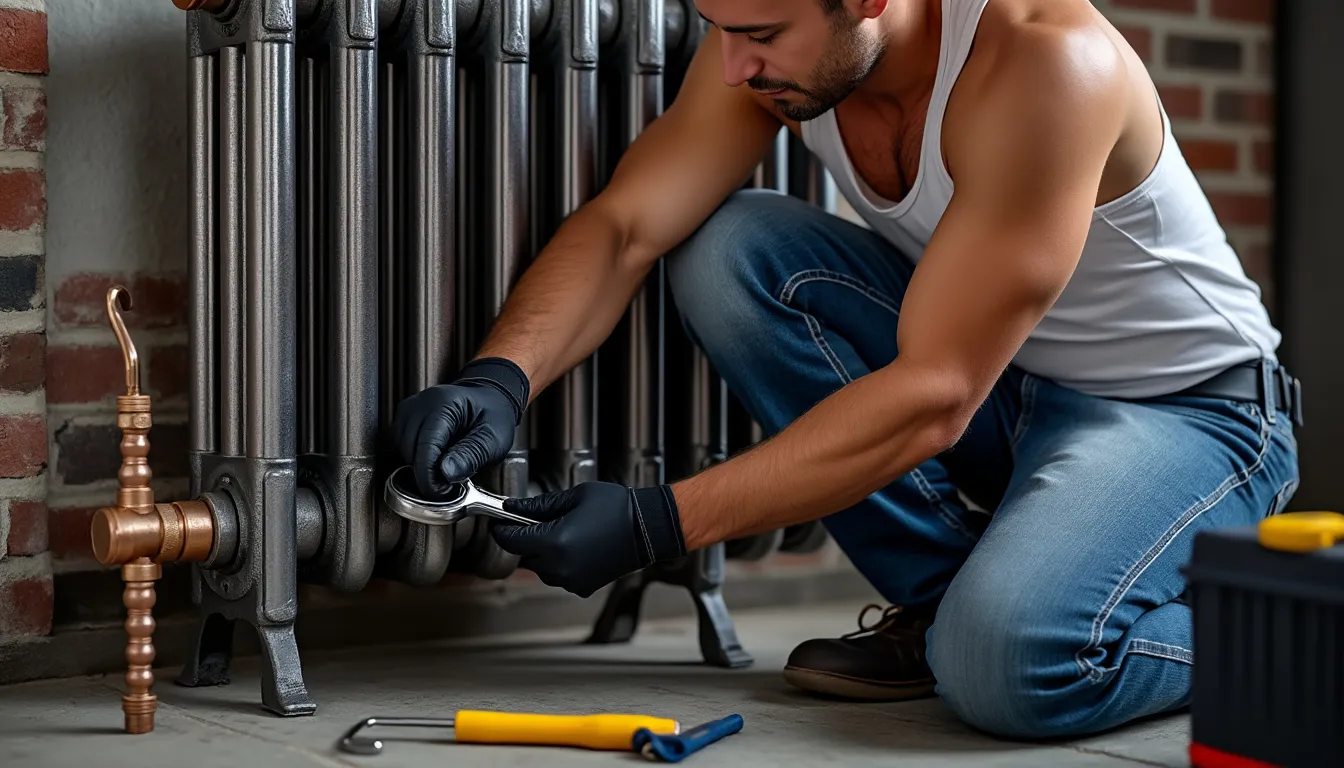
Gently open the bleed screw with a suitable key.
Allow the water to flow until it runs steadily, without air bubbles.
Close the bleed screw once the air is evacuated.
Turn off the boiler.
Place a container under the bleed screw to collect the water.
Gently open the bleed screw with a suitable key.
Allow the water to flow until it runs steadily, without air bubbles.
Close the bleed screw once the air is evacuated.
Balancing the heating circuit: To ensure an even distribution of heat:
Identify the hottest radiator and the one that stays cold.
Adjust the flow of the radiator valves to balance the heat.
Identify the hottest radiator and the one that stays cold.
Adjust the flow of the radiator valves to balance the heat.
Descaling and cleaning: Use a flushing agent to eliminate sludge and debris if necessary. If the problem persists, professional intervention may be needed.
Call a professional: If all steps have been followed without results, it is advisable to consult a professional for a thorough diagnosis.
Anticipating future problems
To minimize the risk of cold radiators in the future, regular maintenance is essential.
Bleed your radiators at least once per season.
Check and adjust the pressure of your boiler every month.
Schedule an annual maintenance with a qualified professional.
The most common solutions recommended by brands
Different heating brands such as Atlantic, Ferroli, and Thermor offer product ranges designed to optimize the functioning of your heating system. The radiators from Radson and Noirot are also known for their efficiency and reliability. Make sure to use quality equipment for a durable installation.
Brand | Type of Product | Main Features |
|---|---|---|
Thermor | Electric radiator | Energy efficiency, modern design |
De Longhi | Supplementary heating | Portable, adjustable, enhanced safety |
Stiebel Eltron | Central heating | Advanced technology, energy economical |
Schneider Electric | Energy management | Connected solutions for optimized heating |
Saunier Duval | Wall-mounted boiler | Compact, soundproof |
Acova | Designer radiator | Aesthetic, customizable options |
FAQ on cold radiators
Why is my radiator cold while others work well?
This may be due to an accumulation of air in the heating circuit. A bleed may be necessary to restore the circulation of hot water.
How can I easily bleed my radiator?
To bleed your radiator, simply locate the bleed screw at the top of it. Use a container to collect the water and turn the screw counterclockwise until the air escapes.
What should I do if my radiator remains cold after bleeding?
Check if the radiator's adjustment valve is open. If it is closed or misadjusted, hot water will not circulate properly.
How can I tell if the heating pump is working well?
Make sure the pump is running by listening for a low circulation noise. You may also feel a slight vibration if you place your hand on its body.
What other reasons could explain why my radiator is not heating?
Other problems may include a faulty thermostatic valve or an imbalance in the entire heating circuit. In this case, balancing the circuit can help ensure that all radiators receive heat evenly.