
Energy renovation: understanding the DPE and your heating priorities in 2025
4 min read
Energy renovation is at the heart of the concerns of many homeowners in France. By 2025, issues related to the energy performance of homes will be more pressing than ever, particularly due to new regulations and environmental imperatives. The central question remains: how to improve the energy efficiency of your home while maximizing savings? This article aims to decipher the subtleties of the Energy Performance Diagnosis (DPE) and outline the priorities to address in terms of heating to ensure optimal comfort and reduced bills.
What is extensive renovation and its benefits?
Extensive renovation, often referred to by the National Housing Agency (Anah), fits this definition: a set of works carried out simultaneously to optimize the energy performance of a home. Unlike one-off interventions, such as replacing a heating system, extensive renovation aims for a global transformation. This notably involves:
Carrying out at least two insulation works, such as wall and attic insulation.
Reducing your DPE by at least two classes for example by improving a house rated F to D.
The undeniable advantages of extensive renovation
Why opt for these renovation works? Here are four major benefits to consider:
Significant energy savings: Renovation can reduce your energy consumption by 55% to 80% depending on the extent of the works.
Increased thermal comfort: By improving insulation, your energy needs decrease, thus increasing the comfort of your home.
Ecological benefits: A more efficient habitat limits environmental impact and meets sustainability requirements.
Property enhancement: Renovation and energy efficiency increase the value of your property on the market.
In France, many homes are classified as energy sieves. The government strongly encourages extensive renovation, supported by subsidies and rental regulations. This constitutes a valuable opportunity for homeowners looking to combine comfort, savings, and property enhancement.
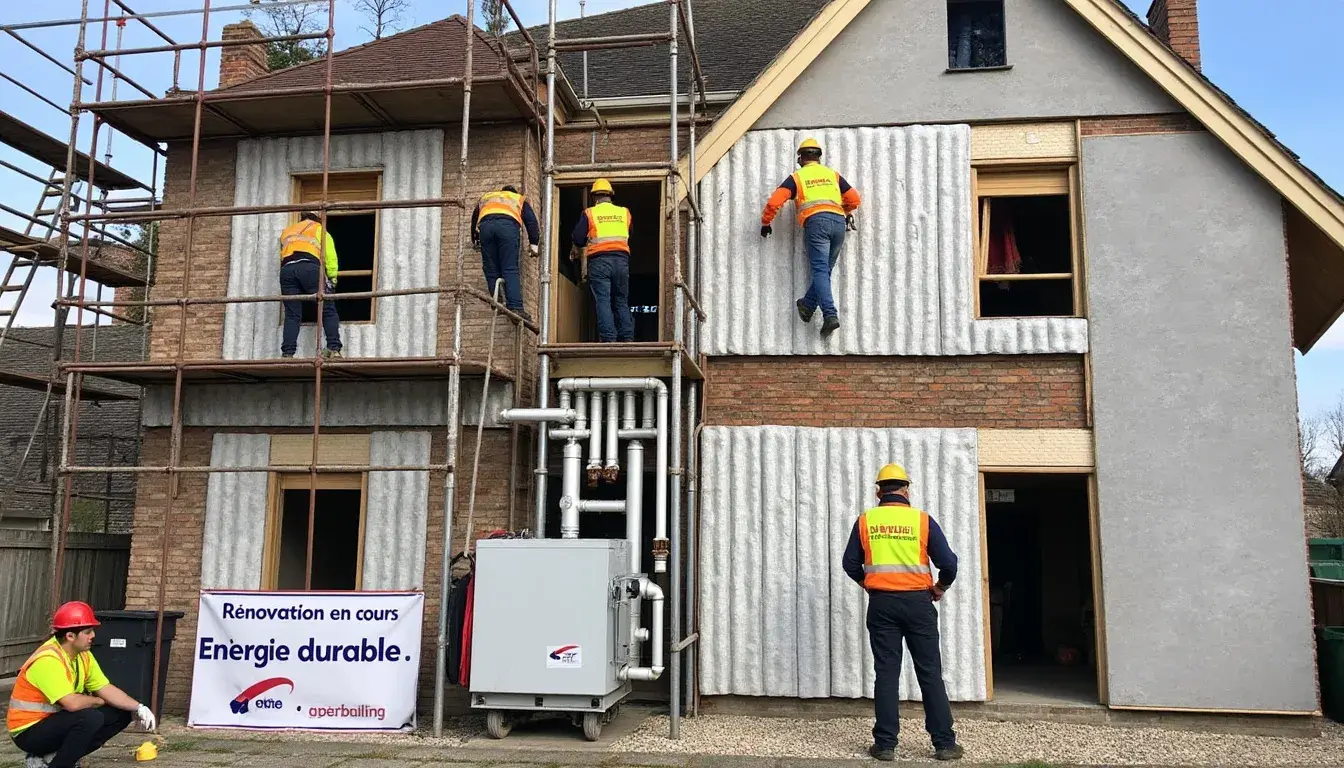
Types of works to consider in 2025
When engaging in an extensive renovation project, it is crucial to properly define the necessary works to optimize the energy performance of your home. The energy audit, a preliminary step, will allow you to identify the improvements to be made.
Main categories of works
Type of works | Examples |
|---|---|
Thermal insulation | Attics, walls, floors, glazed partitions |
Heating and hot water | Replacing fossil boilers with ecological systems |
Ventilation | Improving air circulation |
It is also recommended to opt for high-performance equipment, such as heat pumps or biomass boilers. These ecological technologies are increasingly popular and are often affordable thanks to financial aids.
Financial aids available for extensive renovation
The question of finances is often a barrier when it comes to undertaking renovation works. However, various schemes can lighten the financial burden. In 2025, here are the main aids available:
MaPrimeRénov': The main state aid, its amount depends on income and the amount of works.
Energy bonus: Granted by private actors and can reach up to €25,000.
Reduced VAT: A rate of 5.5% instead of 20% for energy improvement works.
Zero-interest eco-loan: Allows borrowing up to €50,000 for overall renovation works.
Local aids: Vary according to your municipality; check with your town hall for more information.
It is important to check if your project is being carried out by a RGE-certified craftsman (Recognized Guarantor of the Environment), as this determines eligibility for these aids.
Concrete example of extensive renovation
To illustrate the benefits of extensive renovation, let’s take the example of a house located in Pas-de-Calais. In 2025, its owners, classified as having an intermediate income, wished to replace their oil boiler with a more economical heat pump. Thanks to an energy audit, their house was rated F, a true energy sieve. In addition to the heating system, they also chose to improve the insulation of their home.
Works carried out
Insulation of sloping roofs: €8,424
Interior wall insulation: €12,822
The total cost of the works amounted to €38,796, of which €23,278 was covered by financial aids. The remaining amount to be paid by the owners is therefore €15,518, corresponding to a subsidy of 60% of the initial quote.

At the end of this extensive renovation, the energy gain was impressive: 79% energy savings, allowing a transition from class F to C. Moreover, the investment was profitable in just 3.5 years.
FAQ on extensive renovation
What types of works are included in an extensive renovation?
An extensive renovation includes insulation, heating, and ventilation works, ensuring a significant improvement in energy performance.
What is the average cost of an extensive renovation?
Costs can vary, but one should expect an average quote of around €40,000, not including financial aids that can cover up to 90% of the cost.
What financial aids are available?
Aids such as MaPrimeRénov', the Energy bonus, and local subsidies are available and can alleviate the cost of works.
What criteria must I meet to benefit from the aids?
Your project must be carried out by a RGE-certified craftsman, and you must meet income criteria determined by the aid organizations.
What is the environmental impact of extensive renovation?
Extensive renovation reduces the energy footprint of your home, thus contributing to environmental preservation while complying with energy transition standards.