Tiny house: autonomous heating solutions for compact comfort
6 min read
The lifestyle in a Tiny House is becoming increasingly popular, especially for its innovative and energy-efficient aspects. These compact homes are designed to provide optimal comfort while minimizing their ecological footprint. In this context, the choice of heating systems is crucial, both for the well-being of its occupants and for their energy independence. This article explores the various heating solutions suitable for Tiny Houses, highlighting their advantages, characteristics, and impact on living comfort. Through a pragmatic approach, we will discover how to combine thermal comfort and respect for the environment.
The benefits of Tiny Houses in terms of heating
Before addressing the various heating solutions available for Tiny Houses, it is essential to talk about the architecture of these homes. Thanks to their reduced size, Tiny Houses offer remarkable thermal compactness, which means they retain heat more efficiently compared to traditional houses. This can be explained by:
A high-performance insulation, made from top-quality bio-based materials, which helps retain heat in winter and freshness in summer.
An optimized layout that encourages the circulation of warm air.
These characteristics make Tiny Houses an excellent choice for those looking for effective and environmentally friendly Tiny House Solutions. Consequently, the chosen heating method can be lighter and less energy-consuming. All these reasons give rise to several solutions suitable for these reduced living formats.
Gas heating: an option for energy independence
For many Tiny House residents, finding a solution for energy independence is a priority. Gas heating then emerges as a top choice. By integrating devices such as gas radiators, water heaters, and even cooking plates, it allows for a significant reduction in energy needs.
In this configuration, one can disconnect from the electrical grid and opt for an external technical box containing propane tanks. These systems are often very well insulated, ensuring a low gas consumption and optimal natural heating comfort in all seasons.
It should be noted that the pyrolysis of gas heaters provides a gentle and harmonious heat thanks to the melting of the combustion chamber. The thermostats allow for easy control of the ambient temperature, thus ensuring an intelligent management of heat. Residents of a Tiny House with this solution generally express their satisfaction regarding the efficiency and comfort it offers.
Electric heating: a practical and accessible choice
For those looking for a 100% electric option, electric heating is a practical alternative, especially for Tiny House models designed for seniors or permanent use. Among the commonly used systems, oil-filled heaters can be found. This heating method stands out for its ability to diffuse gentle heat that is pleasant.
A 1500W appliance is sufficient for the reduced volume of these homes. The quick installation and meticulous adjustment make them highly appreciated options. This system is known for its efficiency, and many users are attracted by its ease of use and low maintenance costs.
Reversible air conditioning: year-round comfort
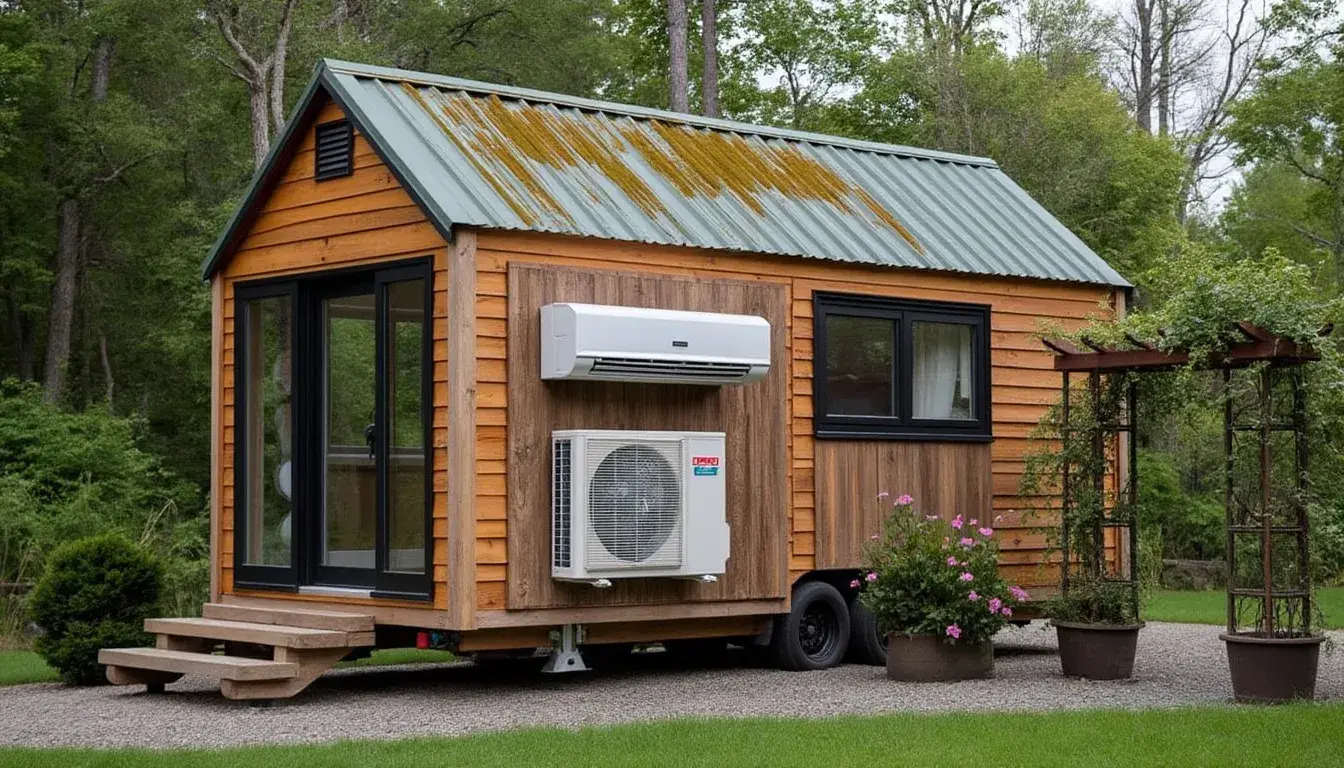
In response to rising seasonal temperatures, reversible air conditioning systems are gradually becoming prominent in discussions about heating solutions. They allow for cooling in summer while heating in winter. Although this option may not be the most ecological, its practicality and comfort often lead to its adoption, especially by those who rent their Tiny House to guests seeking a high comfort experience.
The units we offer are high-performance monobloc models, easy to install and providing effective temperature regulation throughout the year. User reviews have shown a growing interest in these devices, which meet various needs in both urban and rural contexts.
Wood stove: a friendly and warm solution
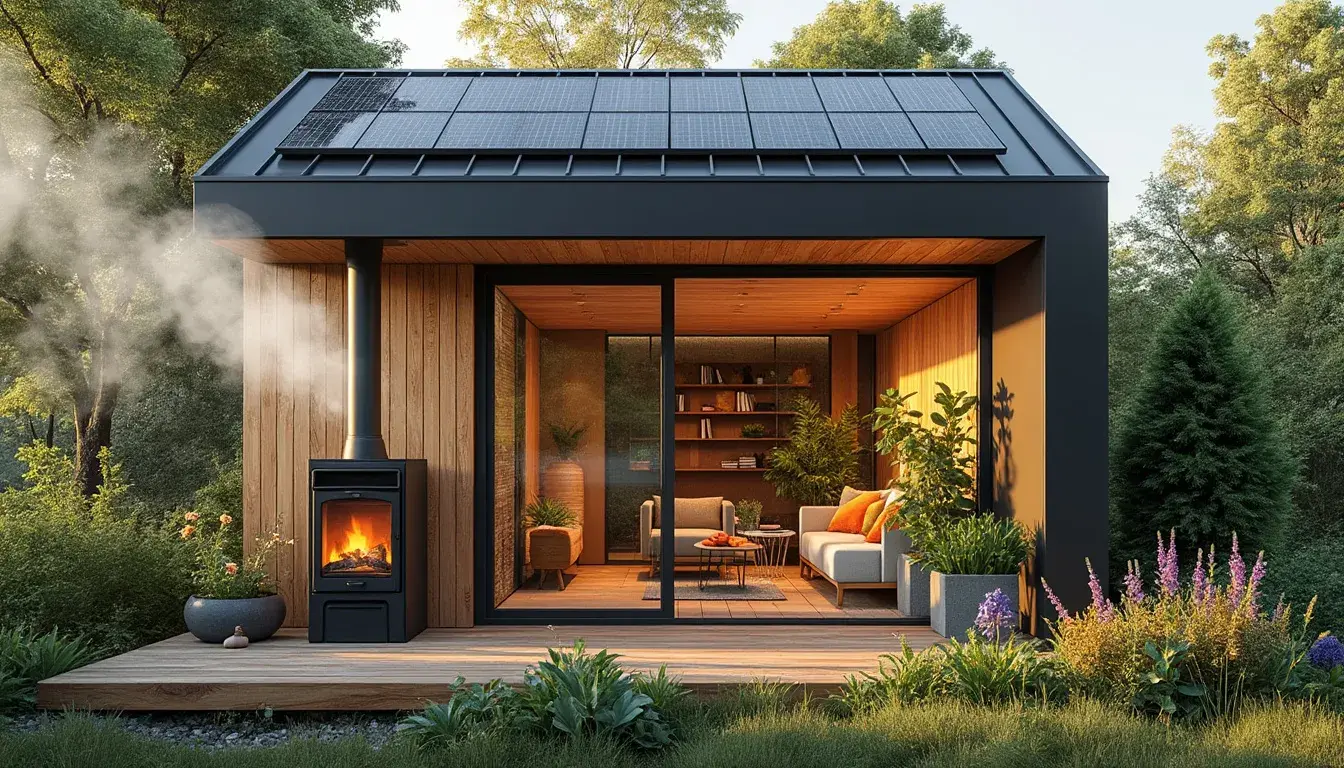
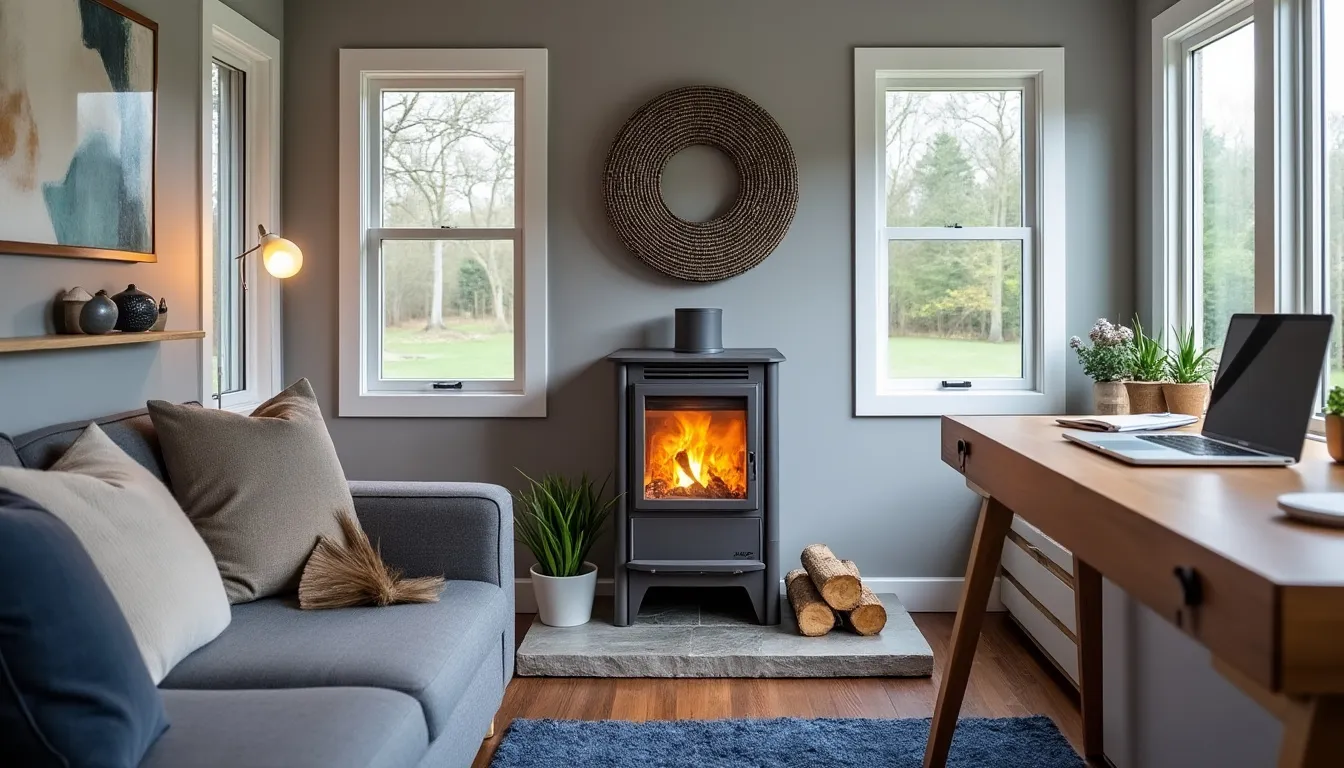
The wood stove, although sometimes underrated in a space as small as a Tiny House, provides a friendly and authentic warmth. Compact models of 2 kW are often chosen for these homes, creating a warm atmosphere during winter evenings.
However, it is important to consider certain aspects: this solution does not have automatic regulation like a thermostat. Therefore, temperature control must be done manually, which may involve opening windows if the heat becomes too intense. Additionally, it requires some preparation for the wood, and it is essential to anticipate the necessary amount for the season.
Pellet stove: to be avoided in Tiny House mode
The pellet stove is often mentioned as a heating solution, but in the context of a Tiny House, it is generally not recommended. The smallest models are often 5 to 6 kW, well beyond what is actually needed in these small spaces where mini-heating reigns.
Using a pellet stove in a Tiny House can lead to incomplete combustion, poor efficiency, and increased maintenance due to the rapid fouling of burners. This can lead to unnecessary complexity, making this method of heating unsuitable or even problematic for the realization of a compact energy-efficient home.
Underfloor heating: the future of comfort
Underfloor heating has evolved and adapted to the needs of Tiny Houses. This solution has the advantage of freeing up space on the walls, often occupied by radiators. Thanks to a gentle temperature adjustment, it avoids unpleasant temperature spikes, thus offering maximum comfort. This represents an ideal solution for Compact Energy Home projects.
Modern systems are more accessible than ever, allowing for simplified and effective installation. The gradual rise in temperature contributes to indoor well-being, and occupants of this type of home generally report positive feedback on this heating option.
Towards energy independence with Tiny Houses
Living in a Tiny House is often associated with a desire to reduce dependence on traditional infrastructures. This opens the way to lifestyles that promote independence, both in terms of energy and water resources. This trend is part of a broader dynamic of environmental respect, seeking to reduce carbon impact.
To experiment with an off-grid lifestyle, various innovative devices are being integrated into Tiny Houses. For example:
Solar panels: A reliable source of electrical supply, allowing for complete autonomy.
Composting toilets: An ecological alternative for waste management.
Rainwater harvesting: A system that contributes to potable water management and self-sufficiency.
This illustrates the philosophy of living “off-grid.” This choice is symbolized by devices such as the compact NOMAD, designed to operate autonomously in all types of conditions. Considering autonomy parameters in the design of Tiny Houses offers their occupants greater freedom.
Nomad: the Tiny House in autonomous mode
The NOMAD, designed by Minimaliste, is an excellent example of a Tiny House capable of living off-grid. Equipped with solar panels with lithium batteries of 5 to 10 kWh, it provides the necessary power for high-quality household appliances.
Its structure is designed to maximize comfort in a reduced space. The design is modern with finishes favoring simplicity while integrating all the necessary amenities. Also noteworthy are its composting toilets, black water tanks (136 liters), and gray water tanks, which illustrate its efficiency in resource management. With this type of construction, living autonomously is accessible to everyone.
Conclusion: a sustainable and comfortable future
In light of the environmental issues affecting our planet in 2025, Tiny Houses represent a promising future. The proposed solutions, whether gas, electric, or wood-based, offer a multitude of options suited to each project and lifestyle. The quest for energy independence, coupled with informed choices regarding comfort, underscores the effectiveness of these homes as models for a sustainable future.
FAQ
1. What is the most economical heating method for a Tiny House?
Gas heating is often considered the most economical option, especially due to the low consumption resulting from the reduced size of the Tiny House and its good insulation.
2. Can a wood stove be installed in any Tiny House?
Yes, but it is essential to choose a compact model and to properly assess the heating capacity to avoid overheating.
3. What is the most ecological option for heating a Tiny House?
The wood stove offers a friendly solution, but devices such as solar panels and low-impact electric heaters are also good ecological alternatives.
4. How much does it cost to install heating in a Tiny House?
Costs vary depending on the type of heating chosen. For gas heating, a budget of 2500 to 5000 euros, including installation, is generally required.
5. What benefits does underfloor heating provide in a Tiny House?
Underfloor heating saves wall space and provides a uniform heat distribution, which is ideal in a reduced space.