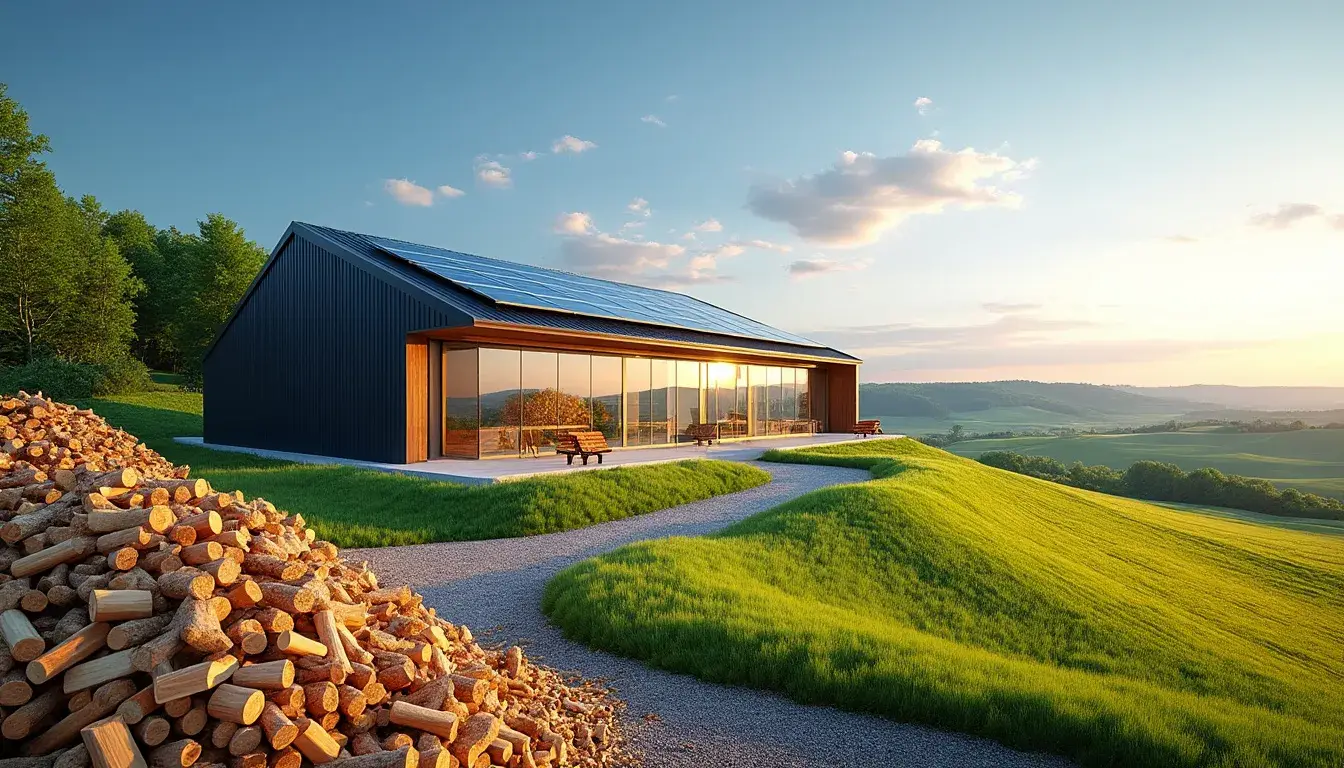
Biomass as a sustainable heating solution: local supply at your service
5 min read
Nowadays, in the face of environmental challenges and the search for sustainable energy solutions, biomass presents itself as an attractive option for domestic heating. Before committing, many questions arise regarding biomass boilers. Are these heating systems really effective? Are they suitable for all types of houses? And above all, what are the financial and environmental implications of their use? This article aims to explore all these questions while highlighting local sourcing as a key for Ecological Heating solutions.
What is biomass and how does it work?
To fully grasp the potential of biomass, it is crucial to understand what it encompasses. Biomass refers to the organic matter derived from plants and animals that, when burned, releases energy in the form of heat. This includes agricultural residues, wood chips, and even organic waste. In addition to being a renewable alternative, it is an integral part of what is called Bioenergy.
The Green Heat generated by biomass is considered more natural compared to traditional gas or oil heating systems. Indeed, the carbon dioxide emitted during the combustion of biomass is offset by the CO2 absorbed by plants during their growth. By 2025, the use of biomass could be further enhanced by technological advances allowing for optimal combustion.
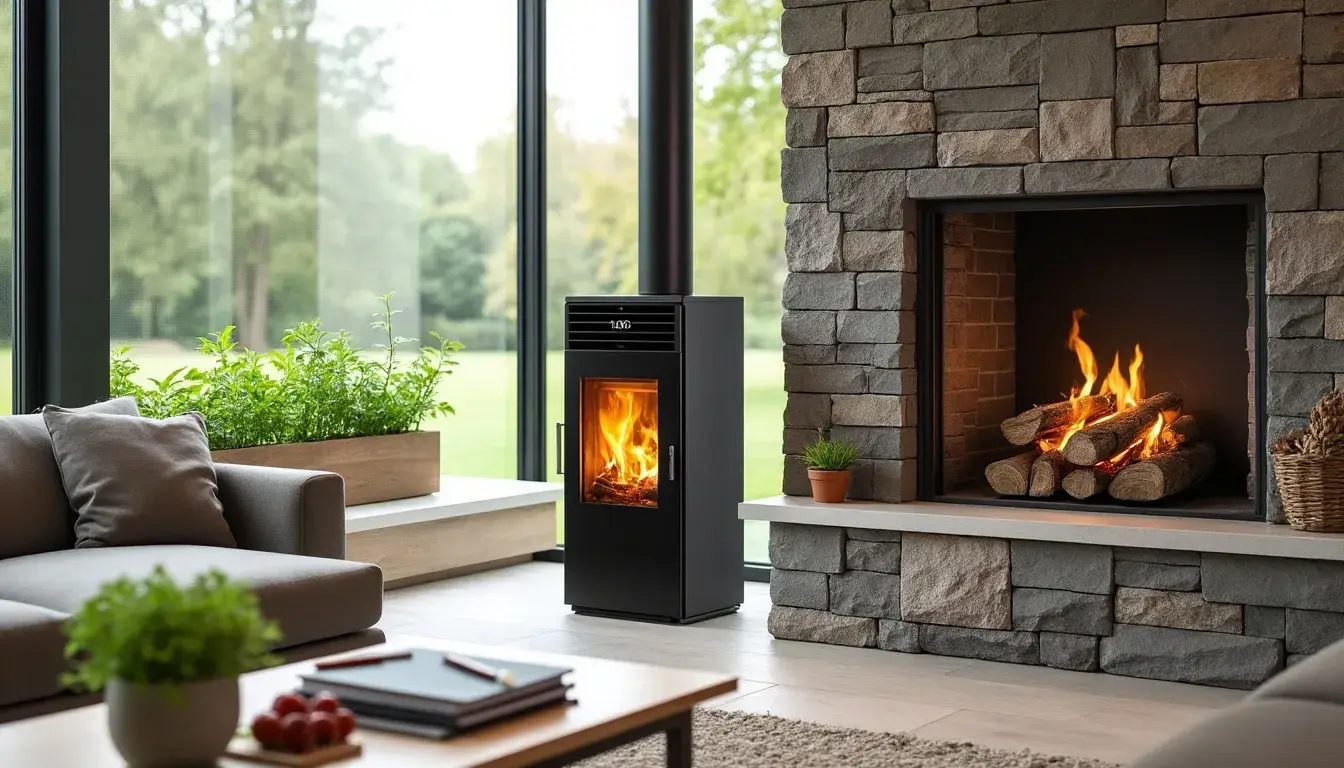
The different types of biomass
There are three main categories of biomass, each with its own characteristics:
Solid biomass: Includes wood, sawdust, and pellets. These items are often used in boilers and wood stoves.
Agricultural biomass: Comprises crop residues such as straws and manure.
Fermentable biomass: This type includes sewage sludge and manures, generally used for biogas production.
Whether you are considering a Domestic BioHeating system or an industrial heating appliance, it is essential to choose the right type of biomass that meets your needs. This will depend on your available space, your energy consumption habits, and your desire to have a positive impact on the environment.
Choosing your biomass boiler: how to find your way?
When considering switching to biomass for your heating system, several criteria must be taken into account, including the type of boiler, the size suited to your home, and the fuels you will use. Among the most common options, we find:
Log boilers: Easy to install but require frequent sourcing.
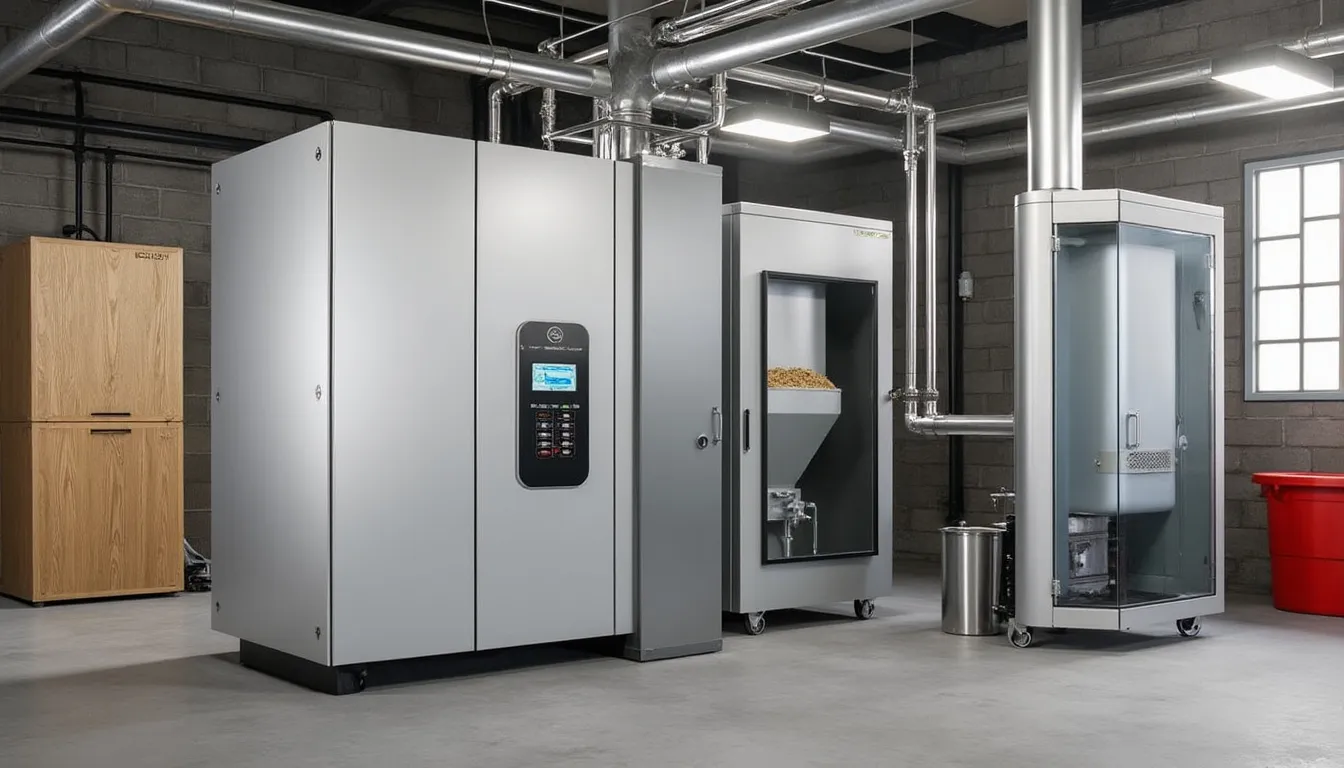
Pellet boilers: Very popular for their efficiency and convenience. They integrate well into your home thanks to automated hopper systems.
Chip boilers: These models are generally more suitable for large properties or industrial installations.
The choice of boiler depends on several factors:
The size of your home and the desired level of thermal comfort.
The initial cost of purchase and installation, which can range from €5,000 to €20,000.
The energy efficiency, where modern boilers can achieve efficiencies of 80% or more.
Comparison of biomass boilers
Type of boiler | Installation cost (€) | Efficiency (%) | Type of fuel |
|---|---|---|---|
Log boiler | 3,000 - 15,000 | 60 - 75 | Wood logs |
Pellet boiler | 5,000 - 20,000 | 80 - 90 | Wood pellets |
Chip boiler | 10,000 - 25,000 | 70 - 85 | Wood chips |
One should also consider the question of fuel supply. Here, choosing a local supplier plays a crucial role in reducing your carbon footprint. By using resources available in your area, you choose environmentally friendly heating while supporting the local economy, what I call LocalHeat.
The advantages and disadvantages of biomass boilers
Switching to a biomass boiler presents many advantages, but it is equally essential to be aware of its disadvantages.
Advantages:
Reduction of CO2 emissions and reliance on renewable energy, which decreases environmental impact.
Potential savings on heating costs, especially if local fuels are cheaper than oil or gas.
Possibility to benefit from financial aids for the installation of biomass boilers.
Disadvantages:
Storage spaces often require larger areas for the fuel.
Higher initial purchase and installation cost than a conventional boiler.
Regular maintenance required, although modern systems are designed to reduce this necessity.
Sustainability and environmental respect
In addition to being a heating solution, biomass can also play a significant role in the circular economy by transforming organic waste into a source of energy. For many households, this means not only benefiting from Biomass Energy, but also contributing to a Biosource system that promotes recycling and sustainability.
For example, by using wood waste to fuel your boiler, you prevent these materials from ending up in a landfill. This allows for more efficient resource management and underscores the growing importance of Natural Heating within the framework of the energy transition of 2025.
Financial aids and subsidies for the installation of a biomass boiler
One of the major barriers to adopting biomass boilers remains the high initial cost. Fortunately, several financial aids are available to alleviate this burden.
Here is a summary of the main aids:
Energy bonus: About €5,000 for the installation of a log or pellet boiler.
MaPrimeRénov’: Up to €10,000 for pellet boilers.
Zero-interest eco-loan: Financing up to €30,000 repayable over 15 years, with no interest.
Reduced VAT at 5.5%: Applies to equipment and their installation.
The steps to follow to benefit from subsidies
To take advantage of these aids, here are some key steps:
Find out about the eligibility criteria for each aid.
Request quotes from certified craftsmen.
Carry out the work with a recognized professional and keep all invoices.
Financial aid | Maximum amount (€) | Eligibility conditions |
|---|---|---|
Energy bonus | 5,000 | Installation of a biomass boiler |
MaPrimeRénov’ | 10,000 | Income conditions |
Zero-interest eco-loan | 30,000 | Renovation projects |
Reduced VAT | NaN | Equipment and installation |
These aids have a double advantage; they make your investment more accessible while contributing to a more sustainable future. By looking for a local supplier, you may even benefit from reduced prices on fuel, which only enhances your long-term return on investment.
FAQ about biomass boilers
What is a biomass boiler?
A biomass boiler is a heating system that uses organic materials such as wood or pellets to produce heat.
What are the main fuels for biomass boilers?
The main fuels include wood logs, wood pellets, and wood chips.
What financial aids are available for installing a biomass boiler?
Aids such as the energy bonus, MaPrimeRénov', and zero-interest eco-loans are available to reduce the purchase and installation cost.
What is the cost of a biomass boiler?
The cost of a biomass boiler can range between €3,000 and €20,000, depending on the power output and options chosen.
How to ensure fuel supply?
It is recommended to choose a local supplier for your fuel to reduce your carbon footprint and ensure a steady supply.