Connected heating: how to integrate it into your smart home?
5 min read
Imagine a daily life where your home adapts to your needs, where every room breathes comfort and energy efficiency. In 2025, this vision becomes a reality thanks to advancements in connected heating technologies. At a time when more than half of households have connected devices, intelligent heating emerges as a priority to optimize our comfort while reducing our ecological footprint.
With a range of options from smart thermostats to integrated heating systems, you have the tools you need to control your domestic environment. This guide looks at the best equipment (such as Tado, Netatmo, Viessmann, and Honeywell) and will help you choose the ideal solutions to transform your home into a true haven of peace. Together, let's explore how these connected heating technologies can maximize your comfort while achieving significant energy savings.
The benefits of connected heating in your smart home
Connected heating represents a major evolution in the energy management of our homes. By integrating advanced technologies, it promises comfort, energy savings, and respect for the environment. Let's discover its main advantages together.
Energy savings and sustainability
One of the major concerns of households in 2025 is energy consumption. Thanks to smart thermostats like Ecobee and Honeywell, it is now possible to achieve significant savings on your heating bill. These devices analyze living habits and automatically adjust temperatures, thus minimizing any unnecessary expenses.
Savings of up to 15%: Smart thermostats can reduce your energy consumption by adjusting the temperature while you are away.
Sustainability: Reduction of carbon footprint by optimizing the use of energy resources.
Intuitive programming: Simply adjust your preferences via the mobile app, and let the system handle the rest.
Personalized comfort
Connected heating systems allow you to create tailored atmospheres that suit your preferences. By integrating equipment like connected thermostatic valves from Chaffoteaux, you can manage heating room by room. Thus, it is possible to heat only the rooms in use.
Custom atmosphere: Temperatures set according to your activities (work, relaxation, sleep).
Multiple zone management: Create different profiles for each room using devices like Tado or Viessmann.
Simplicity and control
With connected devices, controlling your heating has never been easier. Mobile applications offer real-time management of your installations, wherever you are.
Remote control: Manage heating from your smartphone, whether at work or on the go.
Precise notifications: Receive alerts in case of malfunction or energy-saving opportunities.
Brand | Key Products | Key Features |
|---|---|---|
Tado | Connected thermostats | Zone control, integration with voice assistants |
Honeywell | Smart thermostats | Adaptive programming, energy savings |
Viessmann | Central heating systems | Consumption tracking, compatibility with solar energy |
Netatmo | Climate sensors | Indoor air analysis, real-time notifications |
Integrating smart heating systems into your connected home
With the rise of home automation, integrating your heating system with other connected devices is essential. Thanks to ecosystems like Philips Hue or Somfy, you can automate complete scenarios, making your life even more comfortable.
Creating smart home scenarios
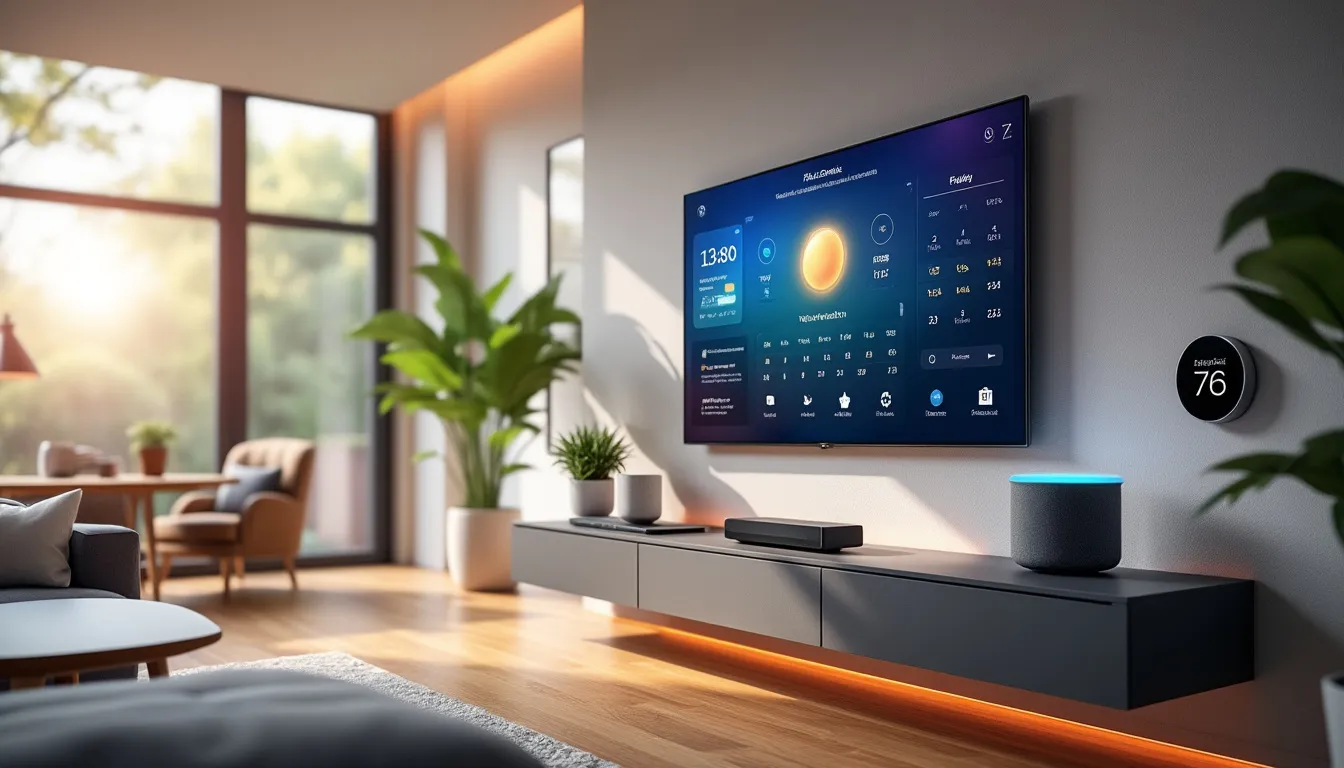
One of the main advantages of connected heating is the ability to couple it with other systems in your home to create automated scenarios. For example, as soon as you trigger your home alarm with devices like Somfy, the heating can automatically adjust to maximize your comfort while minimizing costs.
Customizable scenarios: Set lighting and heating adjustments for each moment of the day.
Security systems: Integration with cameras and alarms for optimal responsiveness in case of intrusion.
Interoperability and standardization
To ensure a smooth user experience, it is crucial that your devices are interoperable. In 2025, standards like Matter are emerging, allowing different brands to communicate effectively with each other.
Increased compatibility: Brands like Deltadore and Sauter adopt these standards to ensure easy integration into your ecosystem.
Flexibility: Add and remove devices at your convenience, without fearing any malfunction.
Best practices for a successful installation
To make the most of your smart heating, here are some practical tips:
Planning: Before installation, think about the rooms to be automated.
Monitoring: Use analysis tools to understand your consumption habits.
Regular assessment: Check the proper functioning of your devices and apply necessary updates.
Essential equipment for efficient connected heating
Brands offer a varied range of smart heating setups, allowing consumers to choose equipment that best meets their needs. Here is an overview of the key equipment available in 2025.
Smart thermostats
Among connected heating equipment, smart thermostats stand out for their efficiency. Brands like Tado, Netatmo, and Ecobee offer high-performance products with advanced features.
Tado: With its intuitive interface and geolocation options, it adjusts the temperature based on presence in the house.
Netatmo: Assesses air quality and optimizes heating based on your health.
Ecobee: Integrates heat sensors for precise control in each room.
Connected thermostatic valves
Thermostatic valves, such as those offered by Chaffoteaux, allow granular control of your heating system. They enable you to set the temperature of each room independently.
Easy-to-install kits: Do not require professional intervention for installation.
Room-by-room adjustment: Allow energy savings by heating only where necessary.
Frequently asked questions about connected heating
What are the main advantages of connected heating?
Connected heating offers significant energy savings, personalized comfort, and easy control from a mobile phone or web interface.
Is it difficult to integrate connected heating into an existing home?
Most connected heating systems are designed to be easily installed and integrated into established homes, although some configurations may require professional assistance.
Are connected heating devices secure?
Companies like Honeywell and Viessmann pay particular attention to security. Always ensure that your devices are protected by modern security protocols to prevent intrusions.
What is the installation cost of a connected heating system?
The cost can vary depending on the brands and desired features. Expect to pay between 100 and 500 euros for a smart thermostat, not including thermostatic valves and other accessories.
Do smart heating devices work without an internet connection?
The majority of connected heating systems require an internet connection for advanced features, but some models can be controlled via local commands if configured as such.