Central heating water vs electric: which solution to choose in 2025?
5 min read
In light of contemporary heating challenges, the question of choosing between a central water heating solution and an electric system becomes urgent. In 2025, the evolution of technologies, environmental regulations, and government subsidies reinforces the importance of this decision. This article addresses all aspects of these two choices, evaluating their performance, environmental impact, installation costs, and maintenance expenses.
Evaluating different central heating options
In the field of heating, several systems can meet household needs. Among them, central water heating and electric heating stand out for their specific features. Let’s first analyze the characteristics of these two systems.
Central water heating
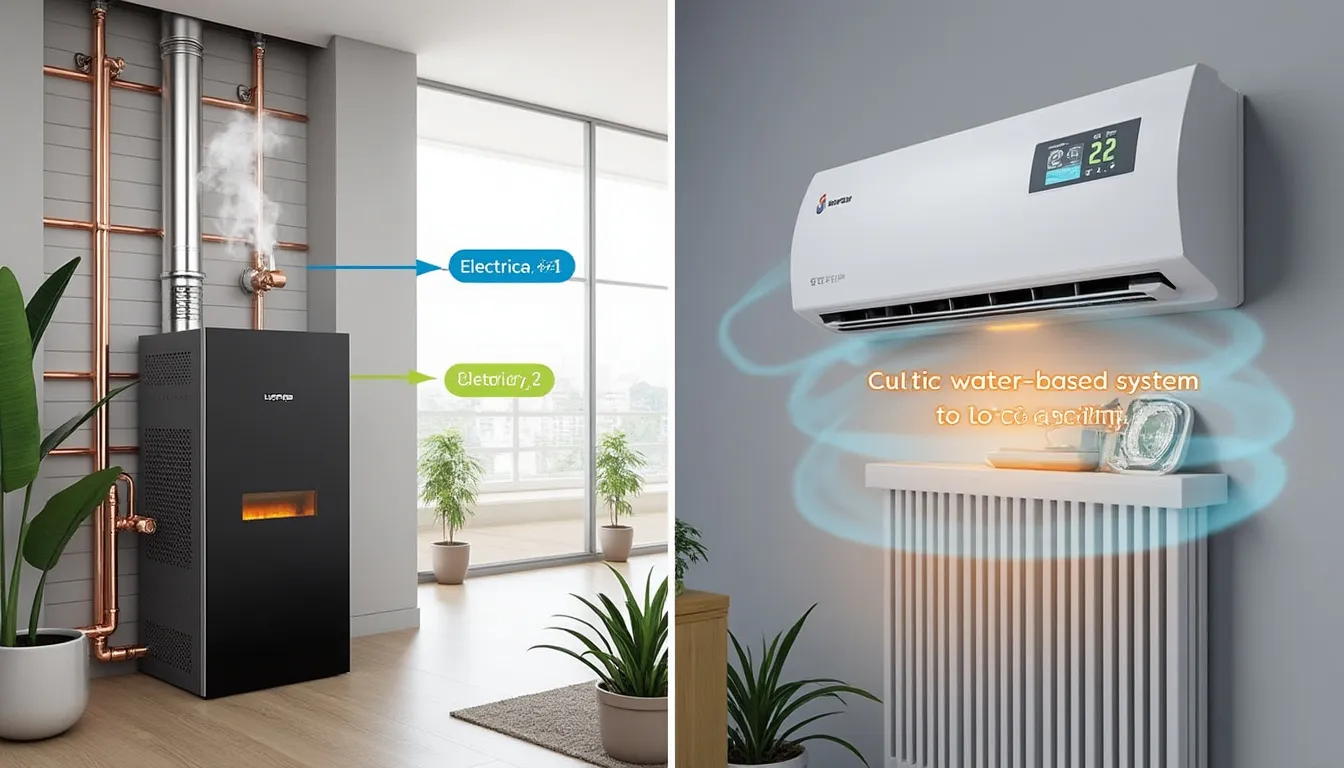
Central water heating, also known as hot water circuit central heating, uses hot water to heat spaces through radiators. This system can operate with various types of boilers, including:
Gas boiler: It can be either condensing or conventional and is often appreciated for its high energy efficiency.
Oil boiler: Although less eco-friendly, it can provide a temporary solution for households not connected to gas.
Wood boiler: Wood heating, while slightly more cumbersome in terms of supply, is often subsidized and environmentally friendly.
The performance of this type of heating can vary, but an efficiency above 90% is generally desired to maximize energy savings.
Electric heating
Conversely, electric heating is another common option. It is available in various forms, including:
Electric boilers: Especially interesting for small spaces, they are simple to install and very efficient in terms of performance.
Inertia radiators: They allow heat to be retained longer due to materials that accumulate heat.
Heat pumps: These systems use energy from the air or ground to efficiently heat a home while remaining economical in the long run.
Electric heating can be more expensive in terms of consumption, especially in areas where electricity costs are high.
Ecological impact and energy performance
Choosing a heating system in 2025 also requires consideration of its environmental impact and energy efficiency. As regulations trend toward more sustainable practices, it is essential to evaluate each solution through this lens.
Ecological impact of water heating
Central water heating offers a reduced carbon footprint, especially if it uses a renewable fuel or a condensing gas boiler. Indeed, these technologies recover heat from flue gases to improve their efficiency. Here are some points to consider:
The condensing boiler can achieve efficiencies of 92% to 100% by reusing heat from flue gases.
Wood boilers are particularly low in carbon, especially with certified wood pellets.
Ecological impact of electric heating
Electric heating, while easy to install and use, has drawbacks in ecological terms, depending on the energy source. If the electricity comes from renewable sources, then its use can be beneficial. However, one must also consider:
Increased dependence on electricity, especially during peak consumption periods.
An electricity cost often linked to a high carbon footprint if the energy source used is polluting.
Type of heating | Average energy efficiency (%) | Environmental impact |
|---|---|---|
Central water heating (gas boiler) | 92-100 | Moderate |
Central water heating (oil boiler) | 85-90 | High |
Electric heating | 95-100 | Variable |
Wood heating | 85-95 | Low |
Financial assistance for heating in 2025
Investing in an efficient heating system can represent a significant initial cost. However, various financial aids implemented by the State can alleviate this financial burden. In 2025, here are the main aids available:
MaPrimeRénov’: Aid to partially finance the purchase and installation of a new boiler.
Zero-interest eco-loan: Allows for interest-free financing of your energy renovation work.
Energy savings certificates: Individuals can receive bonuses in exchange for investments in less energy-consuming systems.
These aids often make the choice of a water heating system more attractive, especially if they can cover a significant portion of installation costs.
Maintenance and durability of boilers
To ensure the optimal operation of your heating system, regular maintenance is essential. But what critical points should be checked?
Maintenance of water boilers
Water boilers require regular checks to avoid breakdowns and ensure optimal longevity.
Check the condition of pipes and radiators.
Schedule an annual cleaning of the boiler to prevent residue buildup.
Monitor the water pressure and ensure it remains within standards.
Maintenance of electric boilers
Electric boilers, while generally simpler to maintain, also require careful handling:
Ensure that the heating elements are functioning correctly.
Regularly check the thermostats and regulators to prevent overconsumption.
In general, a good quality boiler, whether water or electric, can have a lifespan of 15 to 20 years if properly maintained.
Brand comparison for an informed choice in 2025
Finally, choosing a quality boiler incorporating the latest technologies can make all the difference in terms of performance and durability. Here’s an overview of reputable brands in the sector:
Groupe Atlantic: Choice of efficient gas and electric boilers.
Viessmann: Known for its condensing boilers, with an excellent price/performance ratio.
Saunier Duval: Offers reliable and durable boilers, adapted to various needs.
Ferroli: Renowned for its efficient oil boilers.
Atlantic and Thermor: Trusted brands for electric heating solutions.
Ecosolis: Leaders in the field of renewable energy heating systems.
Danfoss: Ideal partner for heating controls and connected installations.
Brand | Type of heating | Specifics |
|---|---|---|
Groupe Atlantic | Gas, electric boilers | Constant innovations, low consumption |
Viessmann | Condensing boilers | High efficiency, reliable |
Saunier Duval | Gas boilers | Intuitive design, durability |
Ferroli | Oil boilers | Advanced technologies |
FAQ
What are the main advantages of central water heating compared to electric heating?
Central water heating generally has higher efficiency, better heat regulation, and an adjustable environmental impact depending on the type of fuel used.
Is it possible to combine heating systems?
Yes, it is possible to install a hybrid system, combining, for example, a gas boiler with a heat pump to optimize energy consumption.
What is the average lifespan of a boiler?
A well-maintained boiler can have a lifespan of 15 to 20 years.
What financial aids can really reduce the installation cost of a central heating system?
Aids such as MaPrimeRénov’, the zero-interest eco-loan, and energy savings certificates are reliable mechanisms to reduce installation costs.
What is the best boiler brand for sustainable heating?
Brands such as Viessmann, Groupe Atlantic, and Saunier Duval are distinguished by their performance in terms of sustainability and technology.