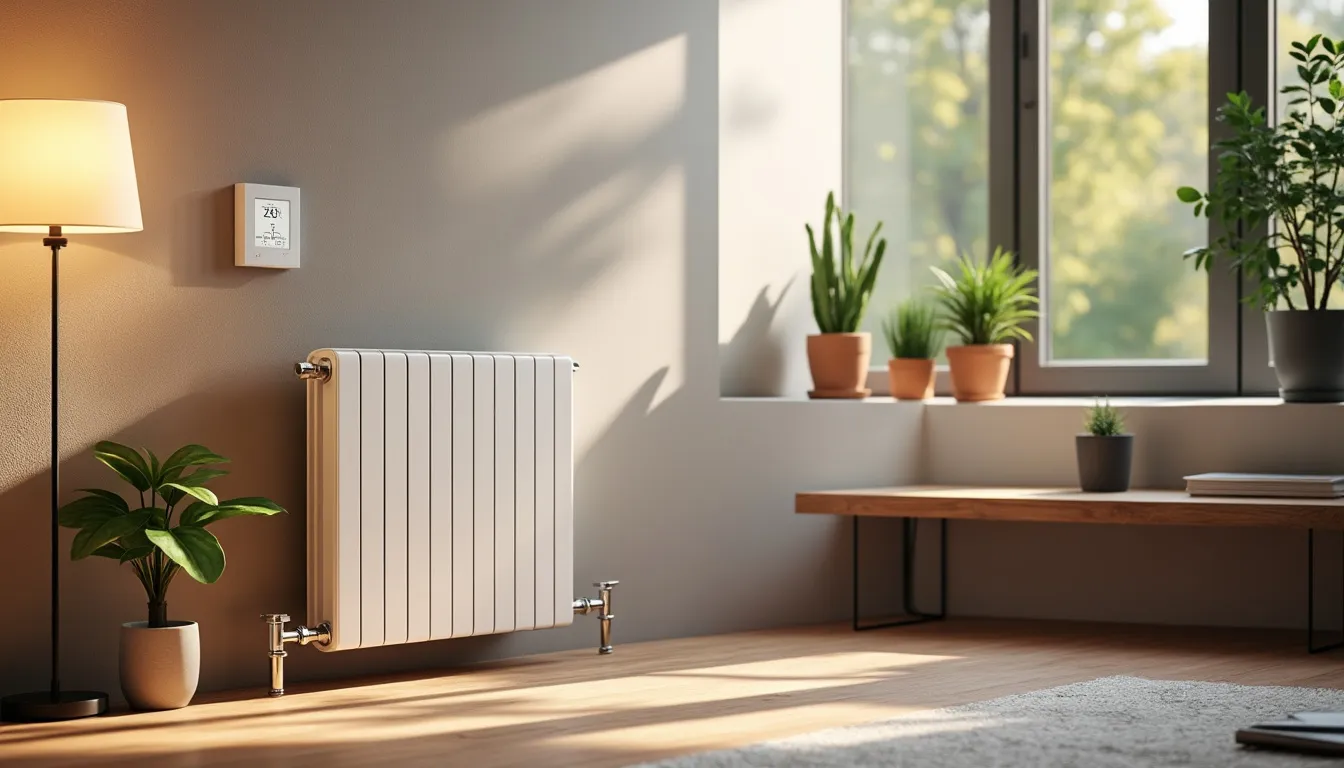
Economic electric radiators: how to reduce your energy consumption in 2025?
4 min read
In 2025, faced with rising environmental concerns and increasing energy costs, optimizing domestic energy consumption has become imperative for many households. Among the proposed solutions, electric radiators are often at the center of the debates. These devices are modernizing and becoming increasingly efficient, thus allowing for reduced bills while preserving our environment. Let’s explore together how to choose and use economical electric radiators, while examining the most reputable brands on the market.
The stakes of energy consumption in 2025
In 2025, it is estimated that household energy consumption needs to be managed more responsibly. This upheaval comes with economic challenges, such as rising energy tariffs. For the current year, it is crucial to learn how to control heating-related costs. More than just an economic choice, it is also a matter of sustainability. Distribution channels and heating technologies are continuously evolving to meet new environmental standards. In this context, installing efficient electric radiators appears as a key solution. Here are some areas to explore:
Understanding the different heating technologies available.
Evaluating the performance criteria of radiators.
Considering financial aids for energy installations.
Choosing the right electric radiator
The choice of a high-performance electric radiator is not to be taken lightly. It involves an understanding of the various technologies. Among the options to consider are convection radiators, inertia radiators, and radiant panel models. Each technology has its advantages and disadvantages:
Type of radiator | Advantages | Disadvantages |
|---|---|---|
Convector | Fast heating | High energy consumption |
Inertia | Durable heating, optimal comfort | Higher initial purchase cost |
Radiant panels | Energy savings, aesthetic | May require professional installation |
Among the brands that stand out in the market, Thermor and Noirot are recognized for their inertia radiators that offer both performance and energy savings. Another key point: evaluating the energy classes of radiators, where models rated A++ are particularly interesting.
Connected radiators: a new standard?
In the digital age, connected radiators add an extra dimension to managing your energy consumption. They allow you to program and adjust heating remotely using mobile applications. Models such as those from Dimplex or Airelec are becoming increasingly popular, offering flexibility and comfort. One undeniable advantage of these devices is their ability to assess your consumption habits and suggest adjustments to optimize your energy usage.
Gaining energy efficiency with good reflexes
Optimizing the use of your heating also involves simple everyday gestures. Here are a few:
Closing curtains at night to keep heat inside.
Ensuring regular maintenance of your equipment to guarantee its efficiency.
An additional tip is to combine the use of electric heating with other heat sources, such as solar panels. Models like Soleil or Atlantic integrate perfectly into hybrid systems, thus offering intelligent energy management.
Financial aids available for consumers
To encourage the transition to more energy-efficient heating systems, several financial aids are available. This includes grants and tax credits offered by the state. In 2025, these measures remain significant to reduce the cost of purchasing and installing efficient electric radiators. Here is an overview of the main aids:
Financial aid | Type | Conditions |
|---|---|---|
MaPrimeRénov' | Grant | For energy renovations |
Tax credit | Tax | For the installation of energy-efficient equipment |
Zero-interest eco-loan | Loan | To finance energy performance works |
Do not hesitate to consult dedicated online portals, such as those of Prime Coup de Pouce, to inform yourself about the aids available to you. These resources can significantly alleviate the cost of your radiator installation project.
Brands to prefer for durable radiators
It can be difficult to navigate among the numerous heating brands. However, some of them are recognized for the quality of their products. Here are some thoughts on brands to consider:
Edilkamin: known for its wood stoves and innovative heating solutions.
Delonghi: offers a varied range of user-friendly and portable heating devices.
Cecotec: renowned for its versatile and economical devices.
Calor: provides quickly adaptable heating solutions in all homes.
Each brand presents its own specifics, but all seek to combine comfort, efficiency, and durability. Do not hesitate to compare products and inquire about the experiences of other customers to make your choice.
FAQ
Q1: What is the average lifespan of an electric radiator?
The average lifespan of an electric radiator is generally 15 to 20 years, but it depends on usage, maintenance, and the quality of the device.
Q2: Do inertia radiators consume more energy?
No, on the contrary, inertia radiators are designed to retain heat longer, which can reduce energy consumption in the long term.
Q3: How to choose the power of an electric radiator?
To determine the necessary power, you need to consider the area to be heated, the insulation of the room, and the climate of your region.
Q4: Can different types of heating be combined in the same home?
Yes, combining different types of heating is entirely possible and can improve the energy efficiency of your home.
Q5: Are there aids for the installation of electric radiators?
Yes, several financial aids are available, including grants and tax credits to encourage the installation of efficient heating systems.