Efficient heating: how to adapt to the rigors of winter in the Grand Est
5 min read
With the arrival of winter, the need to heat our homes becomes urgent, especially in regions like Grand Est, where temperatures can drop quickly. In this regard, finding a balance between thermal comfort and energy savings is essential. How can you optimize your home heating without blowing your budget? In this article, I offer practical advice, expert recommendations, and technical solutions to face the rigors of winter while ensuring the preservation of our environment.
Understanding your home's heating needs
Before diving into heating adjustments, it is crucial to understand the specific needs of your home. Each room in the house has its own temperature requirements, influenced by usage and insulation. The key to effective heating management lies in a precise adaptation based on the characteristics of each space. This enables you to live in a comfortable environment while reducing unnecessary energy consumption.
The ideal temperatures for each room
According to the recommendations of the Ademe (Agency for the Environment and Energy Management), here is a table of suggested temperatures for the different rooms in your home:
Room type | Recommended temperature |
|---|---|
Living rooms (living room, kitchen) | 19 °C |
Bedrooms | 17 °C |
Bathrooms (in use) | 22 °C |
Little-used rooms | 16-17 °C |
Uninsulated spaces (basement, garage) | No heating |
Adapt your heating: practical tips
In addition to the temperature of each room, here are some tips for optimal heating:
Close the doors of little-used rooms to retain heat.
Draw curtains and close shutters at night to avoid heat loss.
Invest in insulating curtains to create a barrier against the cold.
Lower the temperature to 16-17 °C when you are away.
Use the frost protection mode during prolonged absences to prevent freezing.
It is also essential to remember that managing energy consumption does not necessarily require heavy investments. Sometimes, a simple adjustment of your thermostat can lead to significant savings.
Preserving heat: daily gestures
There are several simple gestures you can adopt to preserve warmth in your home:
Insulate your windows with thick curtains or shutters.
Use door snakes to prevent cold drafts.
Regularly maintain your heating system for optimal efficiency.
Dust your radiators to ensure proper heat distribution.
Furthermore, the Ademe reports that a decrease of one degree in ambient temperature can generate up to 7% savings on your annual consumption. A small gesture that can make a real difference on your energy bill!
Choosing the right heating system for your home
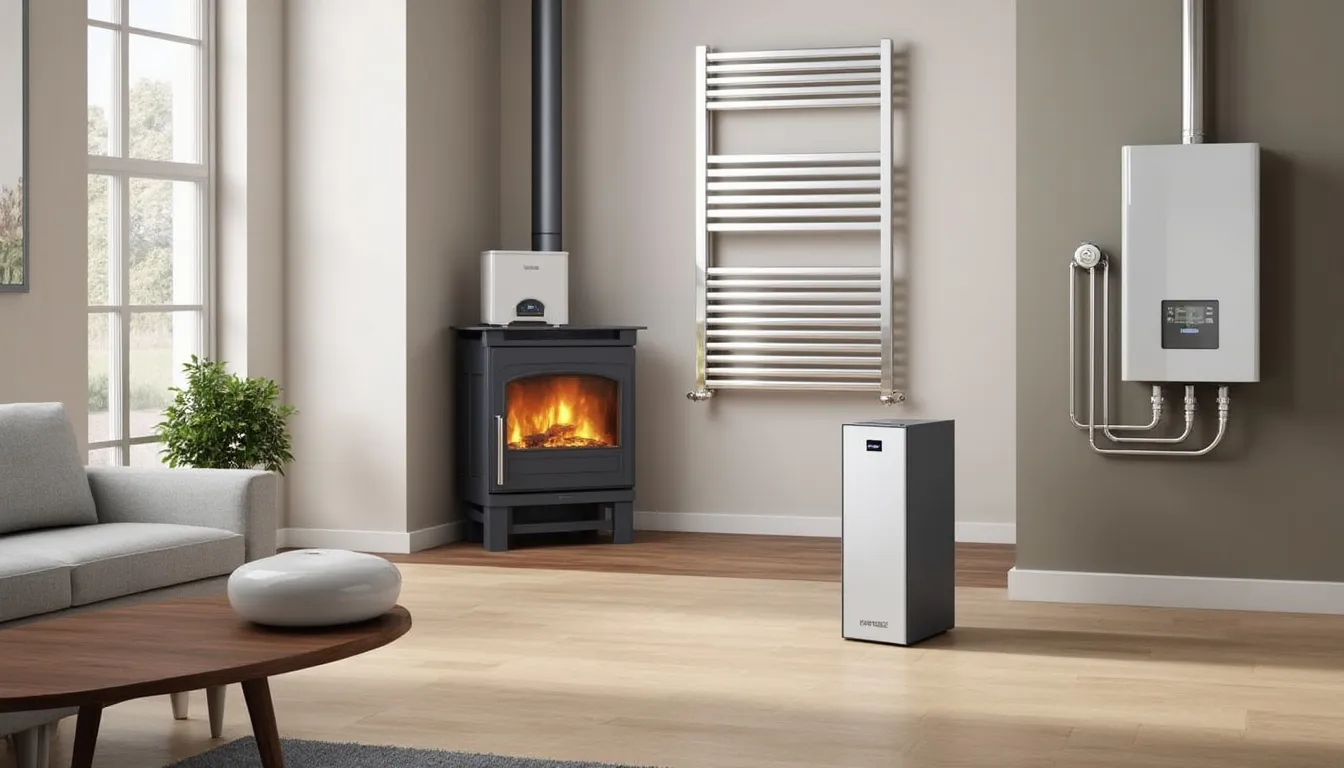
Currently, there are many options on the market for home heating. Whether you want to install a new system or optimize your current heating, it is essential to make an informed choice. Different types of boilers and heating appliances can meet your specific needs:
Condensing boilers: a high-performance choice
Condensing boilers, such as those made by reputable brands like Viessmann, Ferroli, or De Dietrich, offer very high energy efficiency. They recover the heat contained in the combustion gases, allowing them to use less fuel to produce the same amount of heat. Moreover, they are generally eligible for financial assistance for energy renovations.
Heat pumps: an eco-friendly solution
Heat pumps, like those offered by Atlantic or Dimplex, are another important option. These systems transform renewable energy found in the air, water, or ground into heat for your home. An excellent choice from both an economic and ecological perspective.
Pellet boilers: a sustainable solution
Pellet boilers, such as those from Chaffoteaux, offer a system that uses renewable fuels. Although their acquisition cost is often higher, the long-term savings make the initial investment worthwhile. Additionally, they have the advantage of automated operation.
Electric radiators: instant comfort
For occasional spaces, electric radiators, like those from Saunier Duval, can be a quick and effective solution. More suitable for small areas or auxiliary rooms, they provide immediate heating without the installation cost of a centralized system. Remember that inertia models can enhance efficiency by distributing consistent heat.
Saving energy while staying warm
Minimizing energy consumption is a major challenge, not only for your wallet but also for the planet. Here are some solutions to face the cold without harming your budget:
Smart systems: a connected thermostat
A connected thermostat allows you to manage your heating remotely. You can adjust temperatures according to your lifestyle habits. Whether you're home or away, you maintain control. This represents a significant saving on your bill, with devices from brands like Fischer offering a wide range of programmable thermostats tailored to your needs.
Investing in insulation: avoiding heat loss
Have you ever considered the insulation of your home? Poor insulation is often the first cause of a skyrocketing heating bill. Indeed, a poorly insulated house can lose up to 30% of its heat through the roof. Here are some gestures to adopt:
Seal all openings with joints and door snakes.
Close shutters at night to retain heat.
Add rugs on cold floors for better insulation.
These simple actions will help you maintain a pleasant warmth without breaking the bank.
Maintaining your heating system
Also, remember to regularly maintain your heating system. Preventive maintenance allows you to detect potential problems before they become costly. Take the time to bleed your radiators and check your boiler once a year, ideally before the start of the cold season.
FAQ: Your questions about winter heating
What are the most energy-efficient heating systems?
Condensing boilers and heat pumps are generally considered the most energy-efficient, as they use less fuel while offering high efficiency.
How can I improve my house's insulation without major work?
Simple gestures like sealing openings, using door snakes, and adding rugs can greatly enhance insulation without requiring heavy work.
What temperature should I set for winter nights?
It is recommended to set the temperature between 16 and 17 °C at night for optimal comfort and to achieve energy savings.
What is frost protection mode?
Frost protection mode is a setting that maintains a minimum temperature in your home to prevent pipe freezing during your prolonged absences.
Do connected thermostats really work?
Yes, connected thermostats allow remote control of your heating and can help achieve significant savings on your energy bill.