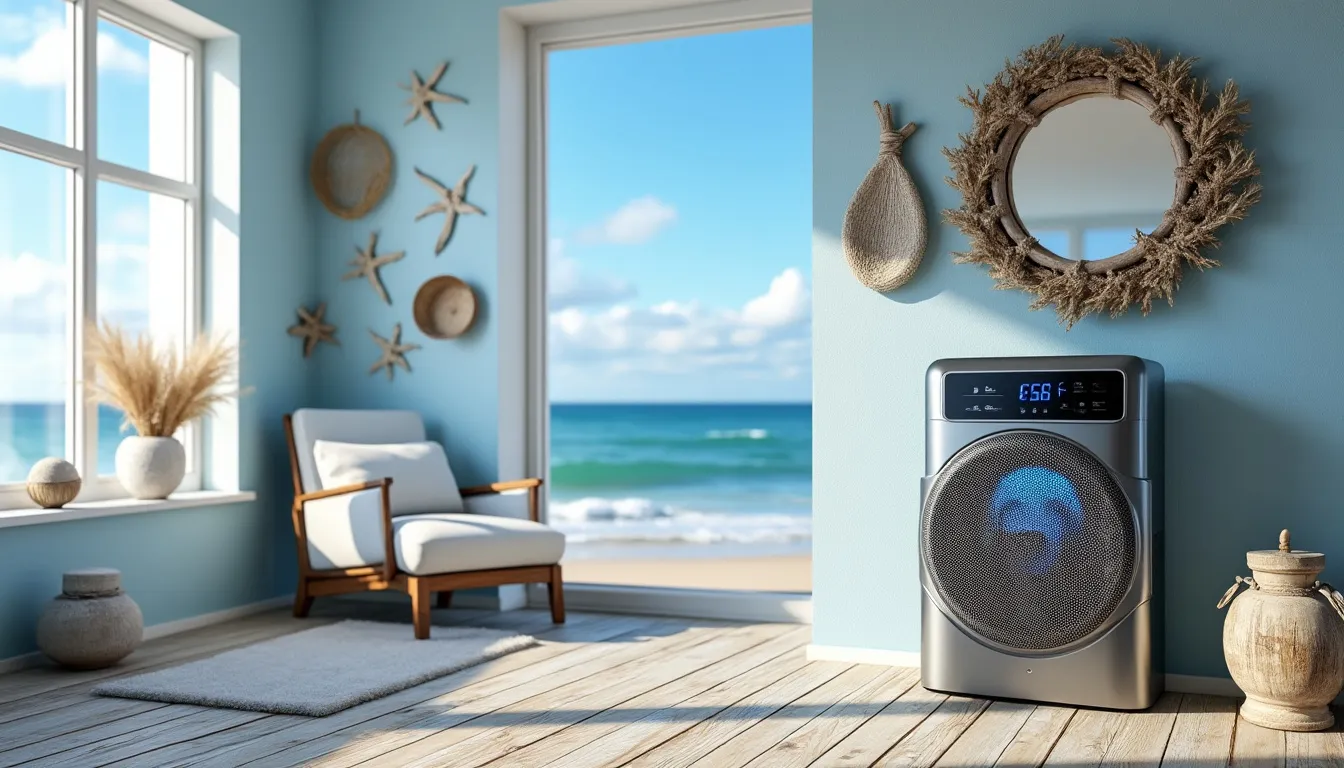
Heating for seaside homes: Effectively withstand salty air
4 min read
Living in a house by the sea brings a sense of serenity and freedom, but it also requires special attention to insulation and heating. The ambient humidity, corrosive salty air, and whims of the wind can pose real challenges to the durability of your home. This article aims to provide you with specialized advice on insulating coastal houses, addressing suitable materials, insulation techniques, and financial support that can assist you in your projects.
The Specifics of Insulation by the Sea
Life in coastal areas offers several advantages, but also presents unique climatic conditions. Houses must not only withstand humidity but also that salty airflow which can compromise the integrity of your home. For this reason, it is necessary to adopt a robust insulation strategy.

The Challenges of Insulation in Coastal Areas
Every house by the sea suffers from constant exposure to harsh conditions. The salty air can cause deterioration in construction materials, making their thermal efficiency less effective. Proper insulation must therefore provide solutions to address:
Corrosion: salt easily rusts metals.
Temperature fluctuations: the ability of materials to adapt to these changes is essential.
Air acidity: this can influence the longevity of the materials used.
In the face of these challenges, the choice of material is essential to ensure a good level of insulation.
Criteria for Choosing Insulation in Coastal Areas
When considering insulating your home, several criteria must be taken into account:
Thermal resistance: it is crucial that materials effectively prevent heat from escaping.
Moisture resistance: a fundamental criterion when living near the sea.
Durability: the material must be able to withstand salt erosion and extreme weather conditions.
What Insulation Materials to Favor for a House by the Sea?
The choice of construction materials is undoubtedly a key element. Different materials meet the specific needs of each coastal habitat.
Glass Wool
This material has very good thermal resistance and is relatively economical. However, it requires adequate protection against moisture, as its effectiveness can decrease when exposed to water.
Rock Wool
Rock wool is a wise choice for coastal houses. It combines thermal resistance and fireproof properties, and it performs better than glass wool against moisture. This makes it an ideal ally by the sea.
Wood Fiber
Eco-friendly, wood fiber offers excellent thermal insulation properties. It is particularly effective in regulating indoor humidity; however, it can incur higher costs.
Cellulose Insulation
Made from recycled paper, cellulose insulation provides remarkable thermal resistance while being treated to withstand moisture. Therefore, it is a good choice for coastal homes.
Wood Wool
Wood wool represents a natural alternative to other materials, combining high thermal efficiency and humidity regulation. Although its cost may be higher, it remains a sustainable option for insulation.
Insulation Techniques Suitable for a House by the Sea
Besides the choice of materials, insulation techniques must also be carefully considered and chosen based on the specifics of your house.
Interior Insulation
This method is often preferred because it is simpler and less expensive to implement. It involves adding an insulating layer to the interior walls, which helps retain heat in the winter without major modifications to the structure.
Techniques and Materials for Interior Use
Using materials such as glass or rock wool, combined with a vapor barrier, can enhance the effectiveness of the installation. The latter plays an essential role in preventing moisture from reaching the insulation, thus ensuring its longevity.
Exterior Insulation
Although more expensive, exterior insulation often produces more effective results. It involves wrapping the entire house with an insulating layer, which addresses all thermal bridges.
Techniques and Materials for Exterior Use
For this method, wood fiber or rock wool panels are particularly effective. Offering high thermal performance, these materials are also robust and durable, thus optimizing insulation.
Financial Aid for Your Insulation Work
Renovating the insulation of your home can be a significant investment, but several financial aids are available to reduce the cost.
State Aid
Several programs are offered by the French State to support energy efficiency work, particularly for coastal homes. The energy bonus and the tax credit for energy transition (CITE) are among the most relevant.
Local Subsidies
Furthermore, some municipalities or regions offer subsidies for insulation work. These vary depending on your location and the specifics of your project, so it is advisable to inquire at your town hall.
Zero-Interest Loans
Zero-interest loans (PTZ) represent an interesting alternative. They allow you to finance your work at no cost of interest and can sometimes be combined with other aids.
Programs for Second Homes
If you own a house by the sea as a second home, know that aids are also available specifically for this type of property. Conditions may vary slightly, but you can benefit from subsidies for your insulation work.
FAQ on Insulation and Heating by the Sea
1. What are the best practices for insulating a house by the sea?
It is essential to use materials resistant to moisture and suitable for the marine environment, such as rock wool or wood fiber. Combining interior and exterior insulation optimizes efficiency.
2. What types of heating are recommended for coastal homes?
Heating systems such as Maritime Heating, and those offered by EcoChaleur Littoral or Atlantis Warm are often the most effective.
3. Are there specific aids for insulating houses by the sea?
Yes, there are many state and local aids, including bonuses and tax credits, which can support your insulation work.
4. Why prioritize natural materials for insulation?
Natural materials such as wood wool or cellulose insulation are eco-friendly and provide excellent thermal insulation capabilities while regulating humidity.
5. Is exterior insulation worth the extra cost?
Absolutely, it addresses many thermal bridges and improves the energy efficiency of the entire house, ensuring better long-term comfort.