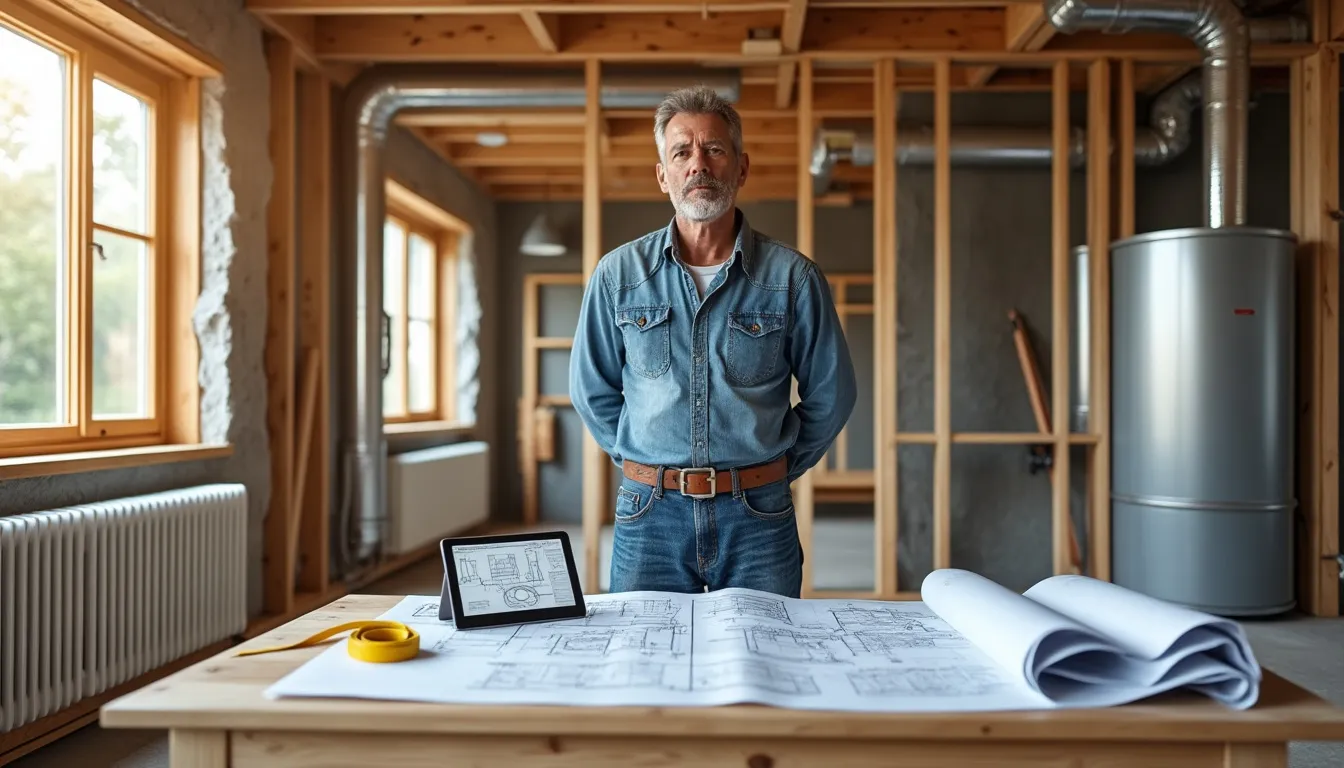
Installation of heating in a new house: how to plan your work effectively?
5 min read
When building a new house, every detail matters. Among the numerous decisions to make, the installation of the heating system ranks as one of the most crucial aspects, which can influence daily comfort, energy consumption, and, of course, the budget. In 2025, where environmental concerns weigh increasingly on construction choices, it is essential to anticipate the different stages to optimize the setup of your heating equipment. From assessing needs to selecting an appropriate system, along with specific technical installations, this article guides you on the best way to plan your work. Discover the current regulations and requirements to meet in order to ensure efficient and compliant equipment.
Why hire a professional heating engineer?
A heating installation project requires specific expertise. That’s why it is essential to collaborate with a qualified heating engineer. Their role goes well beyond installing boilers and radiators; it includes assessing the needs of your home, proposing personalized solutions, as well as conducting regular maintenance to keep the system operating optimally.
An experienced heating engineer can also guide you on the different technologies available, whether it be gas systems from Vaillant or condensing boilers from De Dietrich. They will ensure compliance with current standards and prevent potential issues, thus guaranteeing that your heating operates without interruption.
Criteria for choosing a heating engineer
Experience: A professional with several years in the field is often a sign of reliability.
Transparent quote: A good heating engineer will provide you with a clear estimate, without hidden costs.
Certifications: Ensure that the heating engineer holds the necessary certifications, which proves their commitment to quality.
References: Don’t hesitate to ask for references and check customer reviews.
Follow-up: They should offer follow-up after installation to ensure ongoing service.
Essential steps for installing a heating system
The installation of a heating system in a new house involves several key steps, each of which plays a decisive role in the success of your project.
Step 1: Define your heating needs
First and foremost, it is crucial to understand what your expectations are. Assess your intended use, the type of comfort desired, and the characteristics of your living space:
Type of housing: Detached house, apartment, etc.
Area: The surface area to be heated directly impacts the choice of system.
Insulation: Good insulation can significantly reduce your heating needs.
Budget: What is the amount you can invest initially and in the long term?
Step 2: Choose the appropriate heating system
Once your needs are defined, it's time to choose the system that suits you. In 2025, the market offers several options:
Central heating: Such as Ferroli or Viessmann boilers, often prized for their efficiency.
Heat pump: An investment for the future, allowing you to save energy.
Underfloor heating: For optimal comfort and uniform heat throughout all rooms.
Radiators: Classic options, with brands like Atlantic and Chaffoteaux standing out.
Step 3: Size your installation
Sizing is a crucial step that determines the energy efficiency of your system. Proper sizing would limit your energy expenses and guarantee a constant ambient temperature. A professional will help you perform calculations based on:
Criterion | Impact on installation |
|---|---|
Room volume | Determines the power needed for each emitter. |
Insulation | Reduces heat losses, influencing the choice of boiler or pump. |
Use areas | Some areas may require more heat depending on their daily use. |
Step 4: Install the heating system
Finally, the installation step must be carried out by a professional to ensure compliance and efficiency of the system. This includes:
Installation of emitters: Radiators, underfloor heating, etc.
Connection: Links between the heat generator (boiler, heat pump) and the emitters.
Testing: Checking tightness and pressure to ensure proper operation.
Regulations and standards concerning heating
With the evolution of ecological concerns, regulations impose specific standards to be followed during the installation of heating systems in a new house. The laws in France mainly aim to reduce environmental impact and improve energy efficiency.
Current environmental standards
In 2025, requirements are tightening around heating equipment, and several criteria must be considered:
Energy consumption: Estimating usage in kWh per year is essential.
Greenhouse gas emissions: Devices must meet strict standards.
Energy labeling: Appliances, such as those from Buderus or Danfoss, must carry a label to inform about their efficiency.
Periodic control: Certain installations must undergo regular maintenance to ensure compliance.
Installer obligations
The professional must fulfill several obligations to remain compliant and ensure proper functioning:
Obligation | Details |
|---|---|
Compliance with standards | Adherence to current standards during installation. |
Notification to the administration | Inform about the installed systems via specific forms. |
Expert advice | Offer customer support on usage and maintenance. |
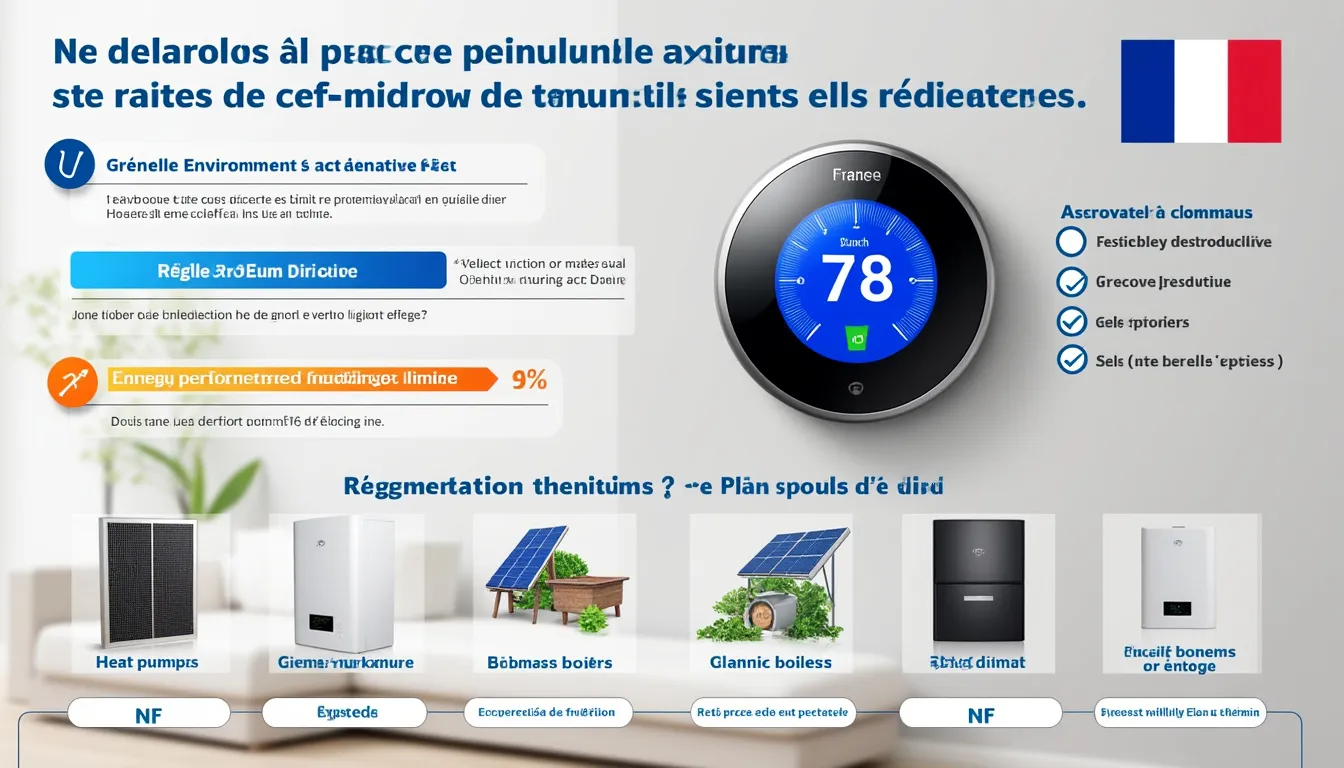
Optimizing your heating system: best practices and advice
After installing the heating system, it is essential to ensure its long-term efficiency. Here are some tips to optimize its performance:
Regular maintenance
Frequent maintenance is key to ensuring the longevity and efficiency of your system. Some practical advice includes:
Checking pressure: Ensure that the pressure of your boiler is within the recommended zone.
Bleeding radiators: It is advisable to bleed the radiators annually to ensure a good flow of heat.
Cleaning: Keep your heating unit clean, free of debris and dust.
Adopting connected equipment
In the age of new technologies, considering the integration of connected devices can optimize your consumption:
Smart thermostats: They automatically adjust the temperature according to your schedule.
Remote control systems: Some allow you to manage the heating from your smartphone.
Consumption monitoring: Keeping an eye on your expenses helps optimize your usage.
Financial considerations
Installing an eco-efficient heating system can benefit from financial assistance from the government. Here are some of them:
Zero-interest eco-loans: Help finance eco-renovation work.
Tax credit: Works carried out to improve energy efficiency are eligible.
ANAH assistance: Proposals for low-income households.
FAQ on heating installation in a new house
What are the main steps to install heating in a new house?
The steps include assessing needs, choosing the system, sizing, and finally, the actual installation by a professional.
Is it possible to receive financial assistance for installing a heating system?
Yes, several schemes such as zero-interest eco-loans or tax credits can help reduce the cost of work.
Which type of heating is the most economical?
The choice of heating depends on several factors, but condensing boilers from brands such as Saunier Duval and Viessmann are recognized for their energy efficiency.
How often should you maintain your heating system?
It is recommended to perform annual maintenance to ensure the proper operation and efficiency of your installation.
Why choose a professional heating engineer for the installation?
A professional has the necessary expertise to assess your needs, choose the appropriate system, and ensure an installation compliant with current standards.