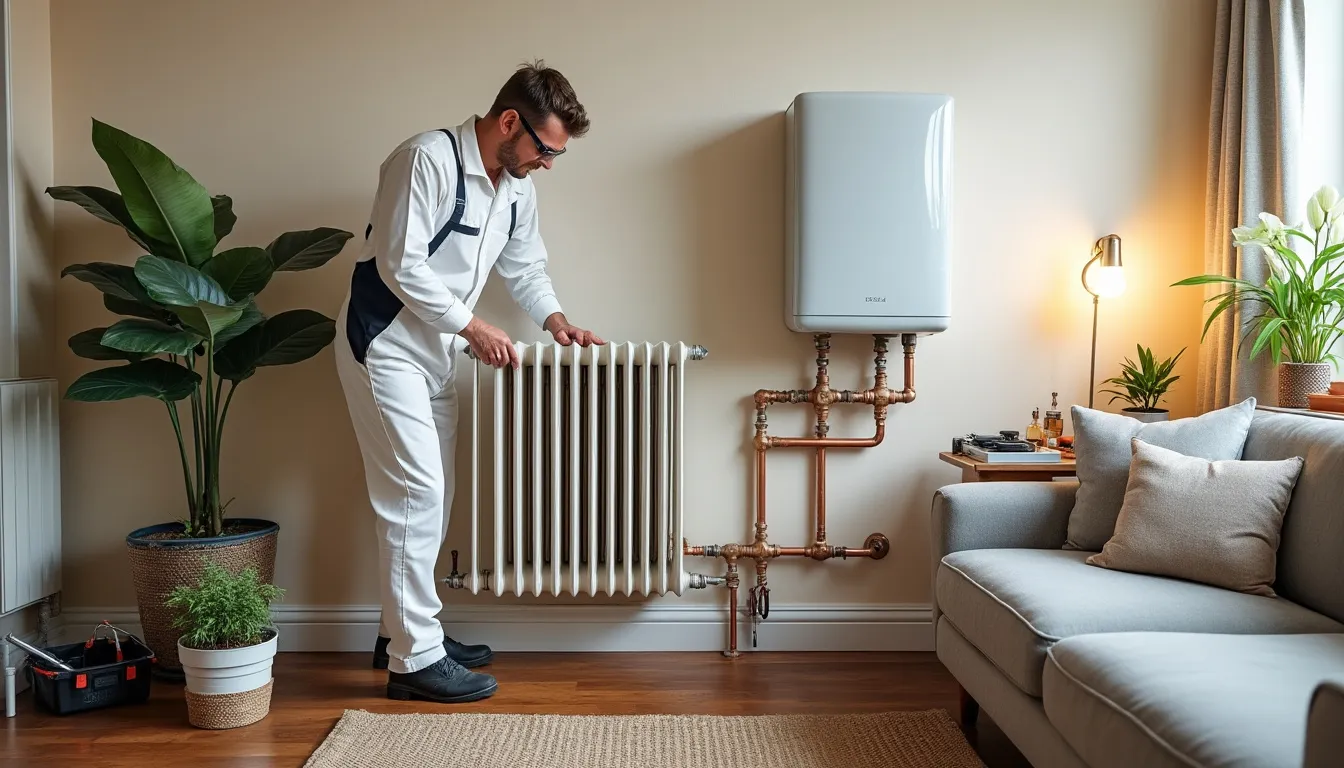
Replacement of radiators: how to maintain your existing boiler?
4 min read
As the world shifts towards more ecological alternatives and increased energy efficiency, the issue of heating in our homes takes on significant importance. Replacing radiators may be seen as a simple update, but this change comes with many technical and financial considerations. In 2025, as the Energy Regulatory Commission (CRE) alerted to an inevitable rise in gas prices, it is essential to consider how we can preserve our current boilers while optimizing our heating system. This article explores how to successfully transition to a more sustainable heating system while keeping your boiler operational.
Understanding the impact of rising energy prices on heating
Since 2022, the energy situation in Europe has been particularly tense, notably due to the war in Ukraine and sanctions against Russia. This major event has forced many consumers to rethink their energy choices while facing a continuous rise in gas bills. The CRE recently revealed an 11.7% increase in gas prices starting in July 2024, prompting us to ask: is it time to give up natural gas?
The increase in costs affects key elements of our gas bill. Here is an overview of the main components:
Energy supply: Represents nearly half of the rate, which varies according to suppliers.
Transportation cost: About 25% of the billing, an amount set by the State.
Taxes and contributions: Also about 25%, including VAT and other taxes levied on consumption.
With transportation costs and wholesale market prices continually rising, it becomes crucial to optimize these expenses while maintaining adequate thermal comfort in our homes.
What elements to focus on when replacing radiators?
Replacing radiators is often the most direct solution to improve energy efficiency. When considering this option, here are some aspects to consider:
Radiator size: Choose radiators suited to the size of your rooms for better efficiency.
Type of radiators: Select high-efficiency models, such as inertia radiators or radiant panels.
Renewable energies: Consider pairing your new radiators with renewable energy sources, such as heat pumps.
These elements will help you optimize your energy consumption, thus reducing the impact of upcoming price increases.
Boilers: between modernity and tradition
The evolution of boilers has been marked by innovations that improve both efficiency and environmental friendliness. Condensing boilers, for example, use the heat from flue gases to preheat water, providing significant savings. However, many households still have old boilers that pose challenges in terms of maintenance and consumption.
The importance of maintaining existing boilers
Regular maintenance is not only mandatory, but it also prolongs the life of your boiler and improves its efficiency. Here are some tips for good maintenance:
Check the burner: Ensure it is functioning properly and that there are no residues.
Check for leaks: Inspect pipes and fittings for possible gas leaks.
Schedule annual cleaning: This includes cleaning the boiler and filters.
When you combine good maintenance with a strategic replacement of radiators, you optimize thermal comfort while reducing your energy bills.
Financial aid available for radiator replacements
To support the energy transition, several financial aid mechanisms have been established. This includes MaPrimeRénov’ and the Coup de pouce heating, which represent interesting opportunities for households wishing to replace their old boilers with more economical solutions.
Which aids to apply for?
Here are the available aids you can consider when replacing your heating system:
Aid | Type of boiler concerned | Conditions |
|---|---|---|
MaPrimeRénov’ | Heat pumps, pellet boilers | Accessible to all tax-exempt households |
Coup de pouce chauffage | Gas, fuel, coal boilers | No resource conditions |
All efficient boilers | Cap on the total amount |
These aids make investments more accessible, allowing households to achieve energy savings while contributing to the ecological transition.
Adopting good practices for optimized warmth
To get the most out of your new equipment, there are several practical recommendations. How you manage your heating system can have a significant impact on your energy bills.
What habits to adopt for improved thermal comfort?
Here are some practical tips that will help you optimize the use of your heating:
Insulate your home: This includes walls, attics, and windows to minimize heat loss.
Use smart thermostats: Regulate the temperature according to your lifestyle habits to avoid overconsumption.
Schedule regular maintenance: This ensures the proper functioning of your boilers and radiators.
By adopting these practices, you not only guarantee optimal thermal comfort but also a more economical use of your heating.
Tips for interior rearrangement with new radiators
Replacing radiators can be an opportunity to rearrange your living space. Consider taking this opportunity to redefine your interior while integrating comfortable heating solutions. Here are some ideas:
Position radiators under windows: This helps counter cold drafts.
Choose designer radiators: Aesthetic models can become decorative elements.
Create heat zones: Depending on your uses, consider supplementary heating for certain areas.
FAQ
What types of radiators are the most efficient?
Inertia radiators and radiant panels are considered particularly efficient compared to traditional models.
Are financial aids available to everyone?
Yes, several aids such as MaPrimeRénov’ are accessible without resource conditions, allowing almost all households to benefit.
How do I know if my boiler needs to be replaced?
If your boiler shows signs of aging, such as frequent breakdowns or excessive energy consumption, it may be time to consider its replacement.
How long should a boiler maintenance last?
A maintenance visit generally lasts between 1 and 2 hours, depending on the state of your boiler and the necessary repairs.
Why choose electric over gas?
The strict regulations on gas boilers and the aids supporting electric systems make this choice increasingly attractive, especially for new installations.